
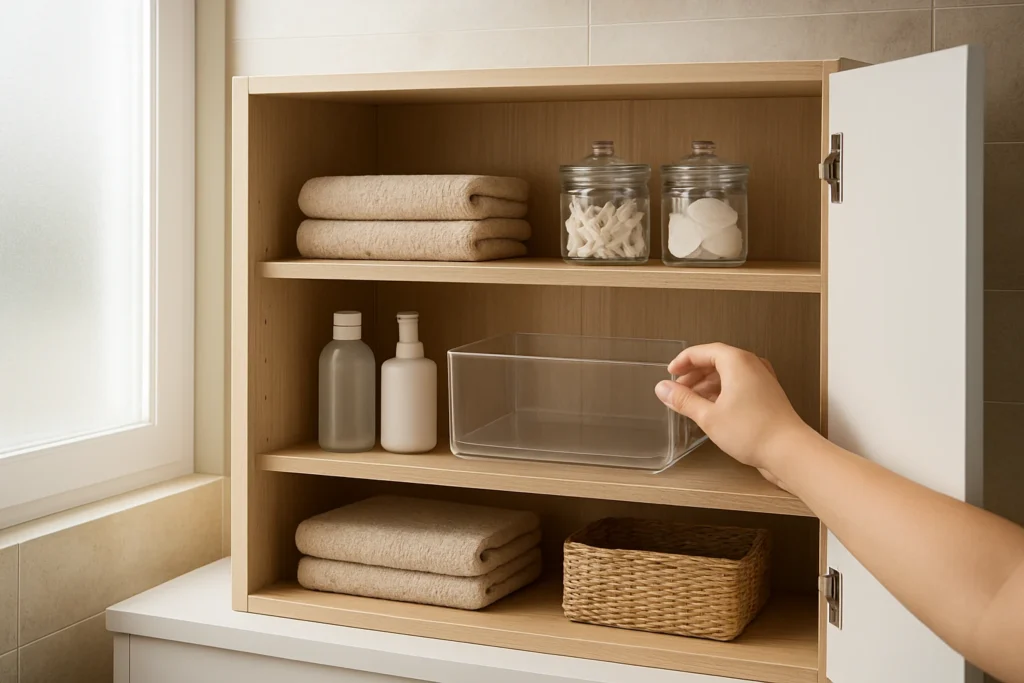
Start by emptying the cabinet and grouping like items so you can see what you own and what you actually use. Then choose storage that fits both the items and the cabinet so no space is wasted and everything is easy to reach. From experience, planning the layout before you buy containers saves time and money. Floorlands.ae shows how small choices like clear bins and labels can keep a cabinet tidy for months. Keep daily items at eye level, put backups on a high shelf, and toss expired products during the first sort.
Key Statistics
- The average household stores about 20 to 40 items in the bathroom cabinet, including medicines, toiletries, and cleaning supplies.
- Proper sorting and suitable containers can reduce daily retrieval time by up to 40 percent in many homes.
- A single 20-minute weekly tidy prevents the need for a full declutter in most cases.
Assess Your Cabinet and Goals
Before you buy boxes, look at the cabinet and decide what you want it to hold. Measure the height, depth and shelf spacing so you can plan containers that actually fit and let you reach what you need.
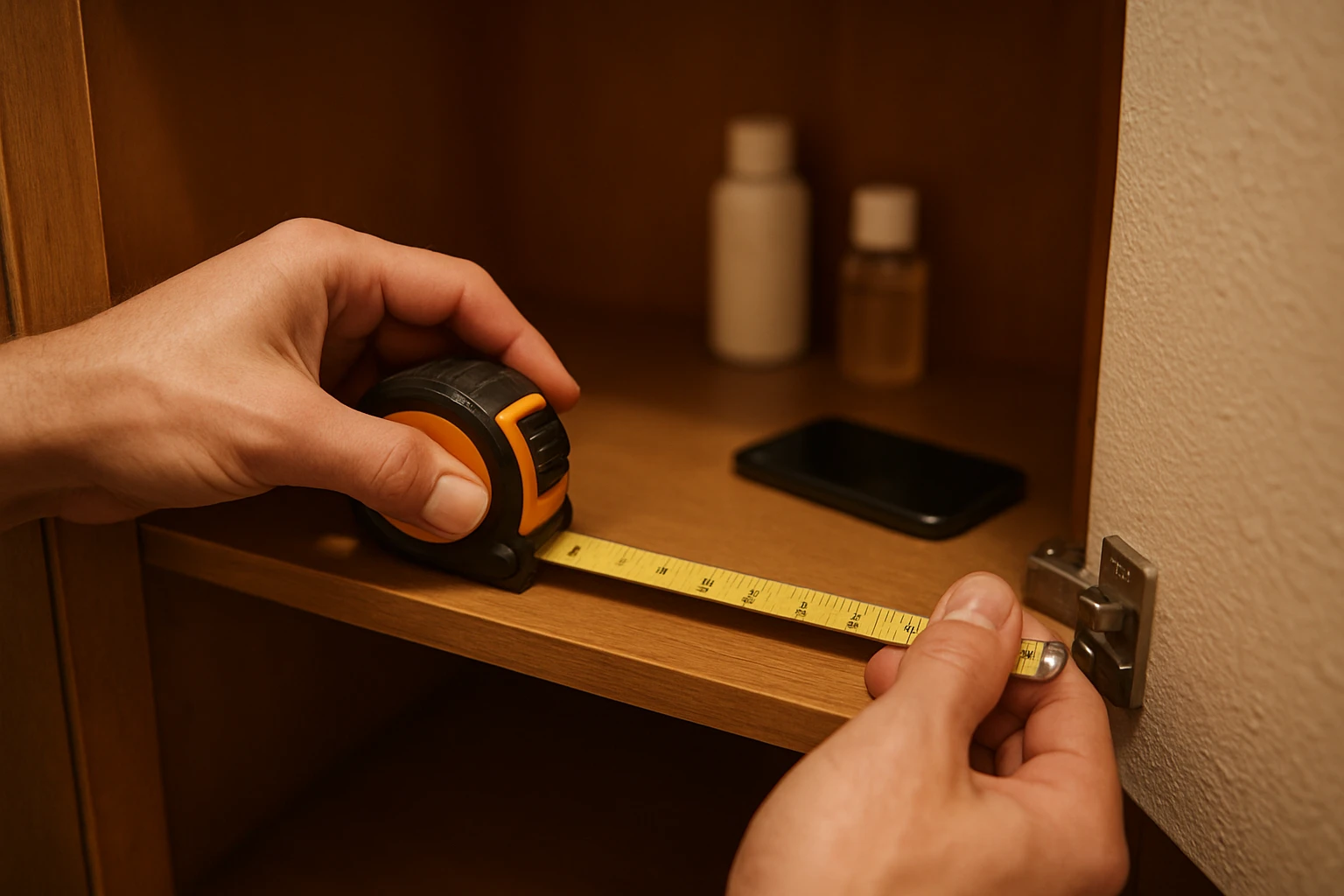
A quick plan makes a big difference. Note which items you use every day, which you use weekly, and which are backups. Many people store rarely used items at eye level and forget the deep space behind the door. Make a simple list: daily, weekly, backups, and cleaning supplies.
Why This Step Matters
A cabinet set up to match your habits is much easier to keep tidy. Measuring and listing now saves time and effort later. If a container looks nice but blocks access, it will become clutter again.
Empty, Sort and Clean
Take everything out so you can see what you own and clean the space while it is empty. Lay items on a towel and group them by type and how often you use them.
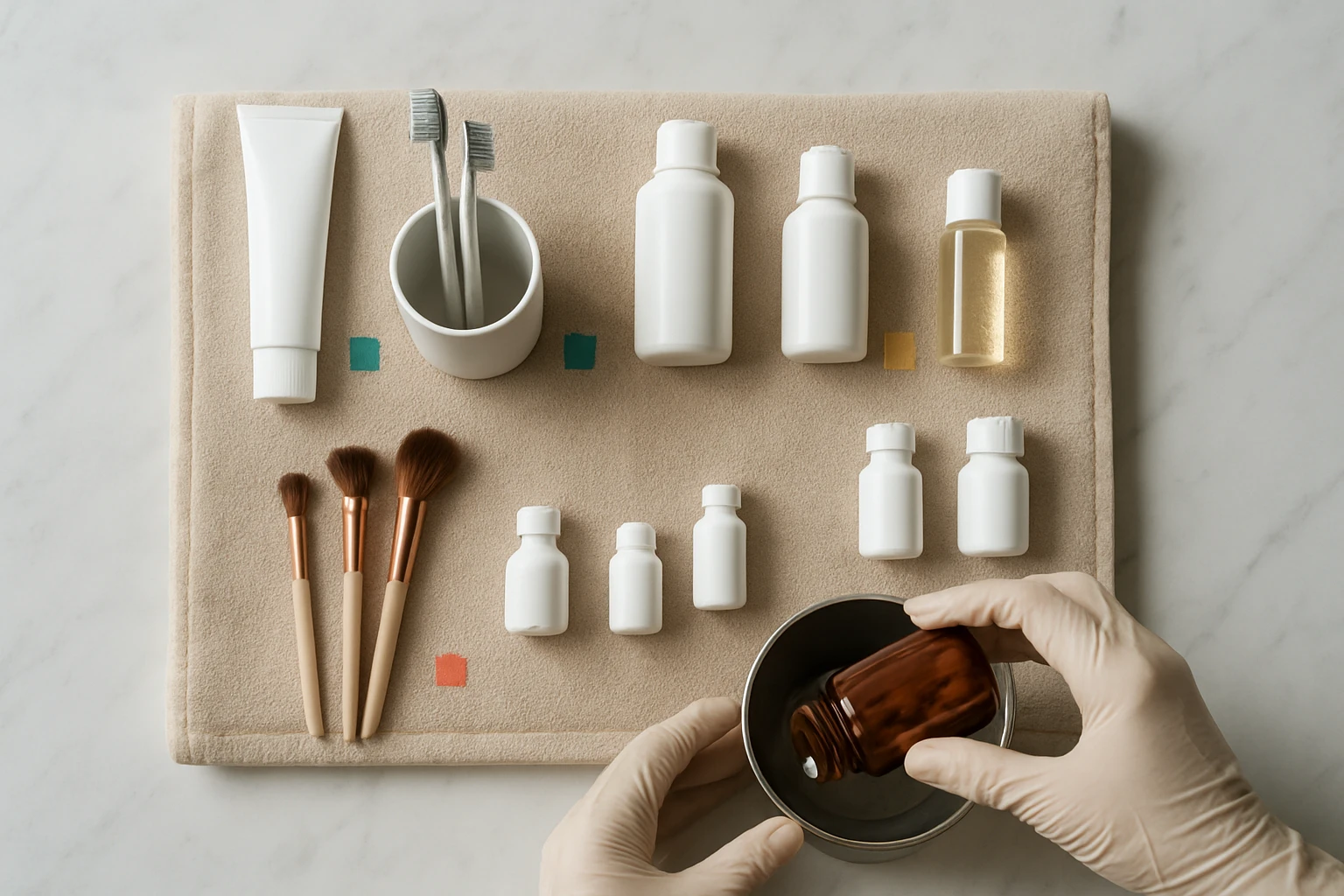
Start three piles: keep, relocate, and discard. A common mistake is holding on to items for “just in case” when they are expired or duplicates. Check expiry dates on medicines and skincare and toss anything old. Move items that belong outside the bathroom, such as craft supplies or extra makeup brushes, to their proper spot.
What to Do First:
- Remove everything and lay it out in groups.
- Check dates and condition on medicines and skincare.
- Wipe shelves, vacuum crumbs, and let the cabinet air dry.
Keep or Toss:
- Keep daily-use toiletries and current prescriptions.
- Toss expired products and old cotton swabs or opened creams older than their guideline.
Cleaning Steps:
Wipe interiors with mild soapy water, let dry, and consider a thin shelf liner to protect wood and catch spills.
Measure and Plan Layout
Use the measurements you took to plan where items will live. Decide which shelf is for daily items, which is for occasional use and where the backups go.
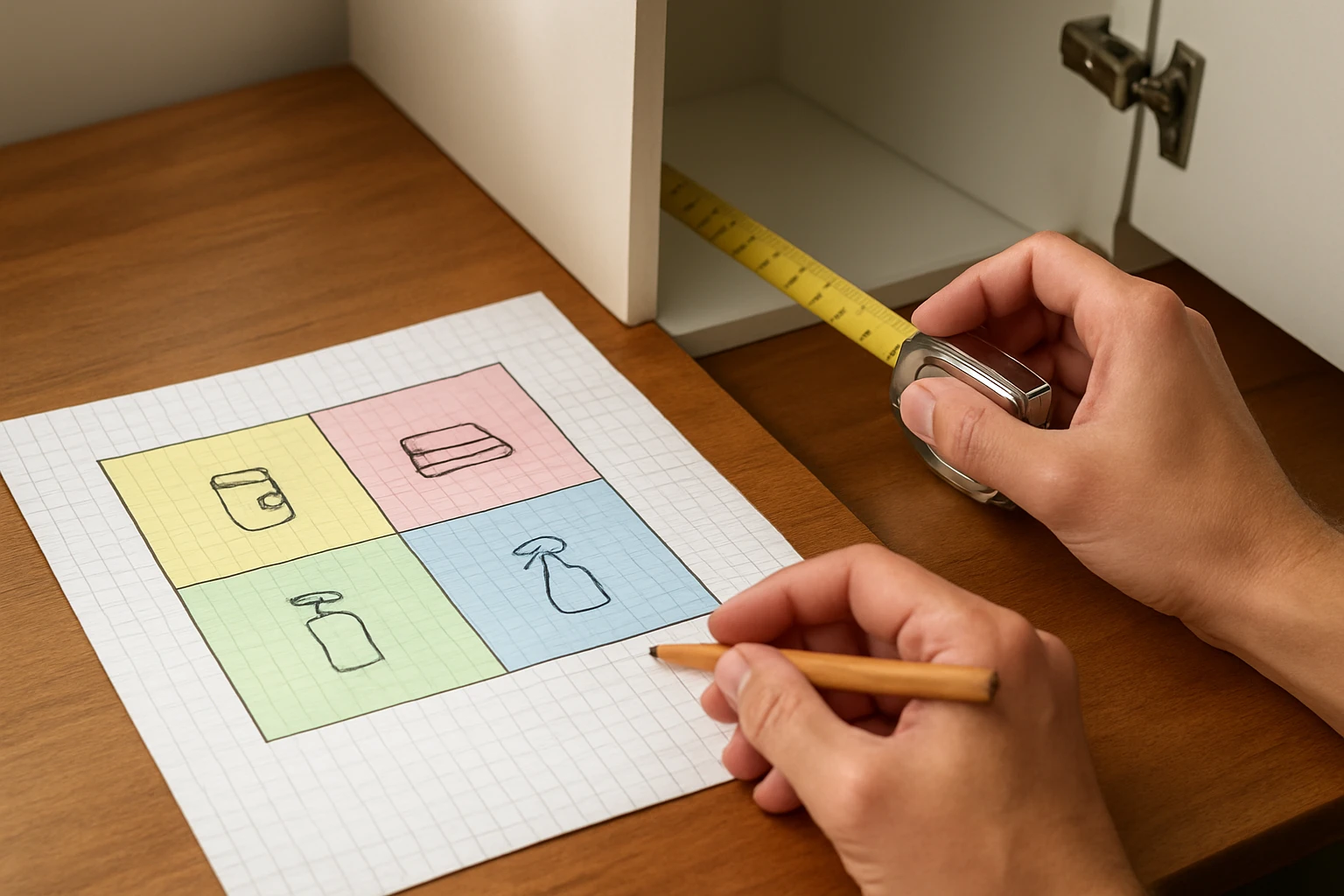
A simple grid helps. Keep daily items in the center or the most accessible shelf, put heavy or awkward items low, and stow lightweight backups high. If the cabinet has doors, use door pockets or adhesive hooks for thin items.
Recommended Container Sizes Table
| Item Type | Container Type | Suggested Size | Why It Helps |
|---|---|---|---|
| Small tools and makeup | Small clear bins or drawer trays | 6 x 4 x 3 in | Visible and easy to pull out |
| Medicines | Vertical pill organizer or shallow box | 8 x 4 x 2 in | Keeps items upright and accessible |
| Towels | Folded stack or open basket | Flexible, fits shelf depth | Keeps bulk tidy and reachable |
| Cleaning sprays | Tall bottle bin | 10 x 6 x 6 in | Prevents tipping and contains spills |
This table uses typical sizes. Always confirm against your cabinet depth and shelf spacing before buying.
Choose Containers and Organizers
Pick containers that match the items and the cabinet layout instead of forcing things into what you already own. Clear containers make it easy to see contents and stackable pieces help use vertical space.
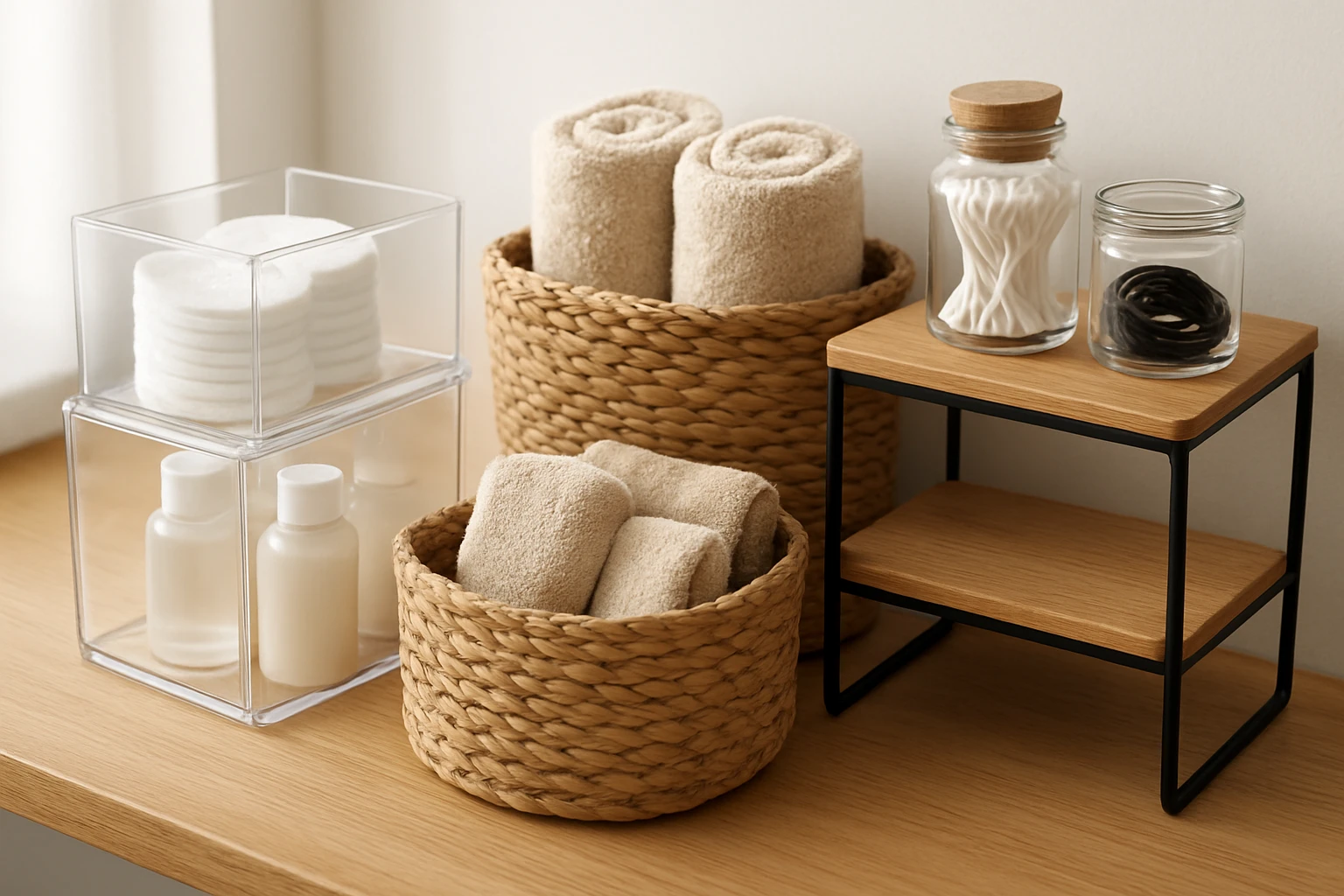
A mix of clear bins for small items and woven baskets for towels looks tidy and tolerates imperfect folding. Use risers to create a second level on deep shelves so small items do not get lost behind larger ones.
Choosing Materials and Types
- Clear acrylic: good for visibility and daily items.
- Woven baskets: hide clutter and keep soft items tidy.
- Lidded containers: protect items from moisture.
How to Label:
Label containers on the front so you can find things fast. A small label maker or a neat handwritten tag works well and helps other household members return items to the right spot.
Arrange Items by Use and Frequency
Put items you use every day at eye level or where your hand naturally reaches. Place weekly items on a middle or lower shelf, and keep backups higher up where they are out of the way.
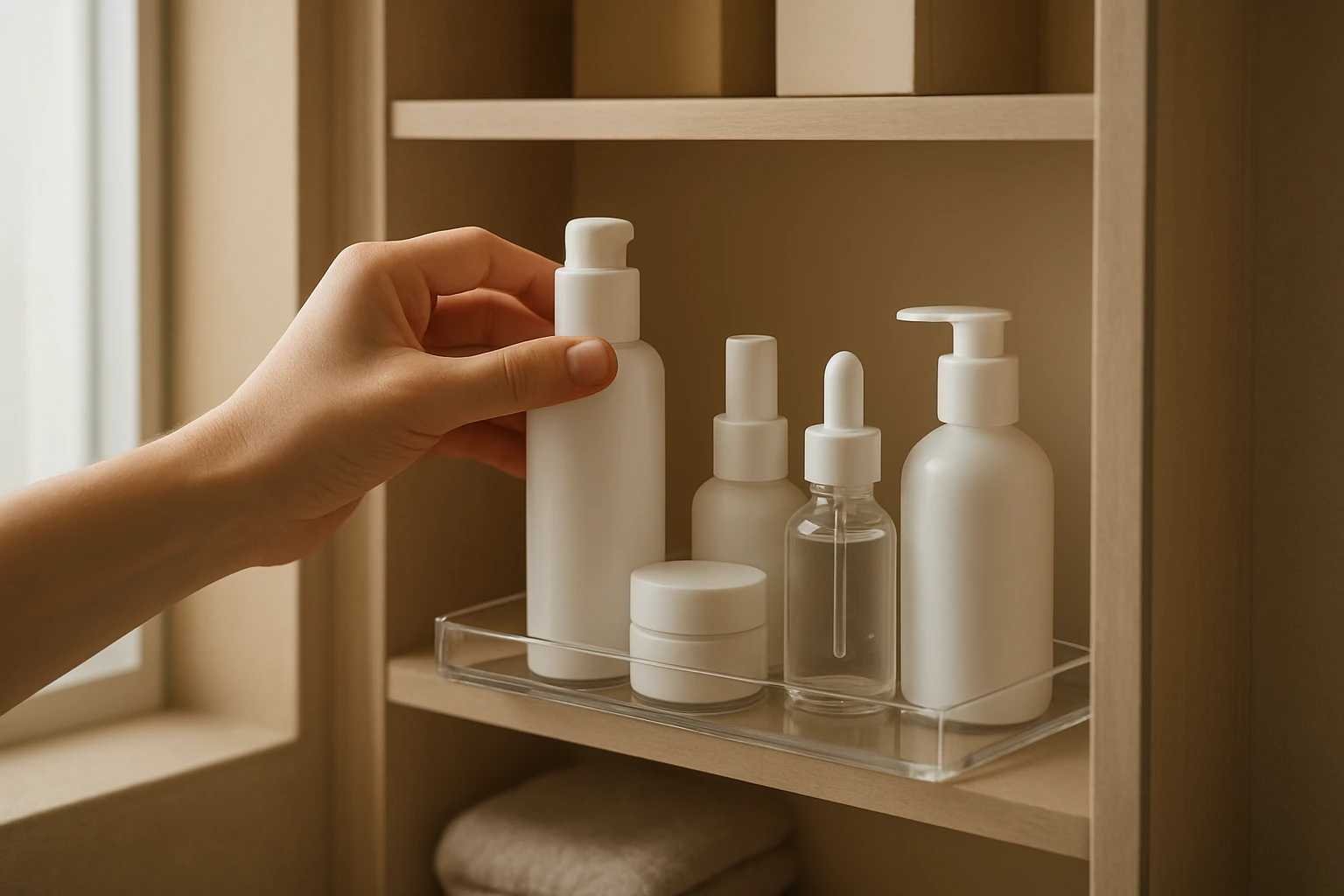
Think of the cabinet as zones: one zone for daily grooming, one for first aid and medicines, and one for cleaning and bulk supplies. This reduces searching time and keeps counters clear.
Quick Access Zones:
- Eye-level: daily face and hair items.
- Lower shelf: heavy items and cleaning supplies.
- Top shelf: backups and seasonal items.
Small Items, Makeup and Toiletries
Small things are the main source of cabinet clutter. Use shallow trays and drawer inserts to keep these items contained and visible.
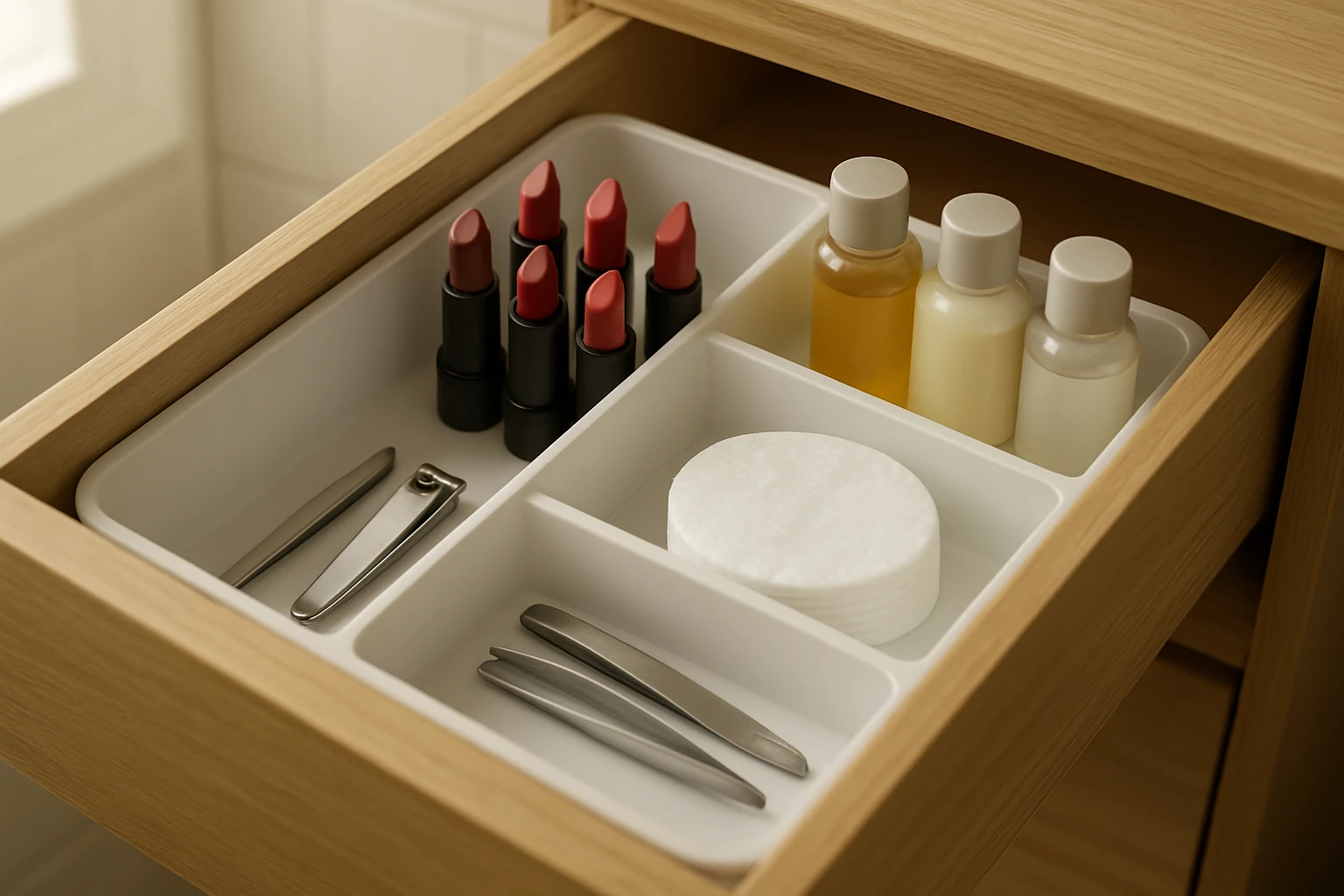
A common mistake is putting small items loose on a shelf. Instead, pick a tray that fits the shelf depth and group like items together. Keep a small open cup for toothbrushes and swap it for a sealed container if moisture is a problem.
Makeup Storage Tips:
- Use vertical organizers for brushes and pencils.
- Place daily makeup in the front of a tray.
- Keep backups in a labeled box on the top shelf.
Protect the Cabinet Base and Floor
Protect wood surfaces from spills and moisture with a thin washable liner or a shallow tray under liquids and products that can leak. Check the base often for any signs of dampness.
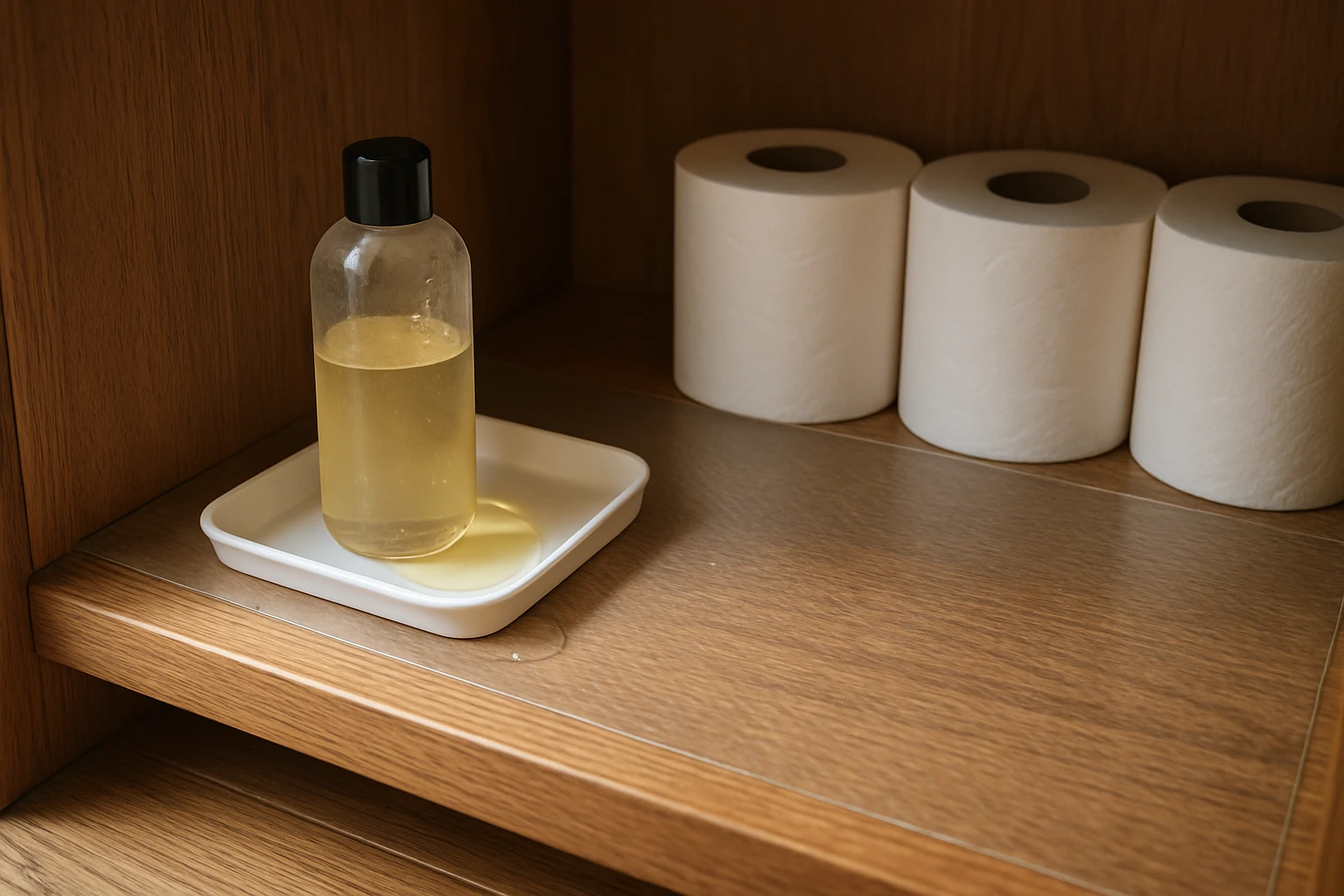
Floor protection matters just outside the cabinet too. If the cabinet sits over tile or wood, a slip-resistant bathroom mat can stop water tracks and limit mess. Consider a proper mat for the floor area to keep the zone clean and safe.
You can find a range of options at Bathroom Mats, which include non-slip designs that work well near vanities and cabinets.
Maintain Order with a Routine
A small weekly check keeps a cabinet tidy and avoids big declutters. Spend 10 to 20 minutes each week returning items to their bins, wiping any spills, and checking for expired products.
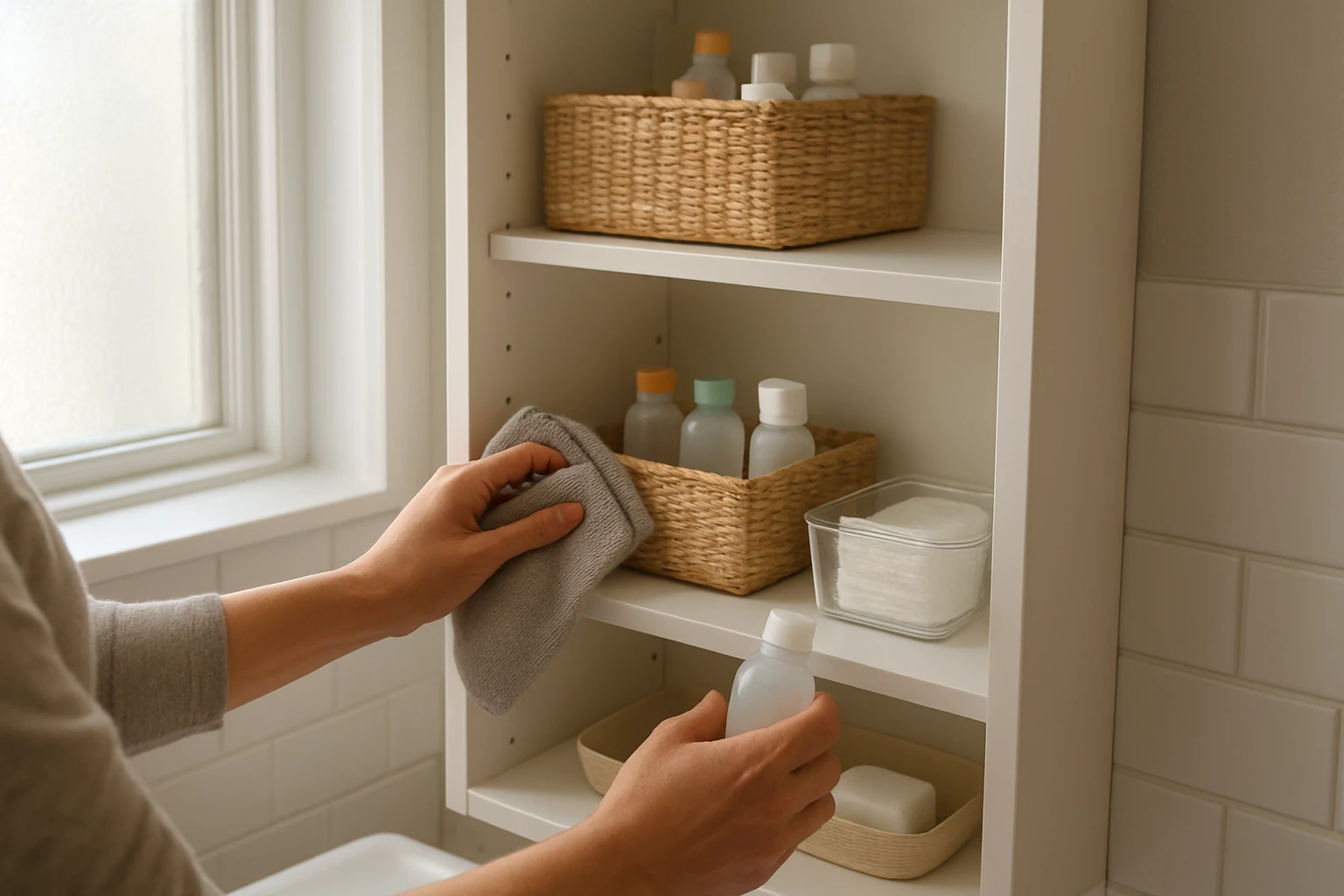
A simple routine looks like this: quick visual sweep, replace items on trays, wipe sticky spots, and move one expired or unused item to donation or trash. This habit keeps the system working without a full overhaul.
Weekly Routine Checklist:
- Visual sweep and re-shelving.
- Spot clean spills and check liners.
- Remove expired or unused items.
Common Mistakes and Quick Fixes
Many cabinets fail because containers are too tall, too deep, or too few. Overcrowding pushes items behind others and they get forgotten.
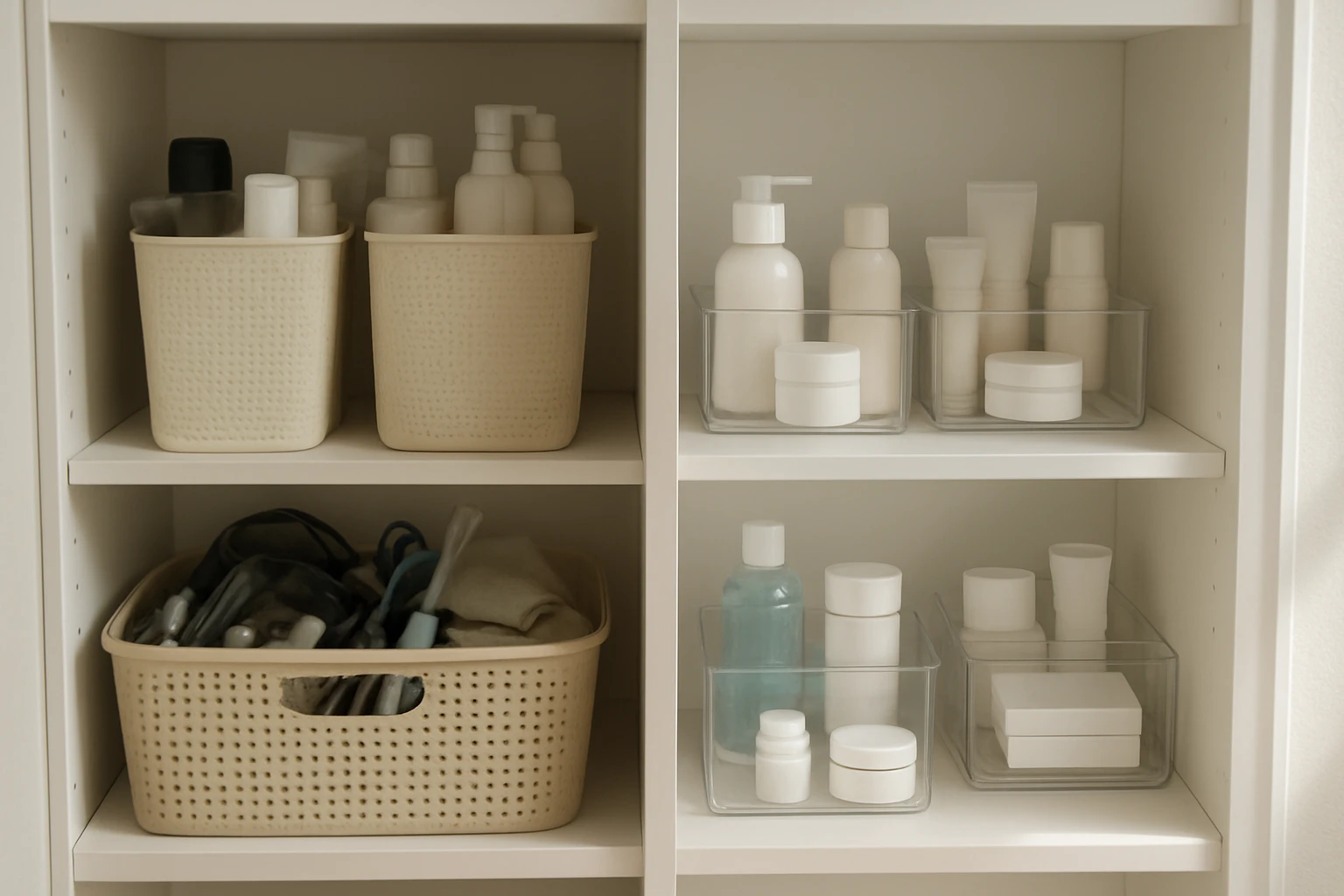
Quick fixes include emptying the cabinet and starting with zones, swapping opaque boxes for clear ones to improve visibility, and adding risers in deep cabinets. If a container hides items, swap it for a shallow tray.
Fast Fix Guide:
- Swap deep opaque bins for clear shallow bins.
- Use labels to help everyone return items correctly.
- Move rarely used items to another closet if space is limited.
Shopping Checklist and Budget
Buy only what fits your plan. Start with versatile pieces you can reuse, like clear bins and risers, and add specialty items as needed.
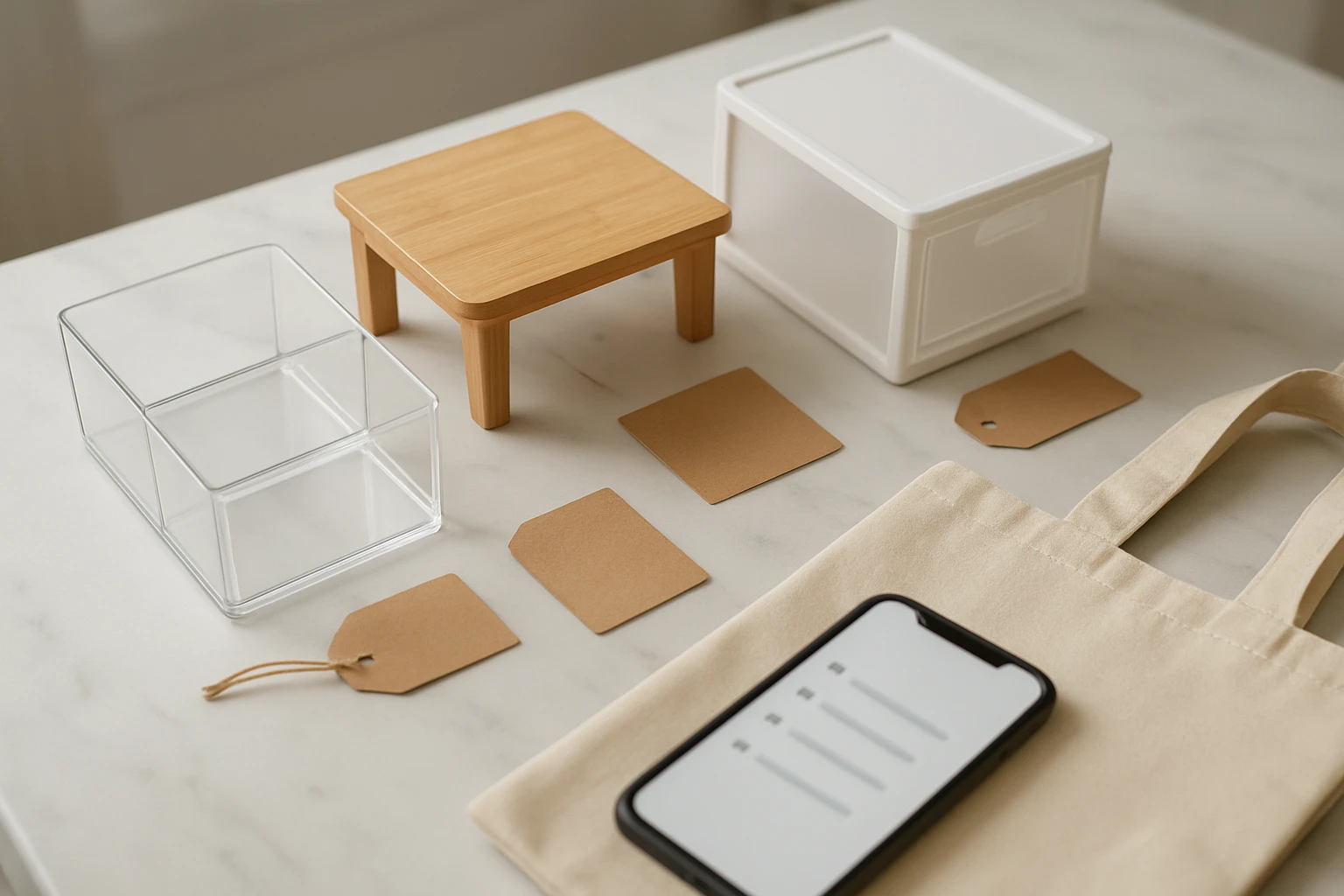
Suggested starter list:
- Two clear shallow bins for daily small items.
- One tall bin for sprays and cleaners.
- One open basket for towels.
- Small label maker or tags.
Budget Options:
- Under $30: Basic clear bins and labels.
- $30 to $75: Mix of acrylic trays and woven baskets.
- $75 and up: Custom inserts or modular systems for deep cabinets.
Quick Comparison Table: Common Organizer Types
| Organizer Type | Best For | Visibility | Cost Range |
|---|---|---|---|
| Clear acrylic bins | Small daily items | High | $8 to $25 |
| Woven baskets | Towels and bulk items | Low | $12 to $40 |
| Stackable drawer bins | Cosmetics and tools | Medium | $15 to $50 |
| Tiered risers | Small bottles, doubled height | Medium | $10 to $35 |
Choose the type that matches your items and budget, and remember that a small investment in quality often lasts longer and looks better.
Final Notes
Organizing a bathroom cabinet comes down to good planning and simple habits. From experience, the few minutes spent measuring and sorting at the start pay off many times over. Keep things visible, match containers to items, and set a short weekly routine so the system stays useful.
If you want ideas for protective floor pieces near the vanity, check the range of Bathroom Mats for non-slip choices that match modern bathrooms.
Frequently Asked Questions
How Often Should I Declutter a Bathroom Cabinet?
A quick weekly sweep of 10 to 20 minutes prevents most buildup, and a full declutter every three to six months is enough for most households.
What Are the Best Containers for Small Toiletries?
Shallow clear trays, divided drawer inserts, and small clear bins work best because they keep items visible and easy to pull out.
How Do I Store Medicines Safely in a Bathroom Cabinet?
Keep medicines in a labeled, shallow box away from direct heat and moisture, check dates regularly, and store them on a middle shelf out of reach of children.
Can I Use Any Shelf Liner in a Bathroom Cabinet?
Choose a washable, water-resistant liner that fits the shelf and has a slight grip to prevent items from sliding; avoid liners that trap moisture under them.
What Is the Quickest Way to Improve a Messy Cabinet?
Remove everything, make three piles keep/relocate/discard, wipe the space, and return only daily items to visible, labeled containers.