Cork floors stay best when you clear dry debris often, use a gentle pH-neutral cleaner, and keep water to a minimum. Sweep or vacuum daily, damp-mop once a week with a recommended cleaner, blot spills right away, and recoat the finish every few years to protect the surface.
Key Statistics:
- Typical lifespan for well-maintained cork flooring: 20 to 30 years.
- Recommended damp-mopping frequency: once per week in most rooms.
- Immediate spill response reduces permanent staining risk by an estimated 70% in domestic settings.
A simple routine keeps cork healthy and looking good. Below are tested methods, product tips, and step-by-step instructions for cleaning, removing stains, and caring for the finish without harming the material.
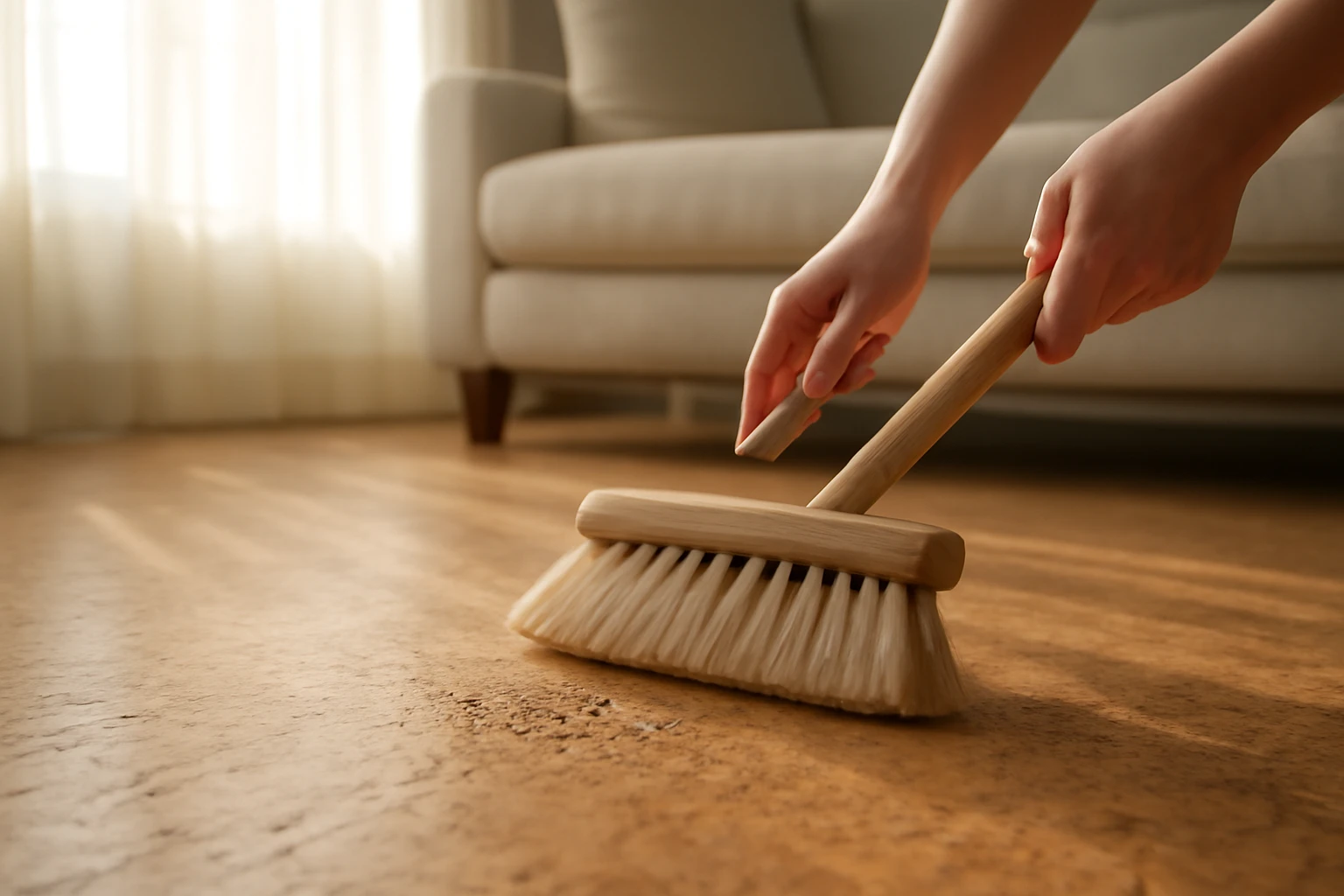
How Cork Flooring Works and Why It Needs Special Care
Cork comes from tree bark. It is spongy, slightly compressible, and full of tiny air cells. Those cells make cork quiet and comfortable to walk on. They also make it more sensitive to water, abrasive grit, and strong chemicals.
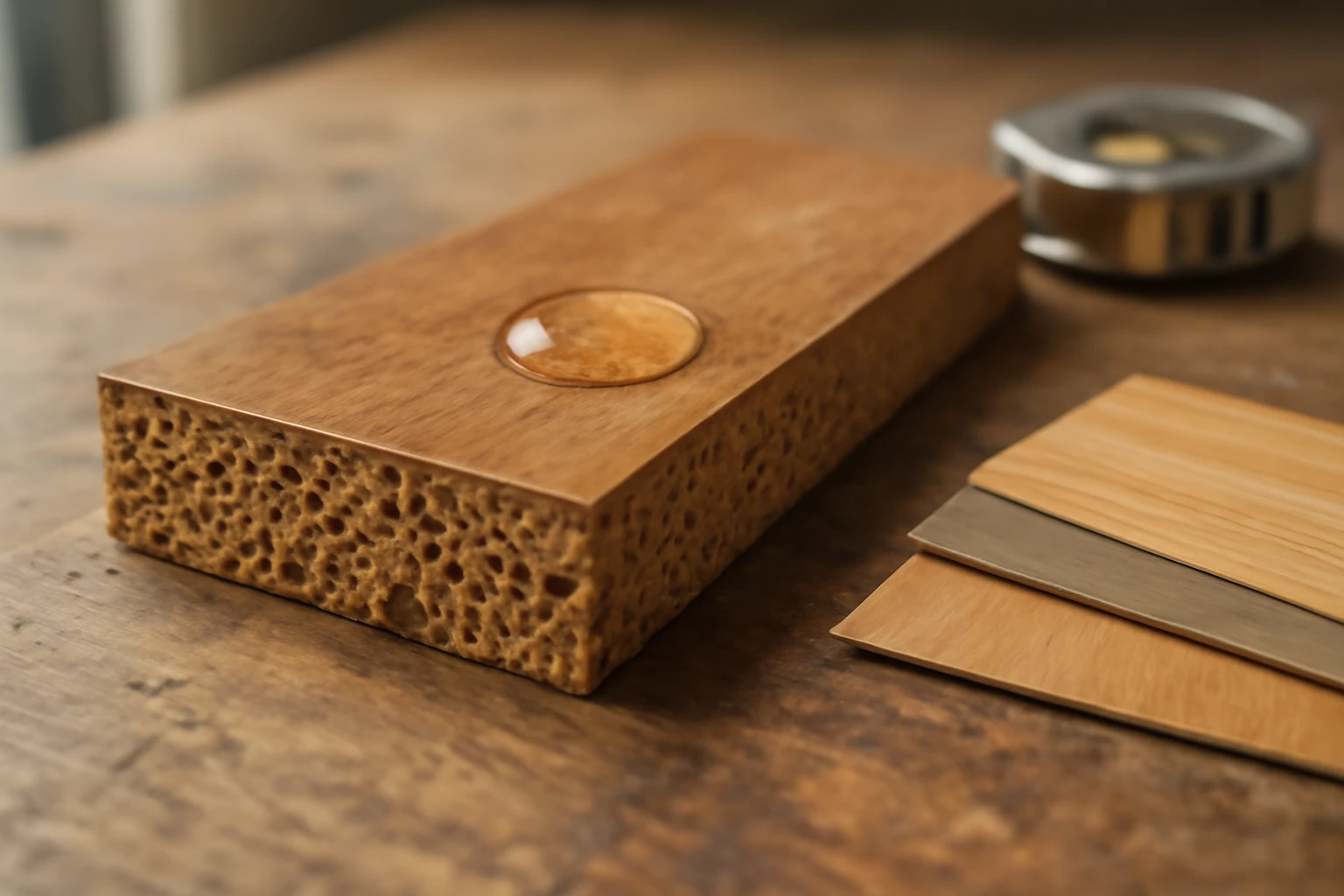
Why Sealant Matters
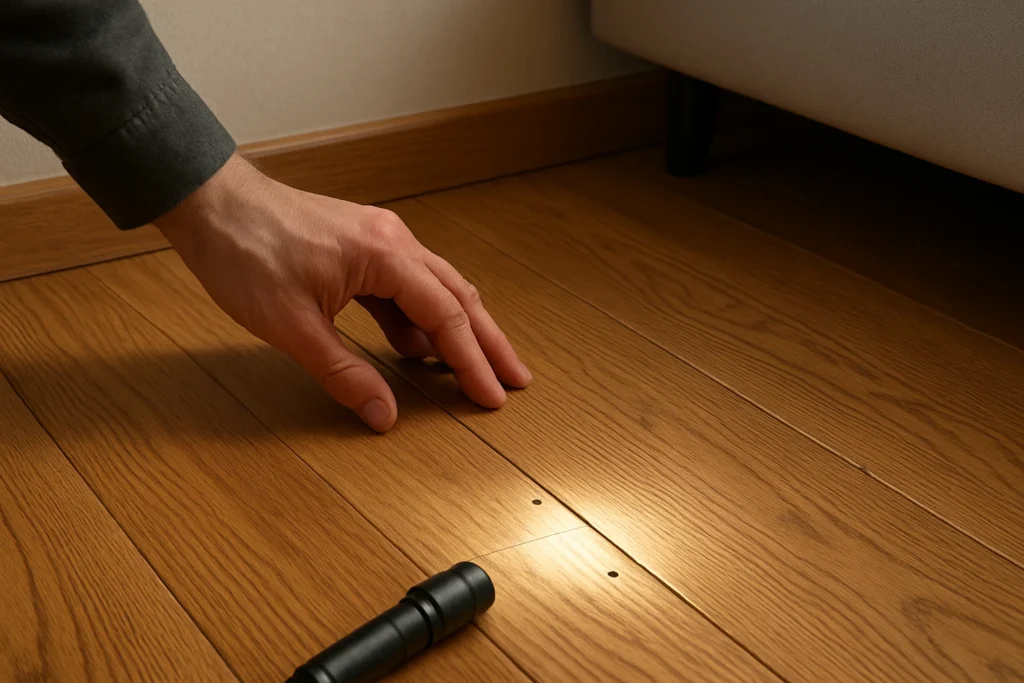
A factory or site-applied seal keeps liquid out of the cork cells. If the finish is missing or worn, water and spills can sink in and cause swelling or color change. Check the finish from time to time. Recoat when the floor loses shine or no longer resists water.
Daily and Weekly Cleaning Routine
Short, steady care stops grit and spills from doing long-term damage. A little daily attention and one controlled weekly clean will keep the finish intact and cut down on deep fixes later.
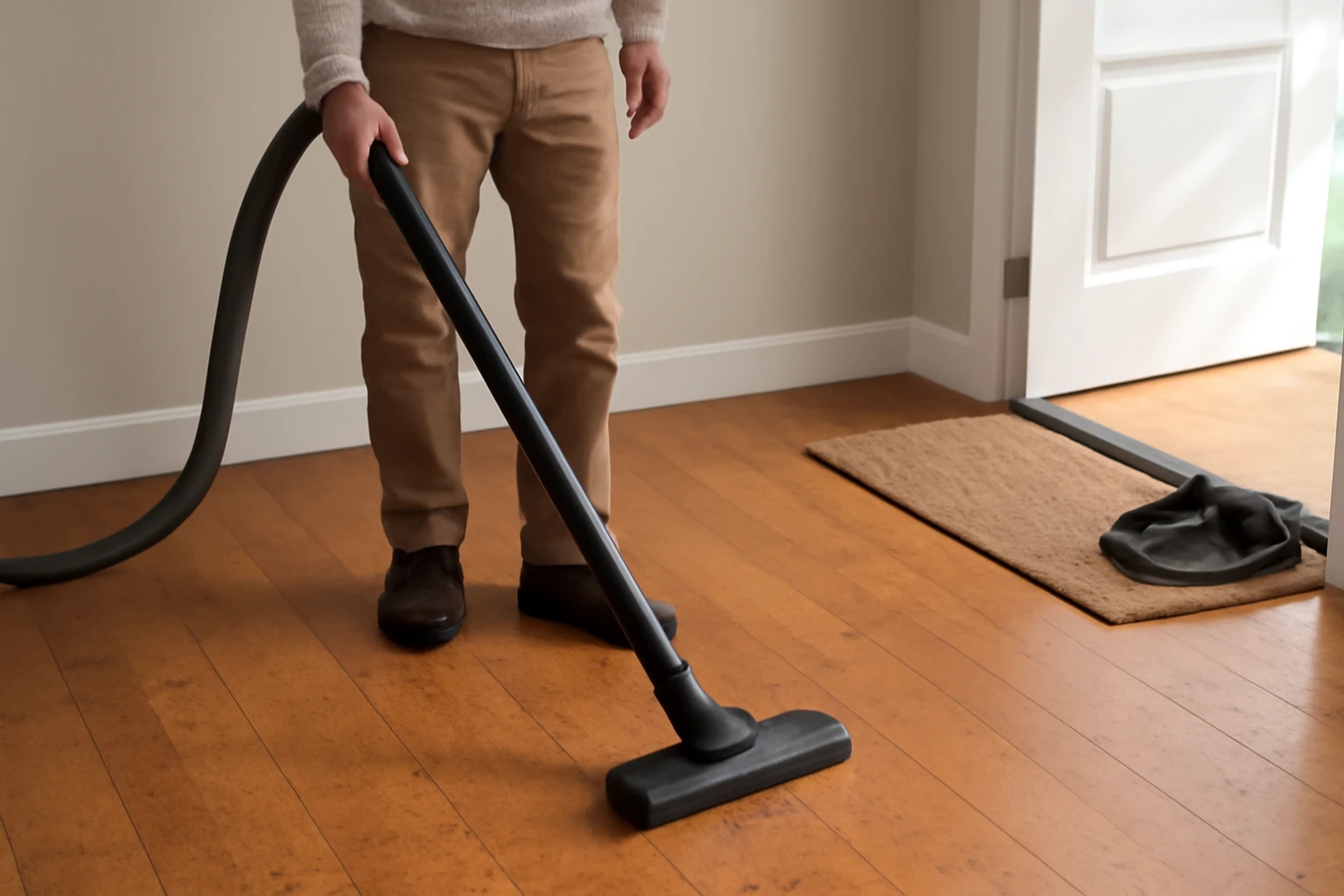
Daily Care
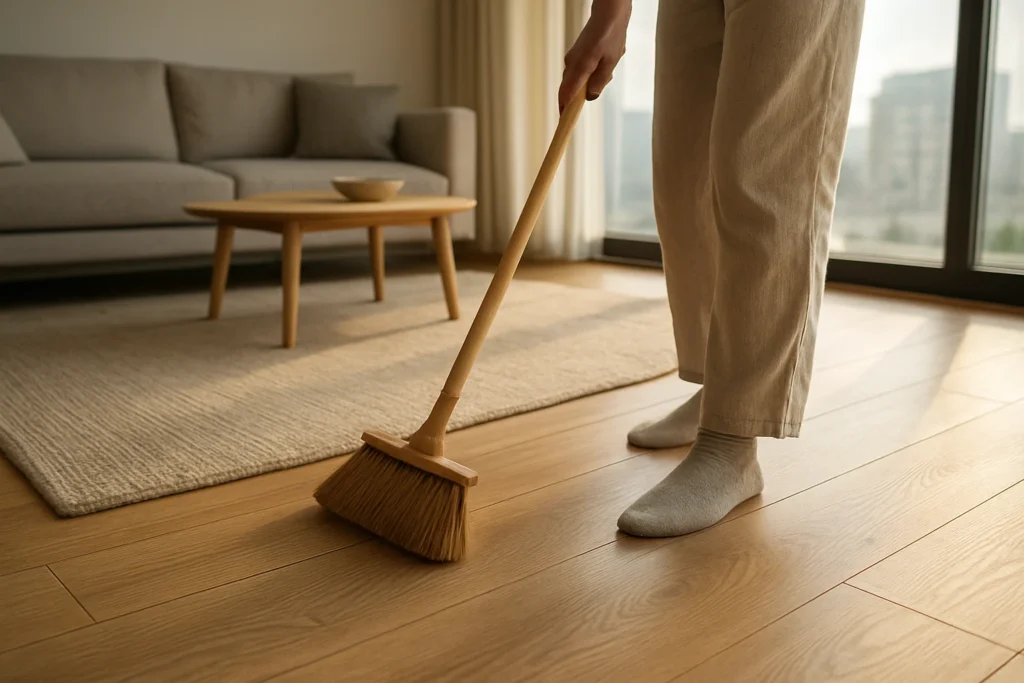
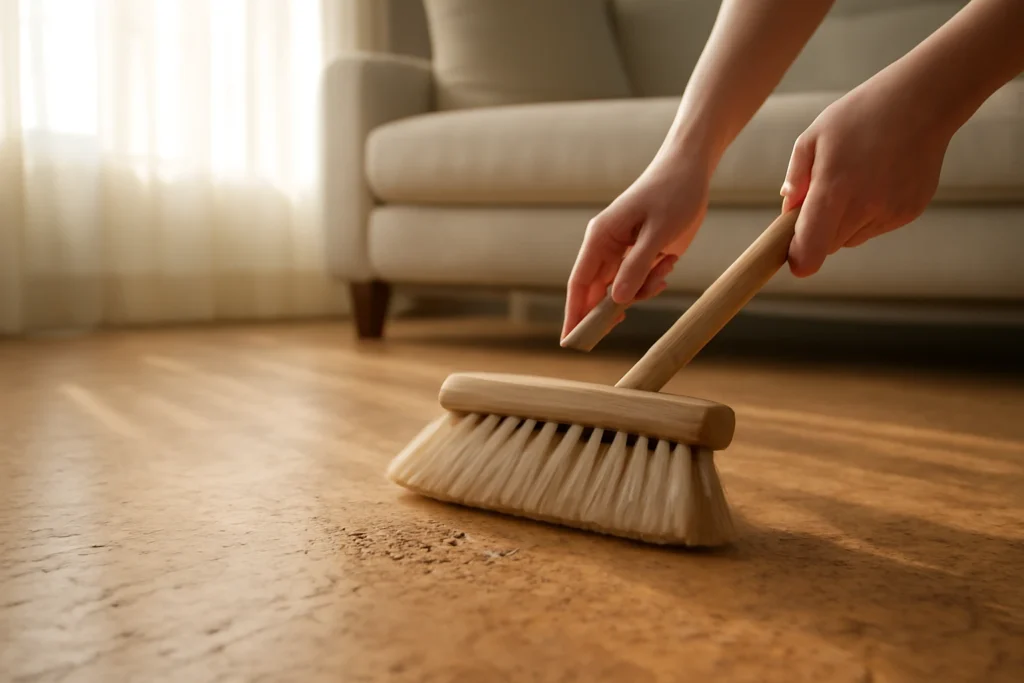
- Sweep or vacuum using a soft-brush attachment to remove grit.
- Put mats at entry points to trap sand and dust.
- Lift furniture pads and clean under items you move often.
Leaving abrasive particles on the floor causes tiny scratches that dull the finish. Remove grit before it can do harm.
Weekly Damp Mopping
Use a well-wrung mop and a pH-neutral cleaner made for cork or wood. Too much water is the main hazard. Follow these steps.
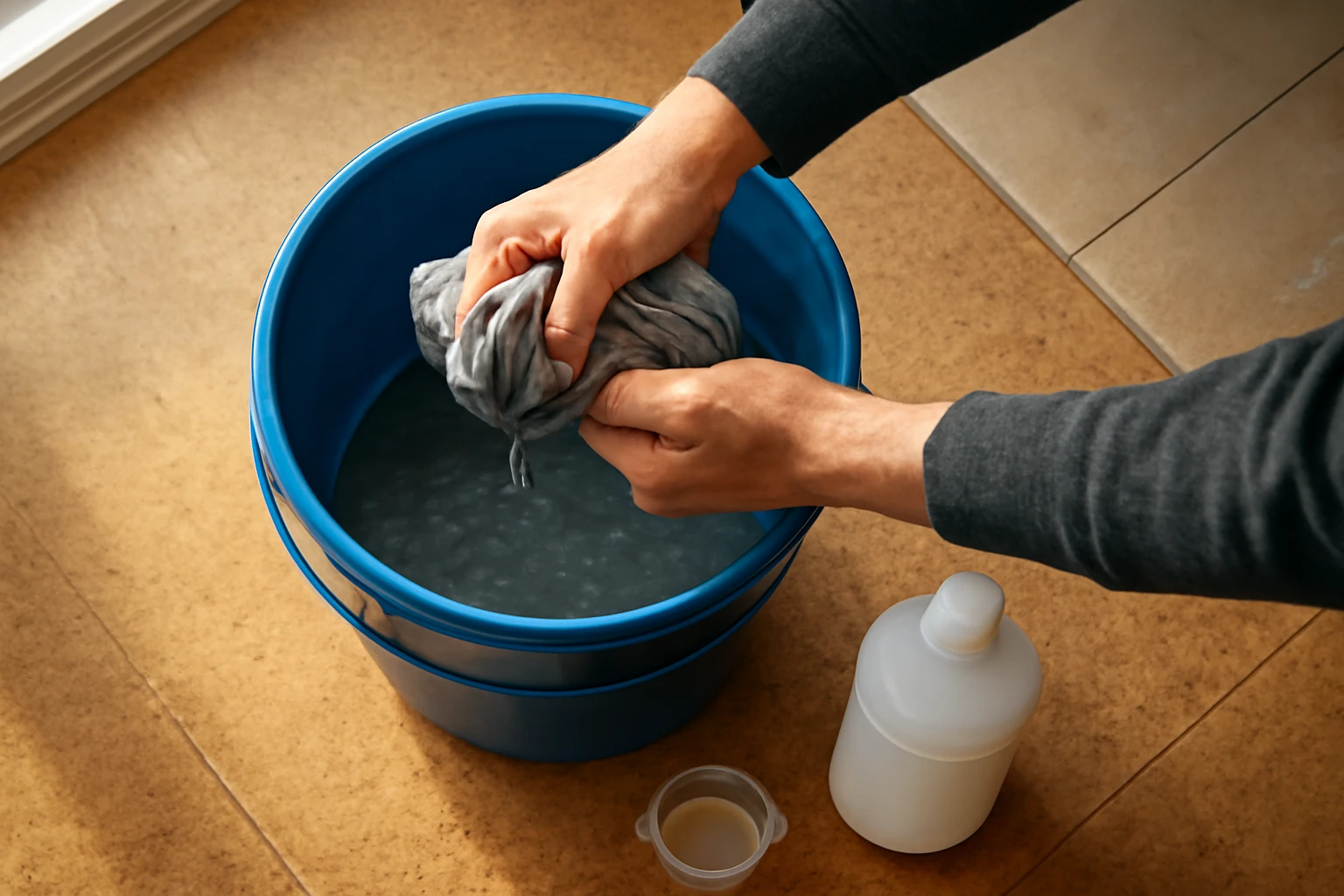
- Remove loose debris with a broom or vacuum.
- Mix the cleaner at the manufacturer’s recommended dilution in a bucket.
- Dip the mop and wring it until only a damp film remains.
- Mop following the grain or plank direction.
- Dry any wet patches with a clean microfiber cloth.
How to Remove Common Stains
Different stains call for different responses. Blotting right away is the most important step for most spills. Use as little liquid as possible and avoid scrubbing, which can wear the seal.
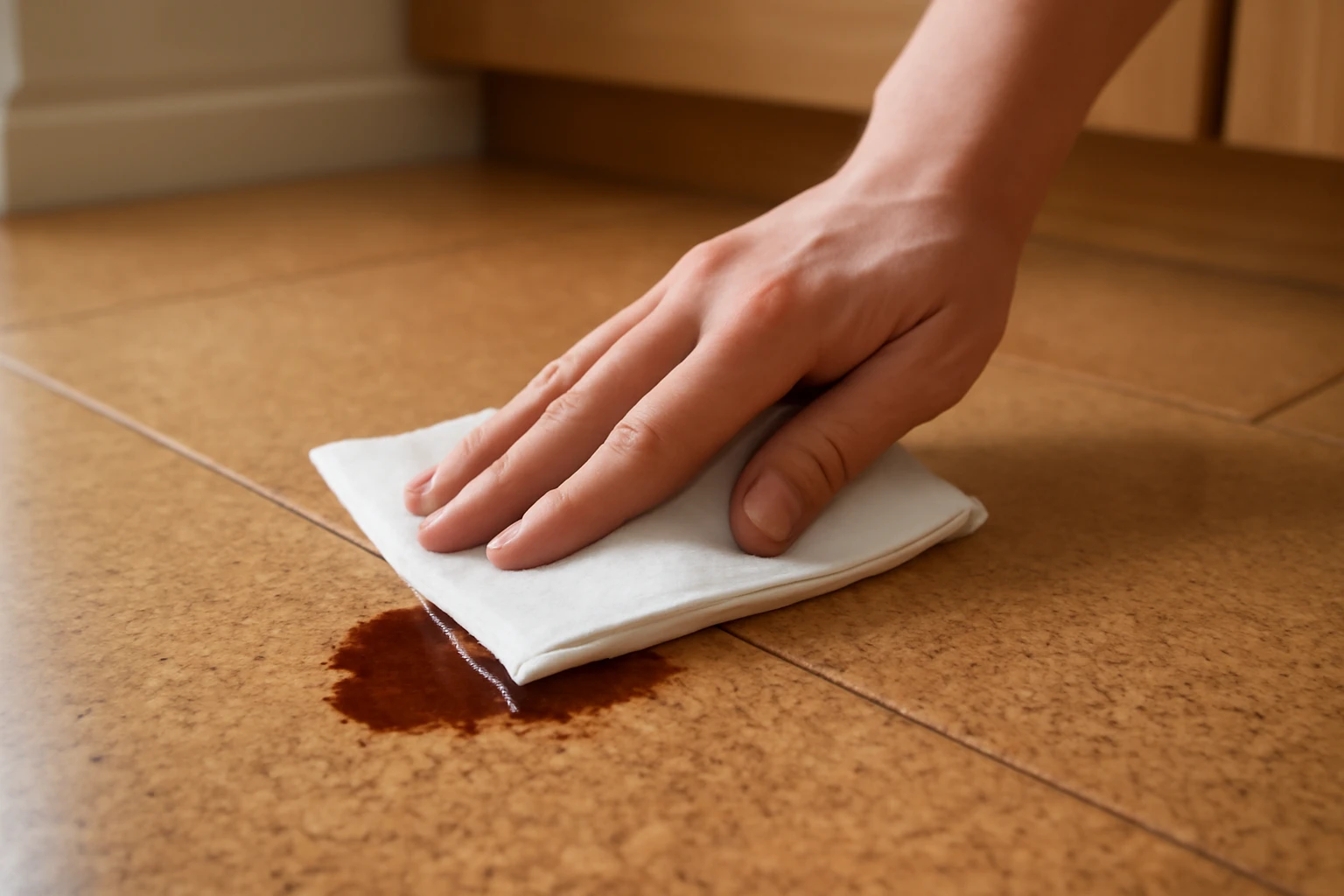
Red Wine and Berry Stains
A calm, gentle approach works best. Blot quickly, then follow these steps.
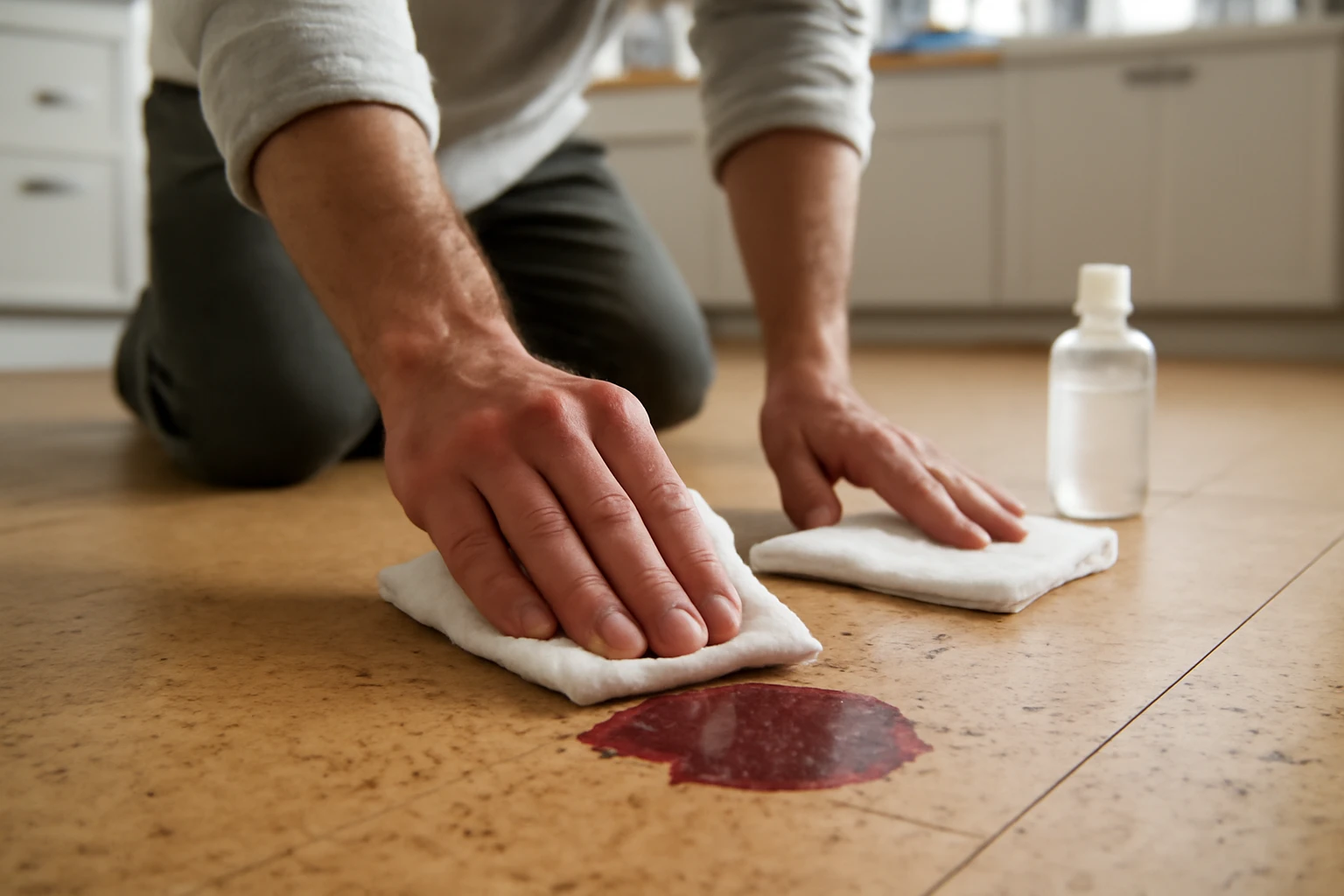
- Blot excess liquid with a white cloth. Do not rub.
- Mix a small amount of pH-neutral cleaner with water.
- Lightly dampen a cloth and work from the outside toward the center.
- Rinse the cloth and repeat until the stain lifts.
- Dry immediately and judge whether a professional treatment is needed.
Oil and Grease Stains
Act quickly to avoid long-term darkening.
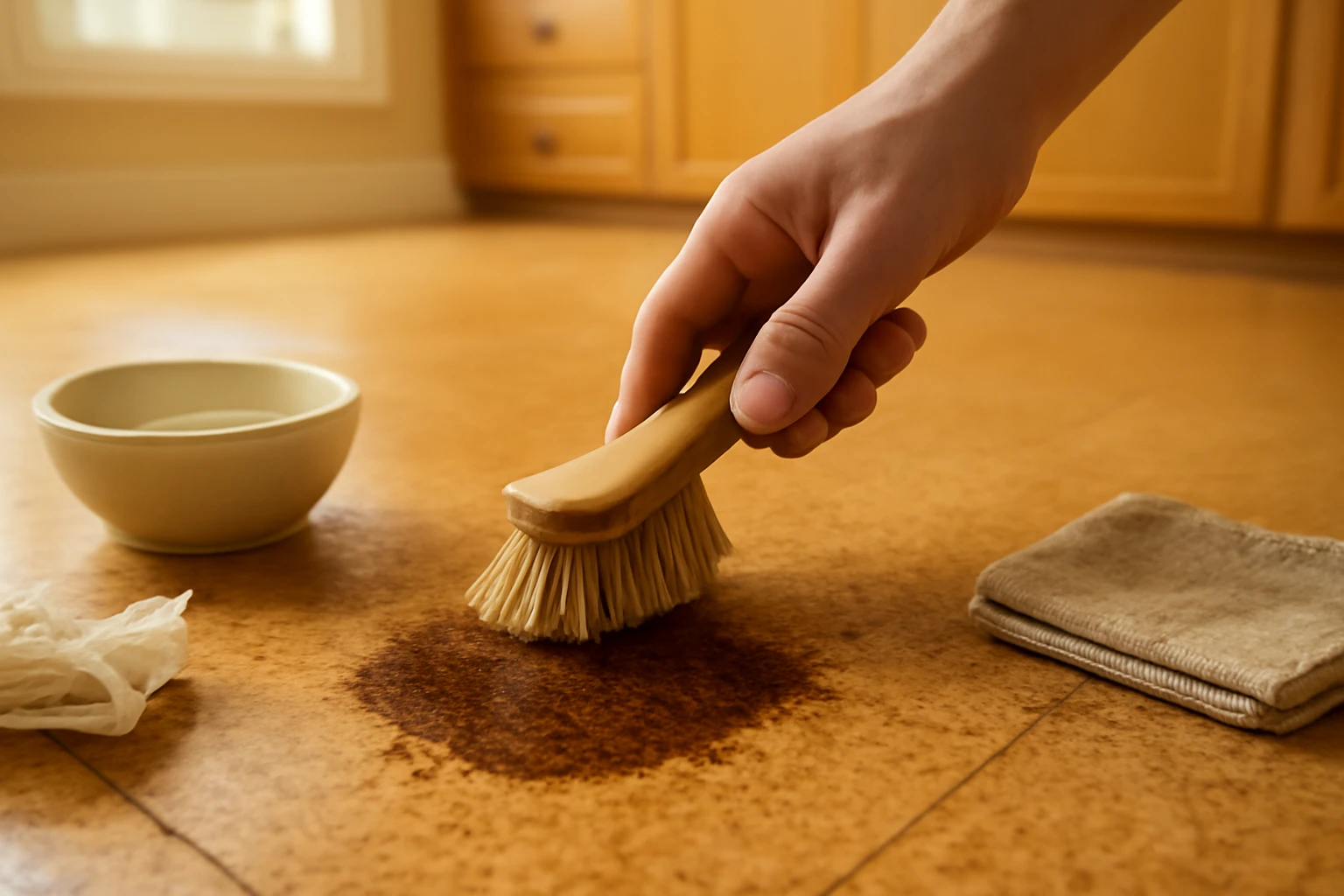
- Blot excess oil with paper towels.
- Use a small amount of dish soap diluted in water on a cloth and dab the spot.
- Rinse and dry. Repeat if needed. If the stain stays, call a flooring professional.
Ink, Marker, and Dye
Try any solvent in a hidden spot first. Isopropyl alcohol on a cotton swab can lift pigment, but it may dull some finishes. Use it sparingly and rinse the area well afterward.
Deep Cleaning and Recoating Cork Floors
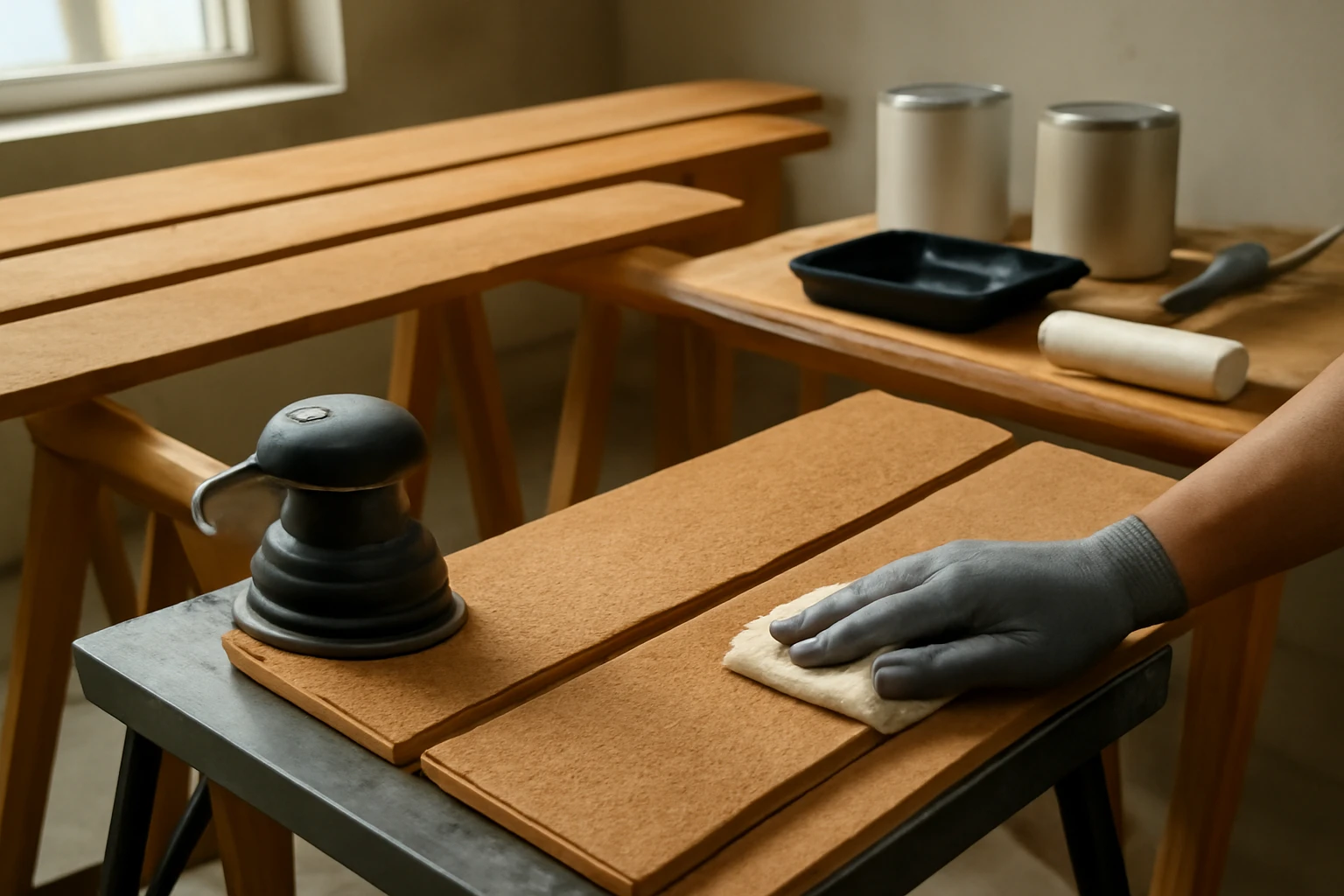
Deep cleaning should be rare and gentle. Recoating restores resistance to moisture and wear. Always do a light, thorough clean before recoating.
When to Recoat
Look for these signs:
- Water no longer beads on the surface.
- The finish looks scuffed or dull in high-traffic paths.
- The surface feels rough to the touch.
A typical residential schedule is to recoat every 3 to 7 years, depending on traffic and wear.
Refinishing Steps
For heavy wear you may need partial sanding and a new finish. These are the basic stages professionals use.
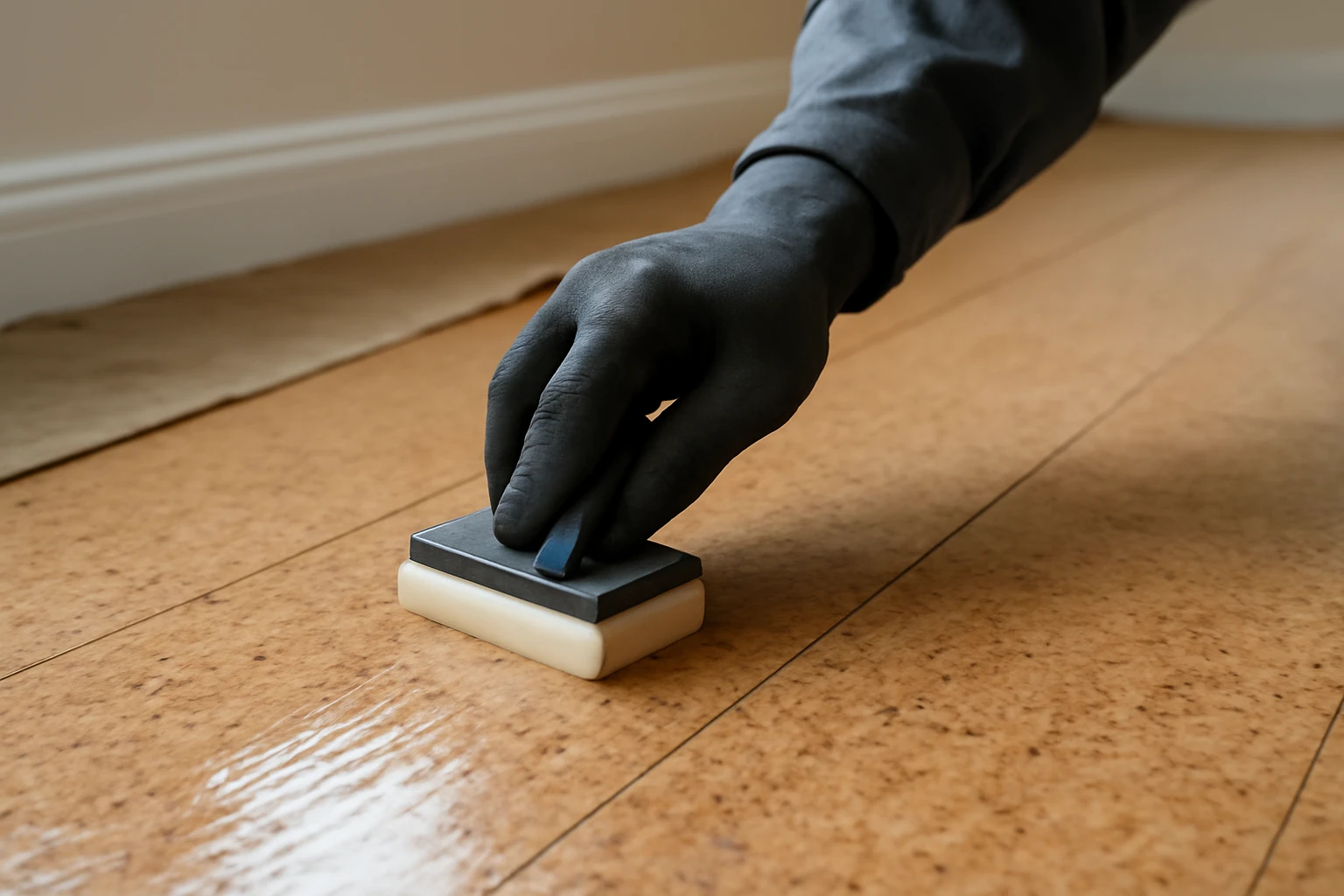
- Clean the floor and let it dry completely.
- Lightly abrade the finish with a nonaggressive sanding pad.
- Remove dust with a tack cloth and vacuum.
- Apply a compatible water-based polyurethane or manufacturer-approved sealer in thin coats.
- Allow proper cure time between coats and before heavy use.
Products to Avoid and Why
Not all household cleaners are safe for cork. Stay away from products that strip finishes or leave a film that attracts dirt.
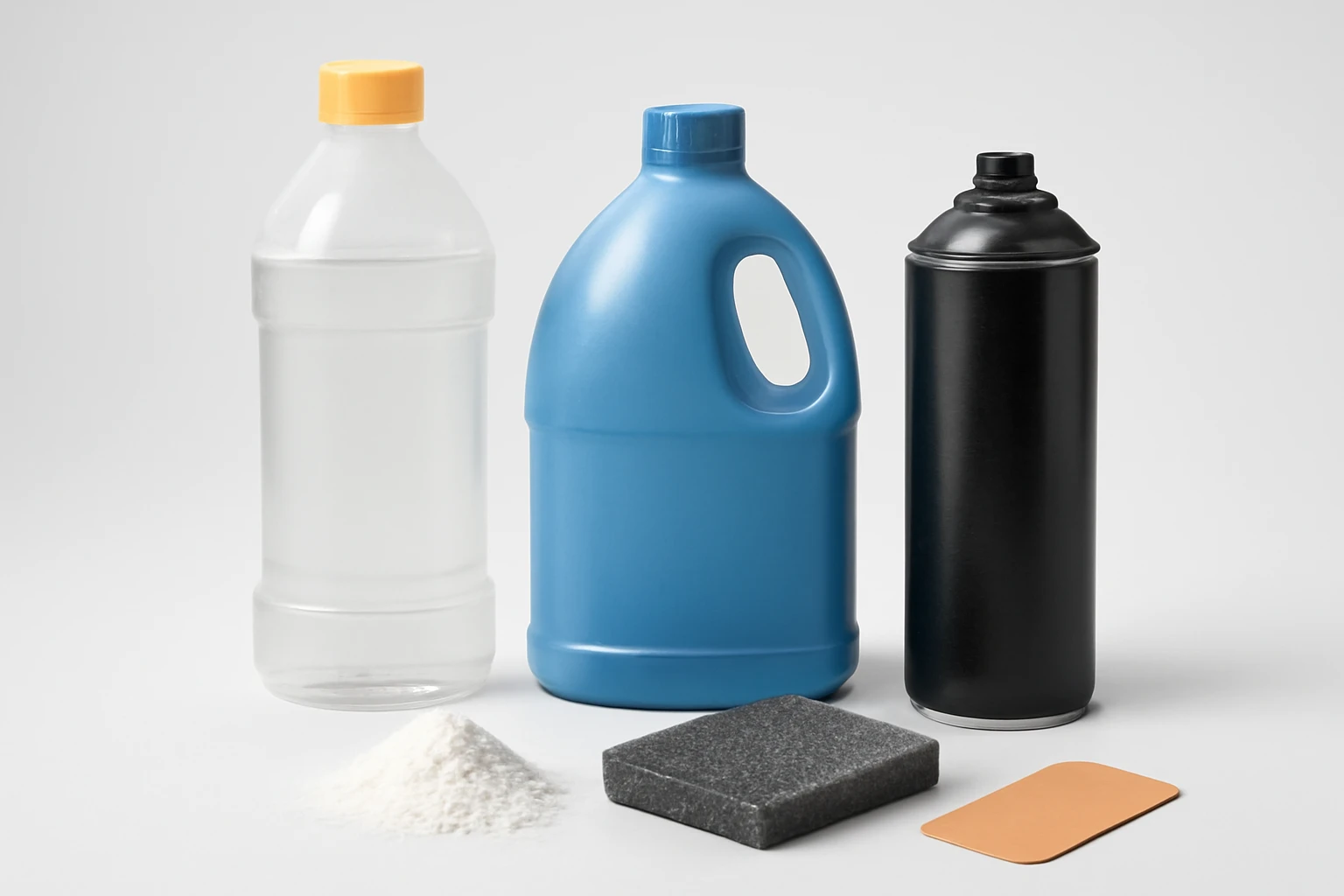
Table: Common Cleaners and Cork Safety
| Cleaner | Typical pH | Safe for Cork? | Notes |
|---|---|---|---|
| pH-neutral wood/cork cleaner | 7 | Yes | Use diluted per instructions |
| White vinegar solution | 2.5 to 3 | Use with caution | Can dull finish if used often; test first |
| Dish soap diluted | 7 to 8 | Cautious use | Mild but rinse well to avoid film |
| Bleach or ammonia | >11 | No | Strips finish and can discolor cork |
| Oil-based polishes | N/A | No | Leaves residue and attracts dirt |
Maintenance and Protection Tips for Longevity
Prevention matters more than aggressive cleaning. Small steps reduce repairs and lengthen the floor’s life.
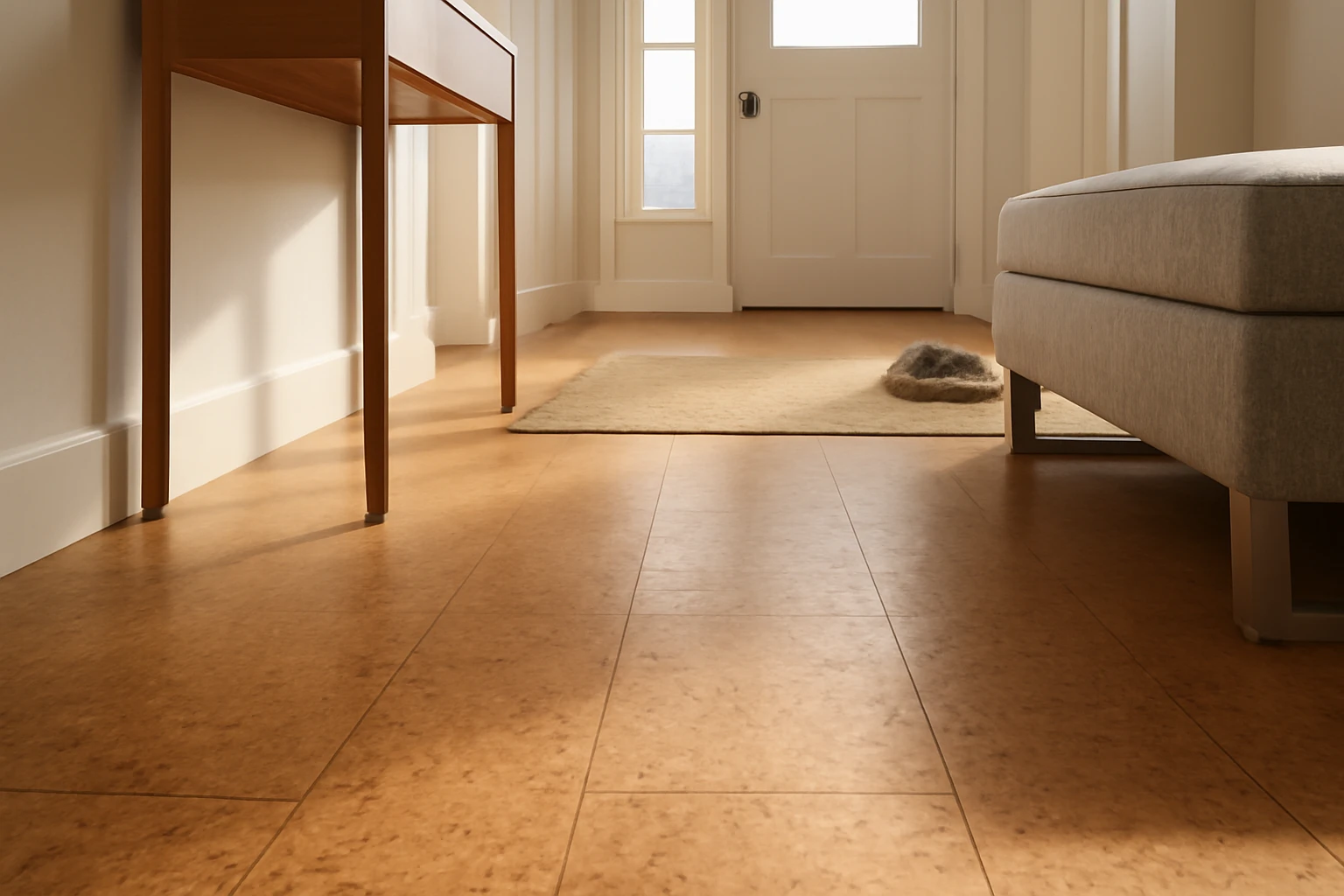
- Use felt pads under furniture legs and wide glides for heavy pieces.
- Place rugs in entryways and under dining tables to catch grit.
- Avoid high-heeled shoes that concentrate force on a small point.
- Keep indoor humidity between 40 and 60 percent to limit expansion and contraction.
- Clean sand and dust often to prevent abrasive wear.
Table: Quick Maintenance Checklist
| Task | Frequency | Why It Helps |
|---|---|---|
| Sweep or vacuum | 2–3 times per week | Removes grit that scratches finish |
| Damp mop | Weekly | Removes soils without soaking cork |
| Inspect finish | Annually | Early detection of wear for recoating |
| Recoat finish | Every 3–7 years | Restores moisture resistance |
Comparing Cork to Other Flooring Types
Cork has specific strengths, but it is not the right choice for every room. The table below helps compare options.
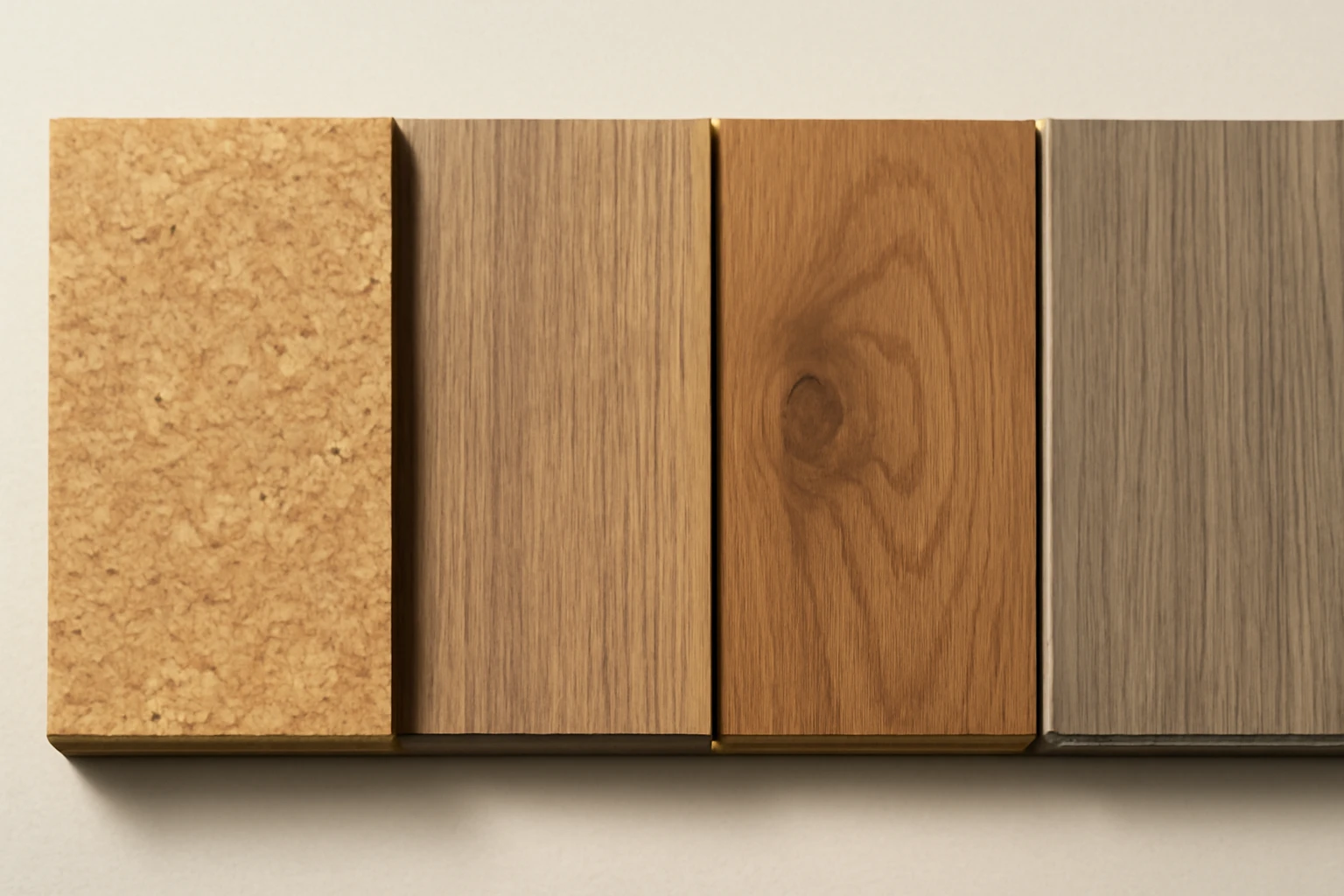
Table: Cork Versus Common Alternatives
| Feature | Cork | Vinyl | Solid Wood | SPC |
|---|---|---|---|---|
| Typical Life Expectancy | 20–30 years | 10–20 years | 30+ years | 20–30 years |
| Water Resistance | Moderate when sealed | High | Low unless treated | High |
| Comfort and Noise | Excellent | Good | Moderate | Moderate |
| Scratch Resistance | Moderate | High | Varies by species | High |
| Typical Cost Per Sq m (Approx.) | Mid-range | Low to mid | High | Mid-range |
For kitchen use, cork can be a comfortable choice if it is well sealed and regularly maintained. See guidance specific to kitchen conditions on the Kitchen Flooring page.
If you are comparing similar natural looks, review samples and care needs on the Wooden Flooring and Vinyl Flooring pages. For ultra-stable waterproof boards, compare with SPC Flooring. For more flooring maintanance guide keep visiting Floor Lands.
Final Checklist Before You Start Cleaning
- Verify the finish type and any manufacturer recommendations.
- Test any cleaner in an inconspicuous spot for color change or dulling.
- Use only soft tools: microfiber mops, soft brushes, and vacuum soft-brush heads.
- Keep water use minimal and dry any damp areas right away.
Follow this routine and recoat when needed, and cork will remain a comfortable, attractive floor for many years.
Frequently Asked Questions
How Often Should I Mop Cork Flooring?
Damp-mop once a week in most rooms. High-traffic areas may need a second short session. Always use a well-wrung mop and a pH-neutral cleaner. Avoid soaking the floor.
Can I Use Vinegar to Clean Cork Floors?
Vinegar is acidic and can dull or damage the finish if used often. It may be okay for an occasional spot test, but a manufacturer-approved pH-neutral cleaner is safer for regular use.
What Should I Do If the Cork Gets Water Damaged?
Blot standing water immediately and dry with fans. For minor swelling, allow the area to dry and assess the finish. Significant warping or dark staining usually requires professional repair or plank replacement.
How Do I Know When to Recoat My Cork Floor?
Look for reduced water beading, visible scuffing, and loss of sheen in high-traffic paths. In typical homes, recoating every three to seven years keeps the surface protected.
Are Any Commercial Cleaners Safe for Cork?
Yes. Choose cleaners labeled safe for cork or wood and with a neutral pH. Follow dilution instructions and test in a hidden area before full use.
Is Cork a Good Choice for Kitchens and Bathrooms?
Cork can work in kitchens if sealed and maintained, and with rugs at entry points. For bathrooms or areas with frequent standing water, consider more water-resistant options or ensure an excellent seal and fast spill response.