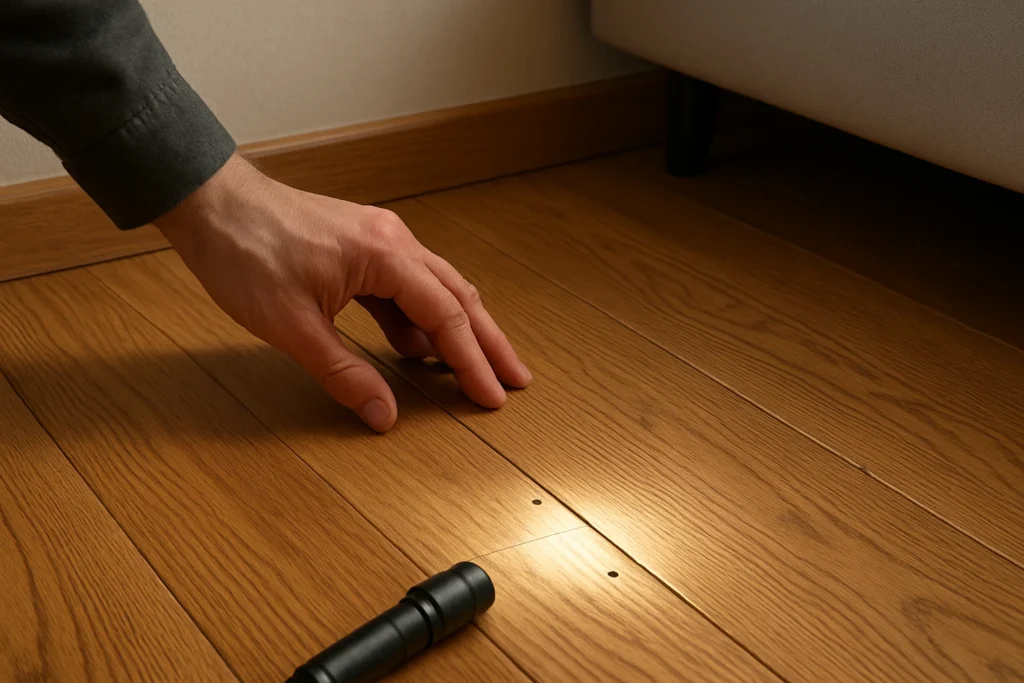
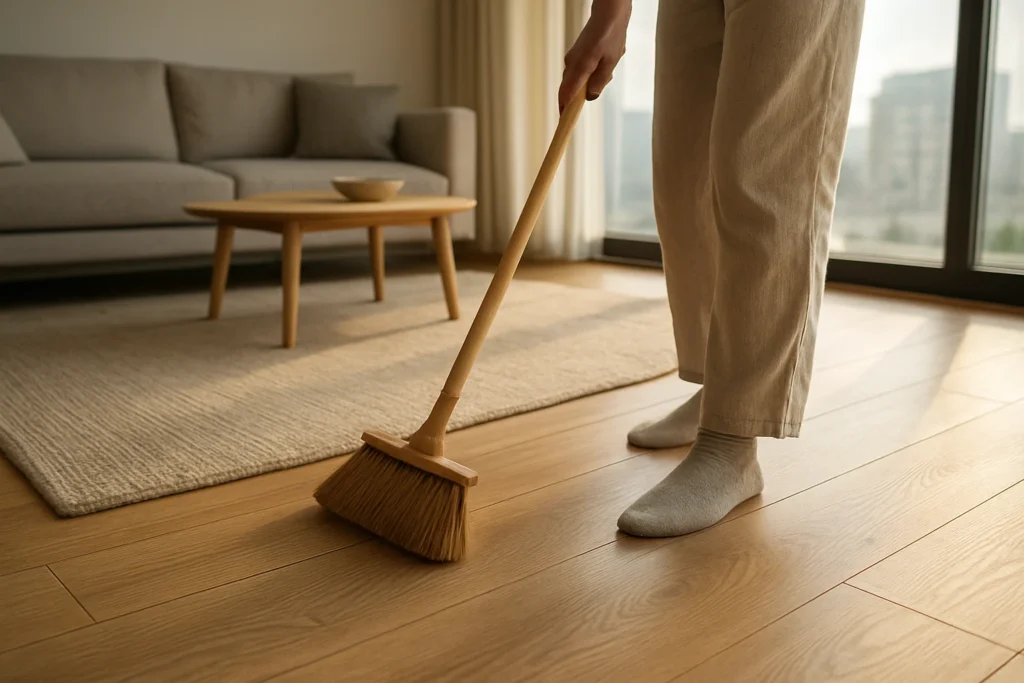
Vinyl plank flooring is easy to care for if you keep a few simple habits and use the right tools. Sweep or vacuum often, mop with a mild cleaner, blot spills quickly, and protect high-traffic spots with rugs. For stubborn stains, follow the steps below and avoid harsh chemicals so the wear layer and core stay intact.
Key Statistics
- Average vinyl plank lifespan with regular care: 10 to 20 years.
- Typical household dirt removal frequency recommended: daily sweeping, weekly damp mopping.
- Common stain removal success rate when treated within 24 hours: over 85 percent in tests with mild cleaners.
This guide from Floorlands.ae explains practical care steps, cleaning methods, repair tips, and product choices so your vinyl plank floors stay attractive and last longer.
Why Vinyl Plank Flooring Is a Smart Choice
Vinyl plank pairs a tough wear layer with a realistic wood look and simple upkeep, which is why many homeowners pick it. It resists scratches, handles light moisture, and comes in many colors and profiles that mimic real wood.
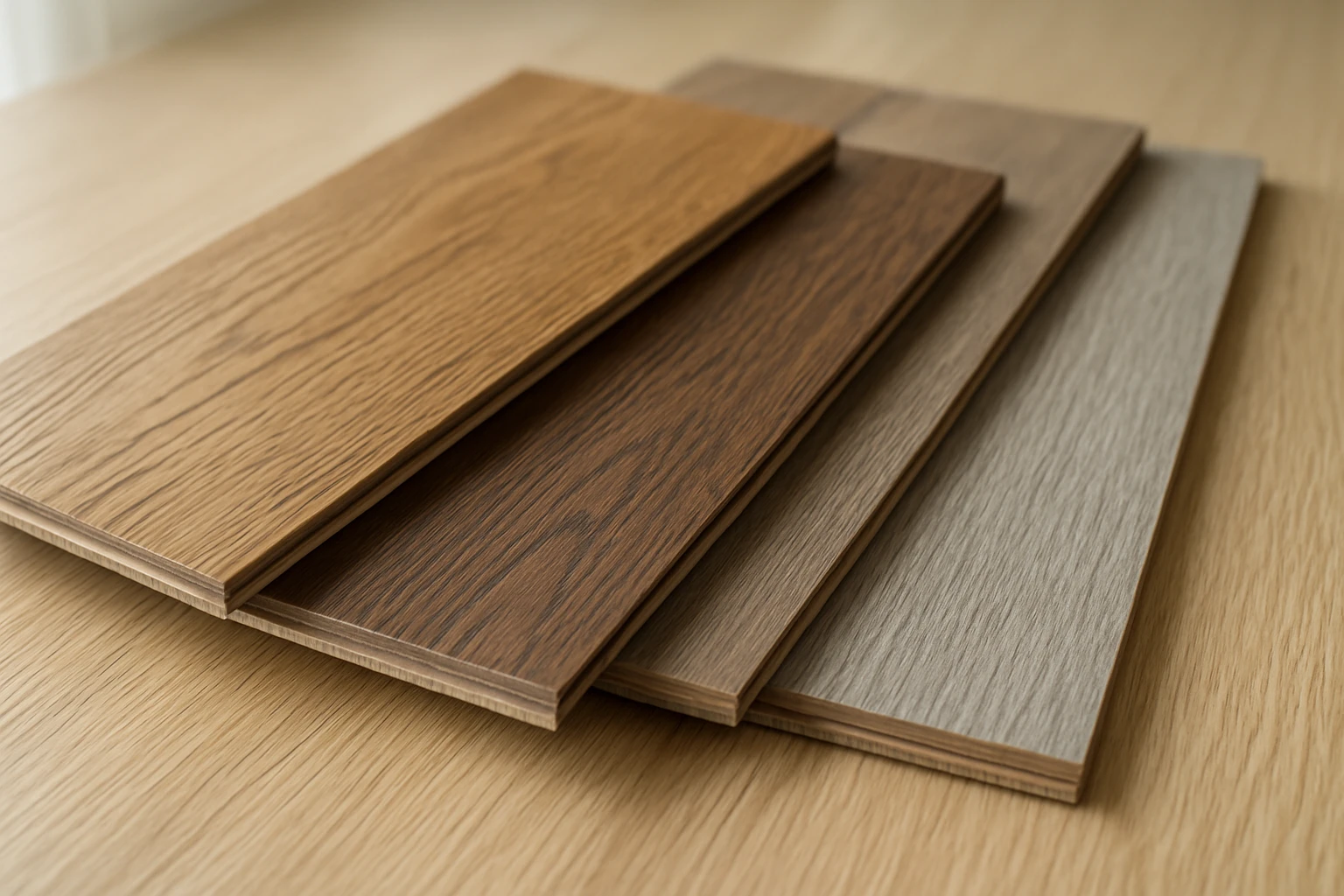
Types of Vinyl Plank Flooring
Vinyl plank is made in a few constructions. Know which type you have because care steps can vary a little.
Luxury Vinyl Plank (LVP):
LVP has a printed image layer with a wear layer on top. It looks like wood and feels softer underfoot.
Stone Plastic Composite and Rigid Core (SPC):
SPC has a dense rigid core and strong dimensional stability. It stands up to heavy furniture and warm rooms.
PVC Vinyl:
Some vinyl planks are mostly PVC. These focus on flexibility and lower cost.
Table 1. Typical Characteristics by Construction
| Construction | Stability | Common Uses | Average Lifespan |
|---|---|---|---|
| LVP | Good | Residential living rooms, bedrooms | 10 to 20 years |
| SPC | Very Good | Kitchens, high-traffic areas, commercial-lite | 15 to 25 years |
| PVC-based sheet or plank | Fair to Good | Budget installations, utility areas | 8 to 15 years |
Often a rigid core product like SPC is the better fit for kitchens and other heavy-use areas. You can read more about SPC at What Is SPC Flooring and How It Works.
Daily Care and Preventive Habits
Daily care takes little time and prevents most problems. Simple habits save time and protect the finish.
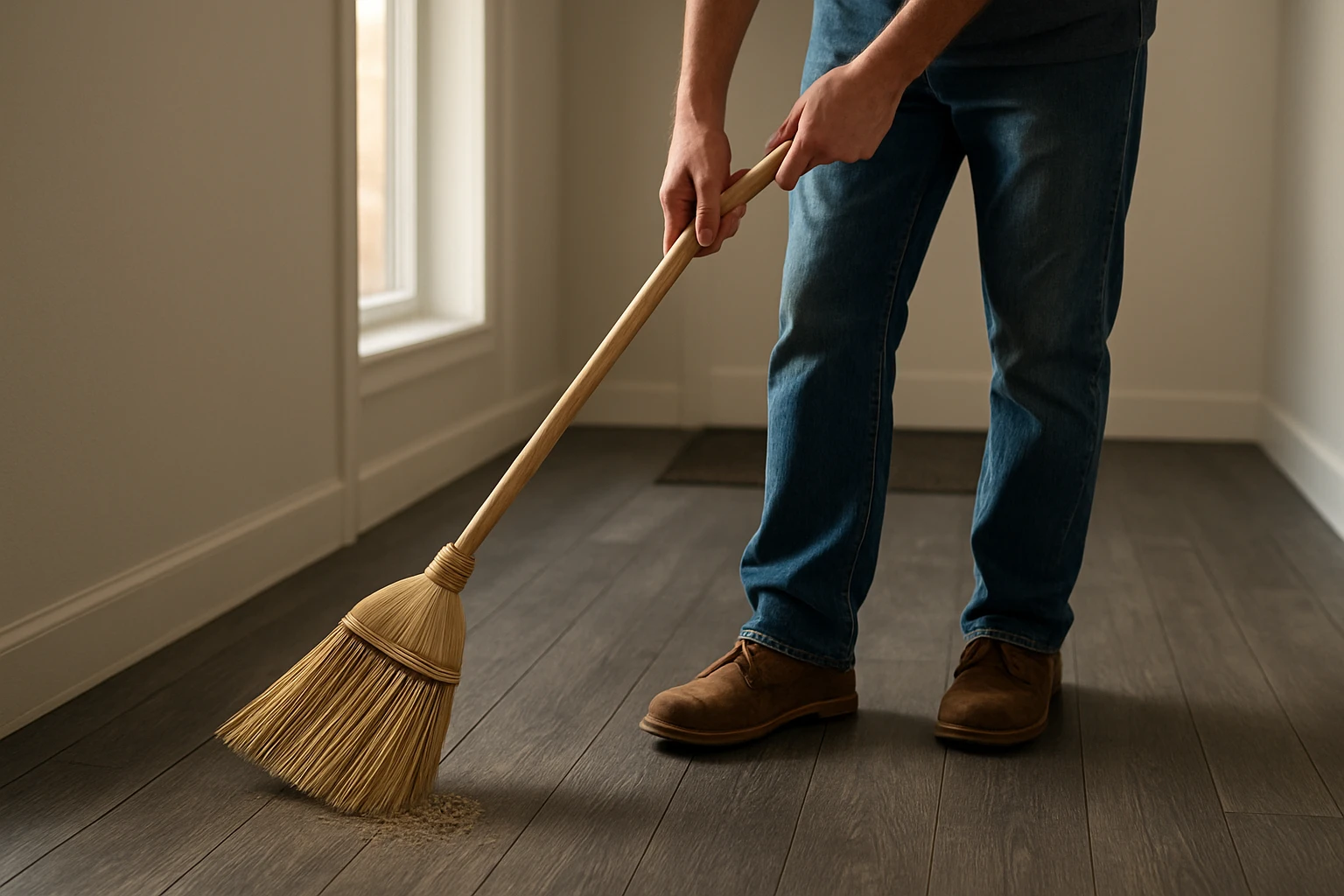
- Sweep or vacuum daily in busy areas to remove grit that can scratch the wear layer.
- Use felt pads under chair and table legs so moving furniture does not mark planks.
- Put doormats at entries to catch sand and dirt, and shake them out often.
- Keep pet nails trimmed to reduce surface scratches.
Daily Care Steps
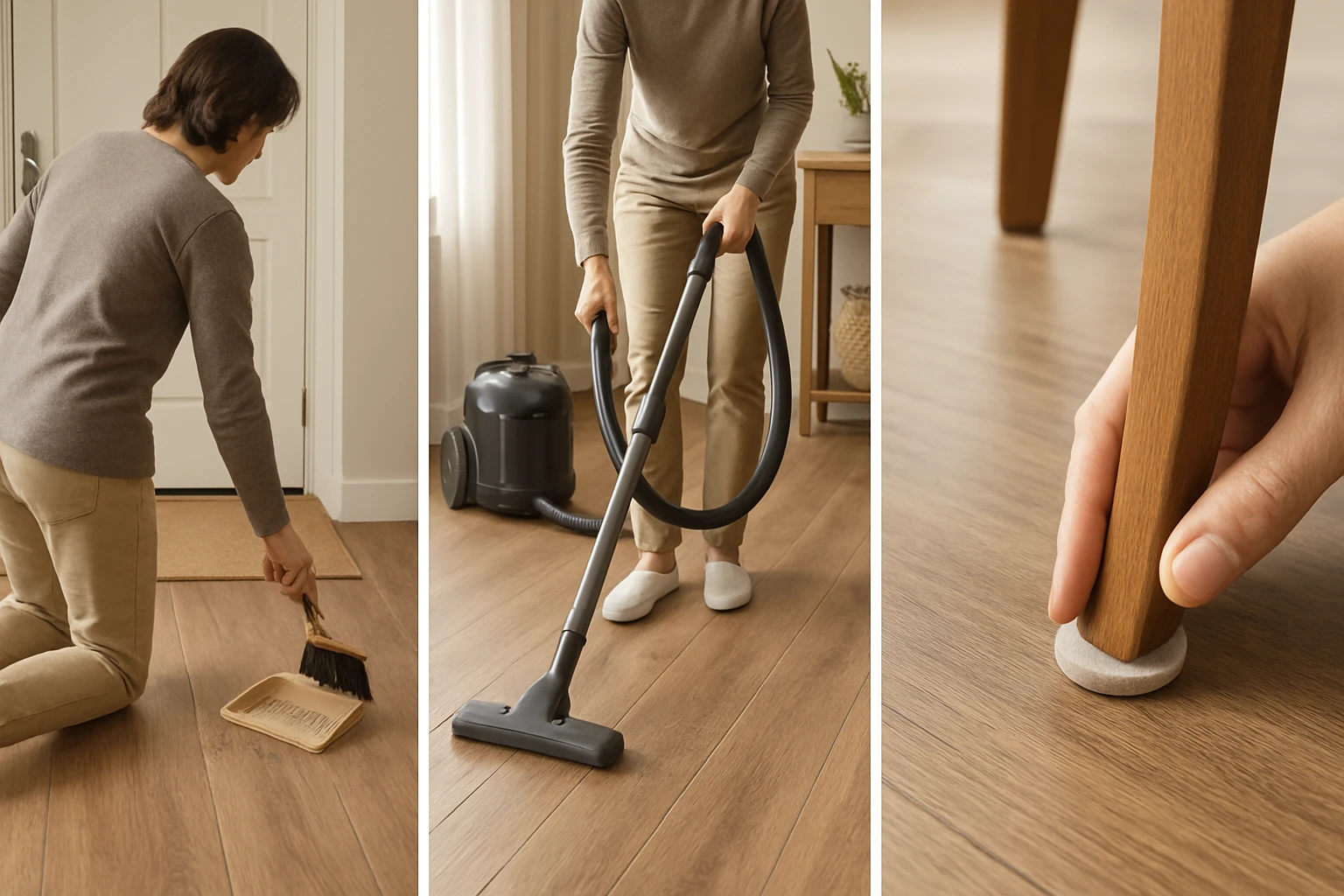
What to Do First:
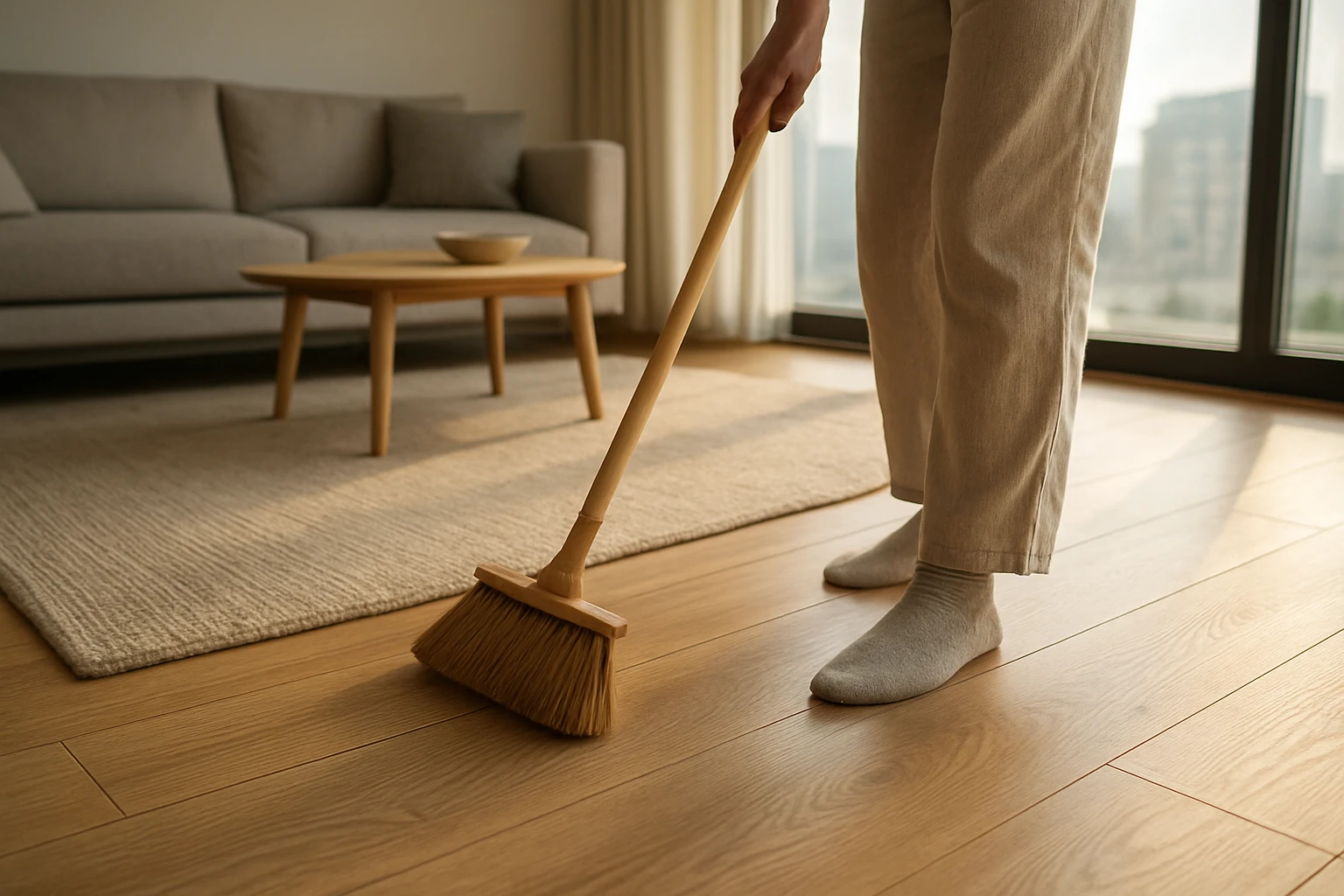
Remove loose debris with a broom or a vacuum set for hard floors.
Tool Checklist:
Have these on hand: a soft broom, a vacuum with a hard-floor setting, a microfiber mop, a spray bottle with mild cleaner, and felt pads for furniture.
Quick Daily Habit:
Wipe visible spills right away with a soft cloth so they do not get into plank seams or attract dirt.
Weekly and Monthly Cleaning Routines
A short weekly routine plus a deeper monthly clean keeps the floor looking new without harming the top layer.
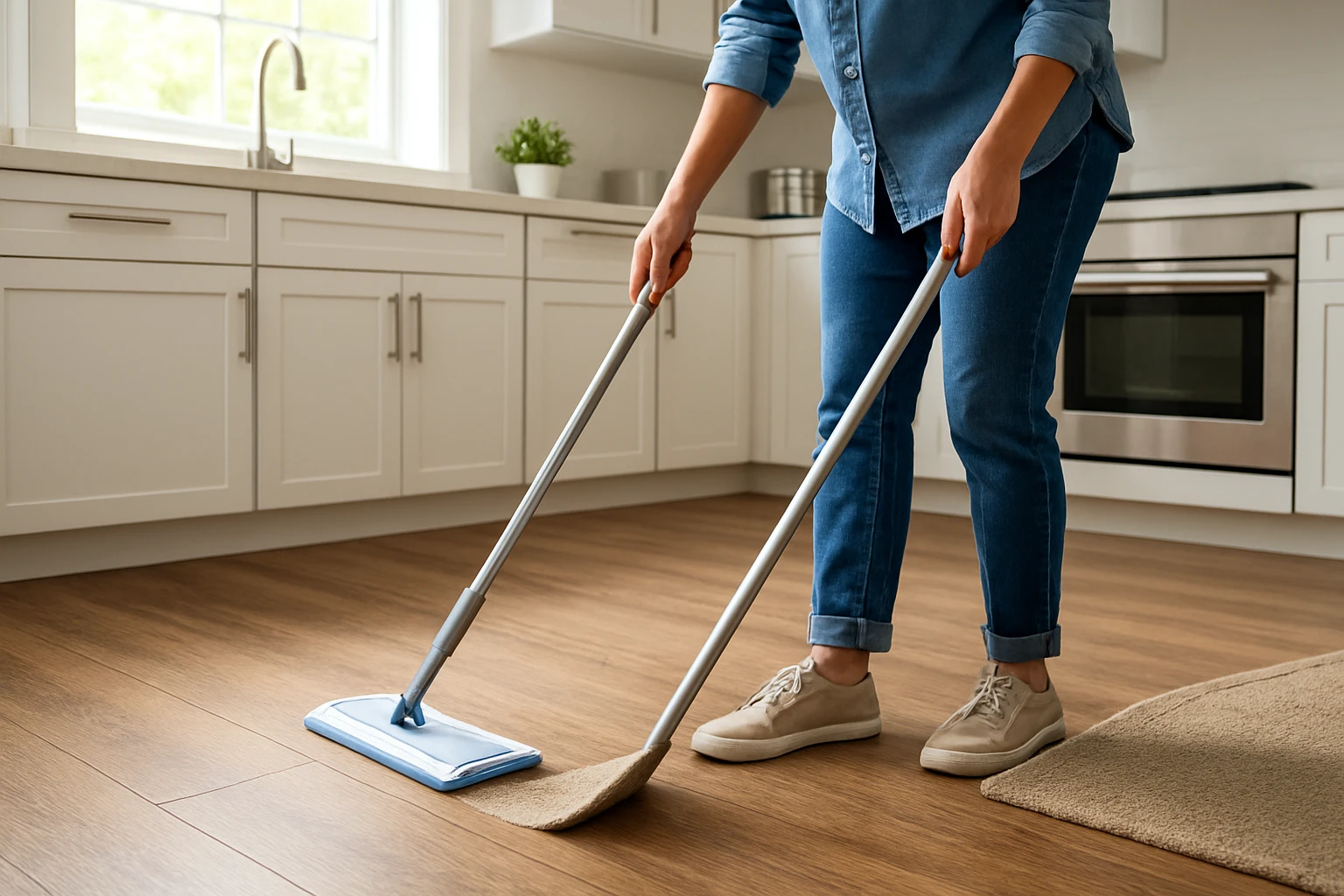
Weekly tasks include a damp mop with a mild cleaner and checking for grit under rugs. Monthly, inspect seams and edges and clean under movable furniture.
How to Mop Vinyl Plank Safely
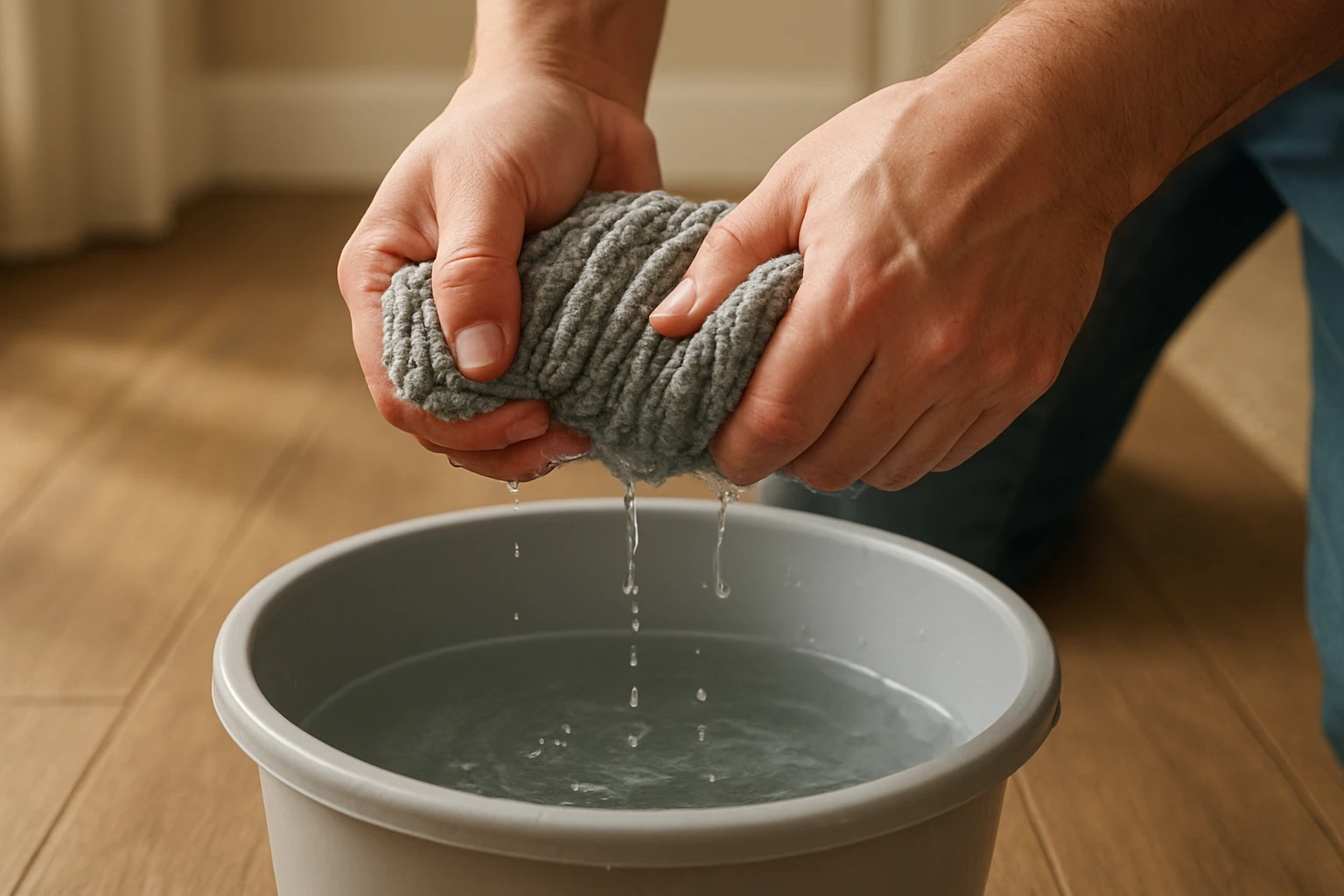
- Use a microfiber mop with water and a mild floor cleaner made for vinyl.
- Avoid soaking the floor. The mop should be damp, not dripping, so water does not sit in seams.
- Move the mop along the grain of the planks for even results.
Mop Frequency:
For most homes, a weekly damp mop is enough. Mop more often if you have pets, kids, or heavy foot traffic.
Removing Stains and Tough Spills
Spills happen. Treat them in a calm order so the finish and the plank stay safe.
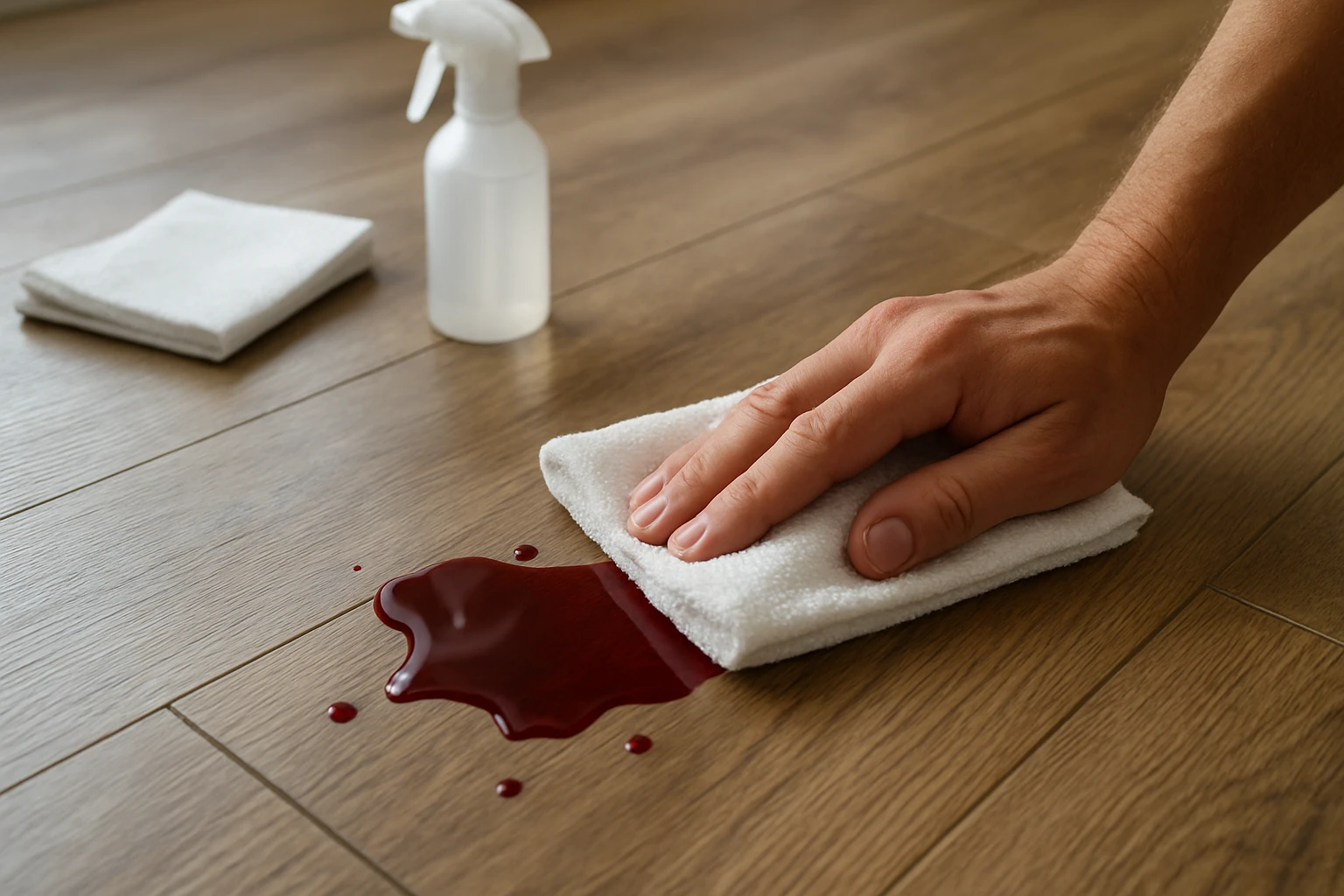
Start by blotting the spill, then clean with a mild solution, and finish by rinsing or drying the area.
Stain Removal Steps
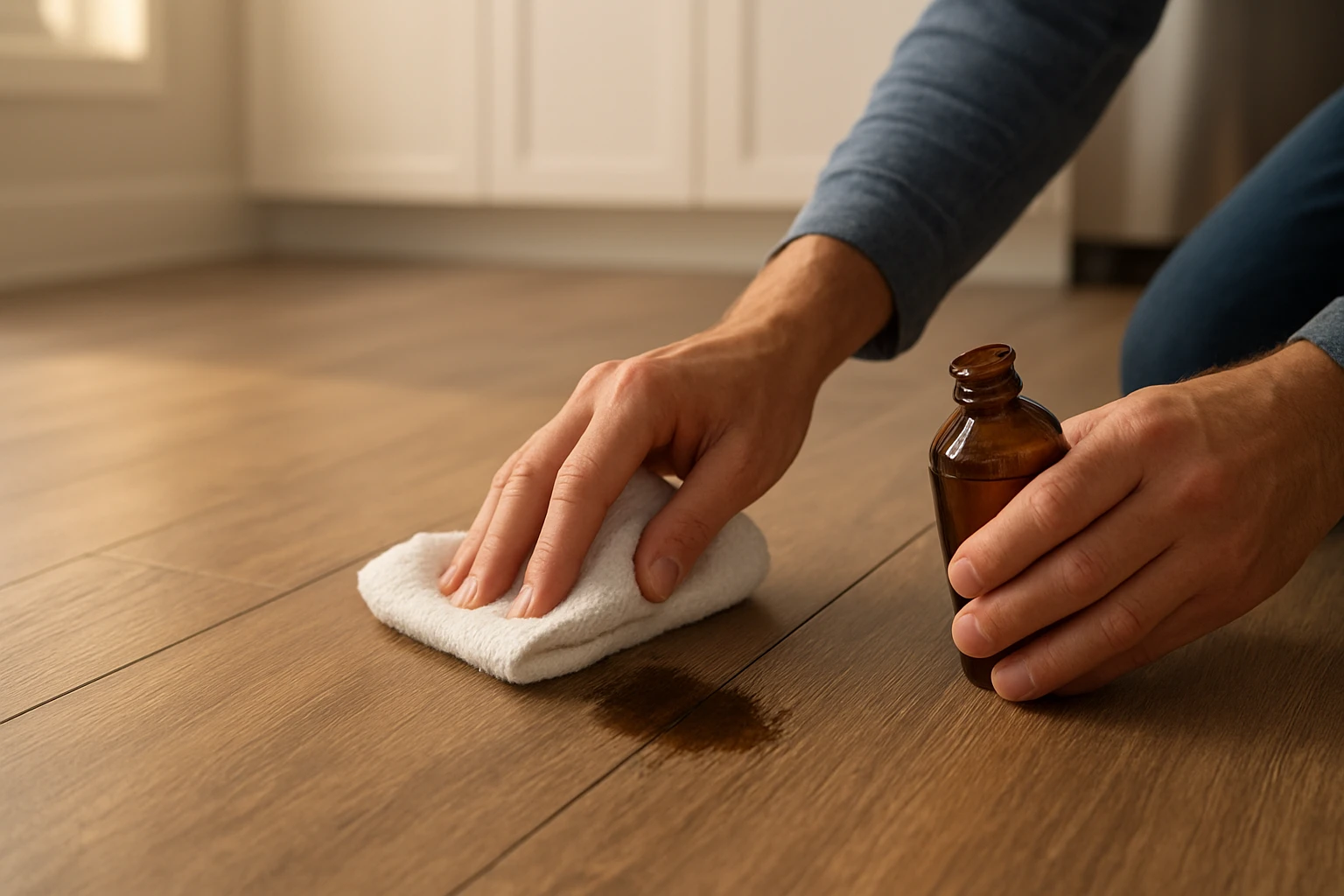
- Blot liquids immediately with a soft cloth instead of rubbing.
- For food, coffee, or wine stains use a damp cloth and a few drops of mild dish soap mixed with water.
- For grease, blot first, then use a little isopropyl alcohol on a cloth and test in a hidden area.
- For ink or permanent marker, try a small amount of rubbing alcohol or a manufacturer-recommended product; always test first.
Table 2. Common Stains and Recommended First Response
| Stain Type | First Response | Product To Use |
|---|---|---|
| Water or juice | Blot, damp mop | Mild soap solution |
| Grease or oil | Blot, apply rubbing alcohol test | Isopropyl alcohol |
| Ink or marker | Test spot with alcohol | Manufacturer cleaner if needed |
| Paint (water-based) | Soften with warm water then scrub | Mild scrub with soft brush |
If a stain does not come out with home care, call a professional rather than using strong solvents that can strip the wear layer.
Deep Cleaning and Stripping Wax
Most modern vinyl planks do not need wax and many finishes will not accept polish. Know your product before you add any floor finish.
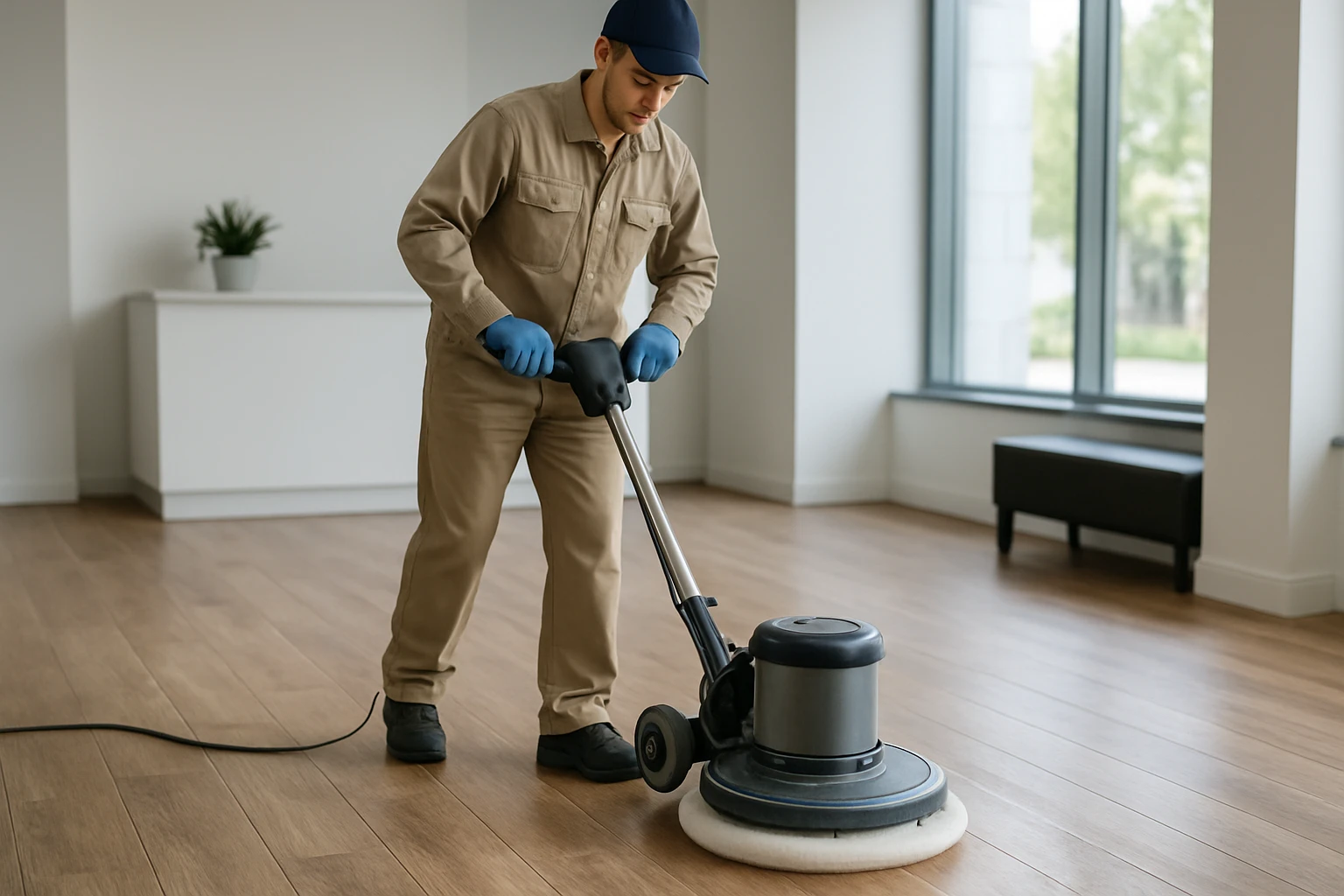
If an incompatible polish has been used, build-up can make the floor look dull. Many manufacturers advise against solvent-based strippers.
Deep Clean Steps
- Remove furniture and vacuum thoroughly.
- Use a manufacturer-safe cleaner and a microfiber scrub pad with low agitation.
- Rinse with clean water and dry with microfiber towels so water does not sit in seams.
When to Strip Coatings:
Only strip when there is a visible build-up that affects appearance and after checking what the manufacturer allows. The wrong stripper can damage the wear layer.
Repair and Maintenance for Damage
Minor scuffs and small scratches can often be reduced, and single planks can be replaced if needed.
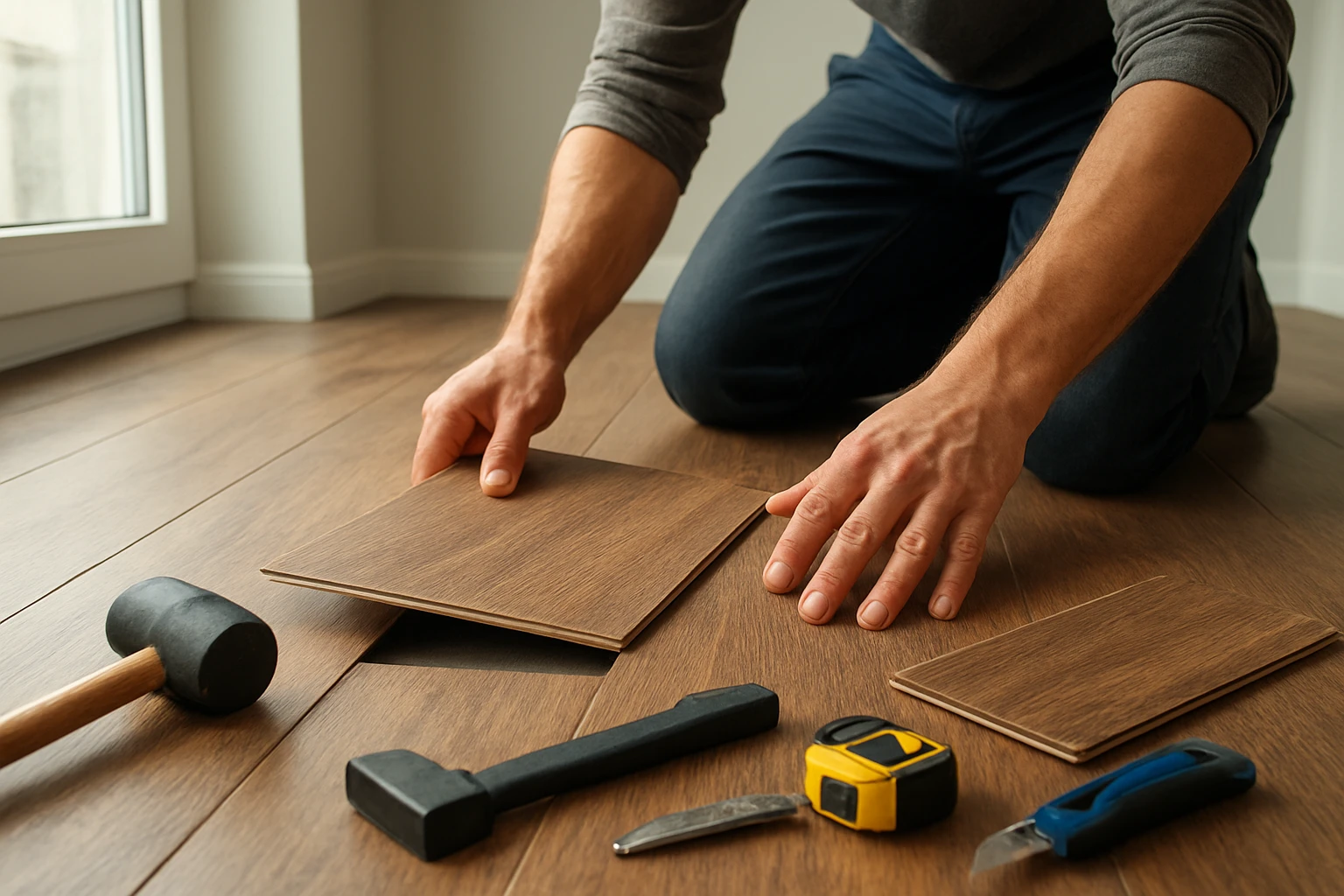
Fixing Scratches and Gouges
- For light scuffs, rub gently with a non-abrasive cleaner and a soft cloth.
- For deeper scratches, color touch-up kits made for vinyl can make them less visible.
Replacing a Plank
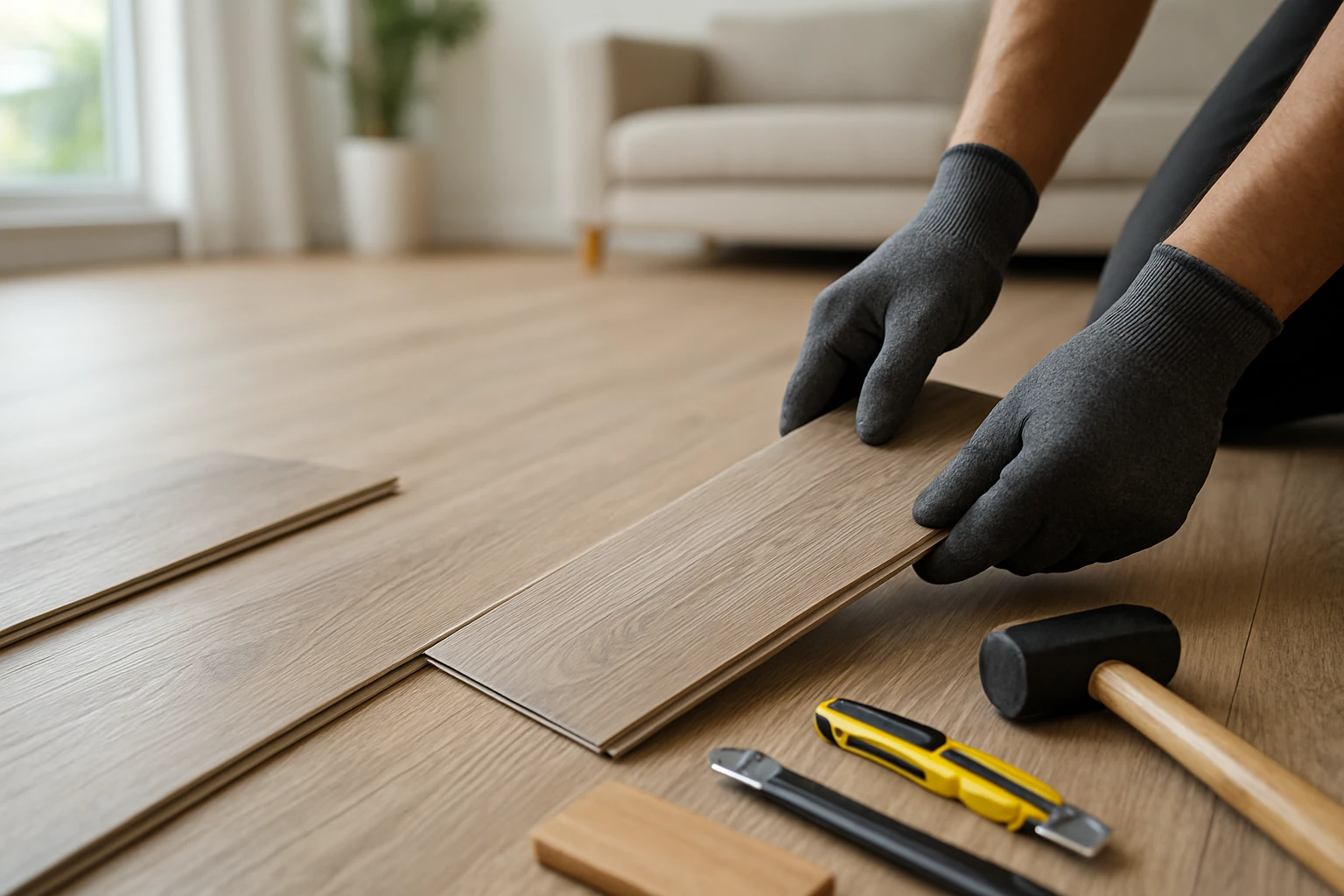
- Measure and order a matching plank if possible.
- Follow the manufacturer instructions for unlocking and removing planks, or cut out the damaged plank and insert a new one if your installation allows it.
- If you are unsure, hire a flooring professional to avoid harming nearby boards.
If you want professional help, many flooring businesses including services at Vinyl Flooring and SPC Flooring offer repair and installation options.
Humidity Sunlight and Environmental Care
Vinyl plank is stable, but extreme heat and long sun exposure can change color or cause slight expansion for some products.
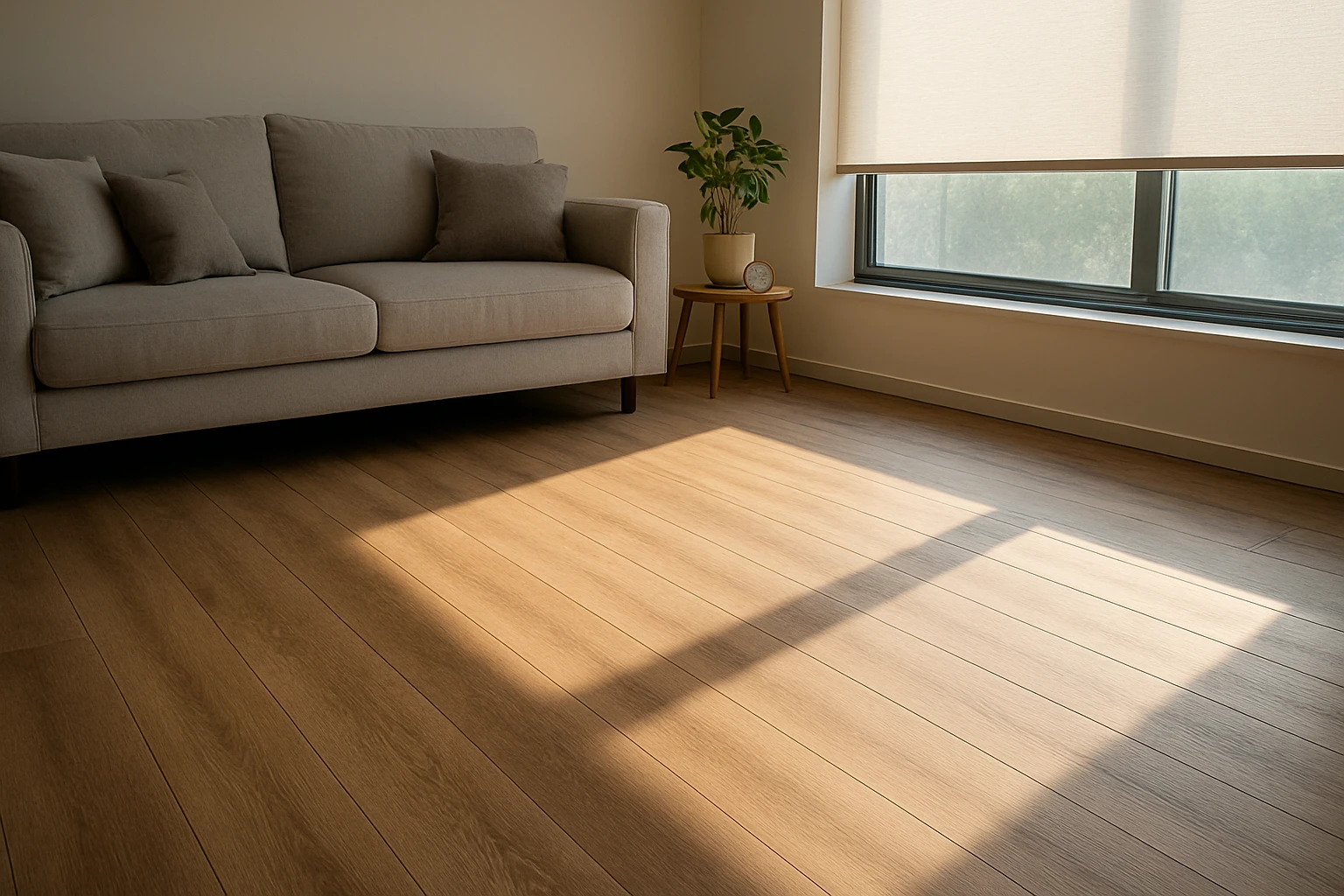
- Keep indoor humidity in a normal range and avoid big swings, because moisture under a floating floor can cause problems.
- Use curtains or UV film on windows to limit long-term fading in sunny rooms.
Sunlight and Fading
Rotate rugs and move furniture now and then so one area does not get constant sun and fade more than the rest of the room.
Comparison Table Cleaning Methods and When to Use Them
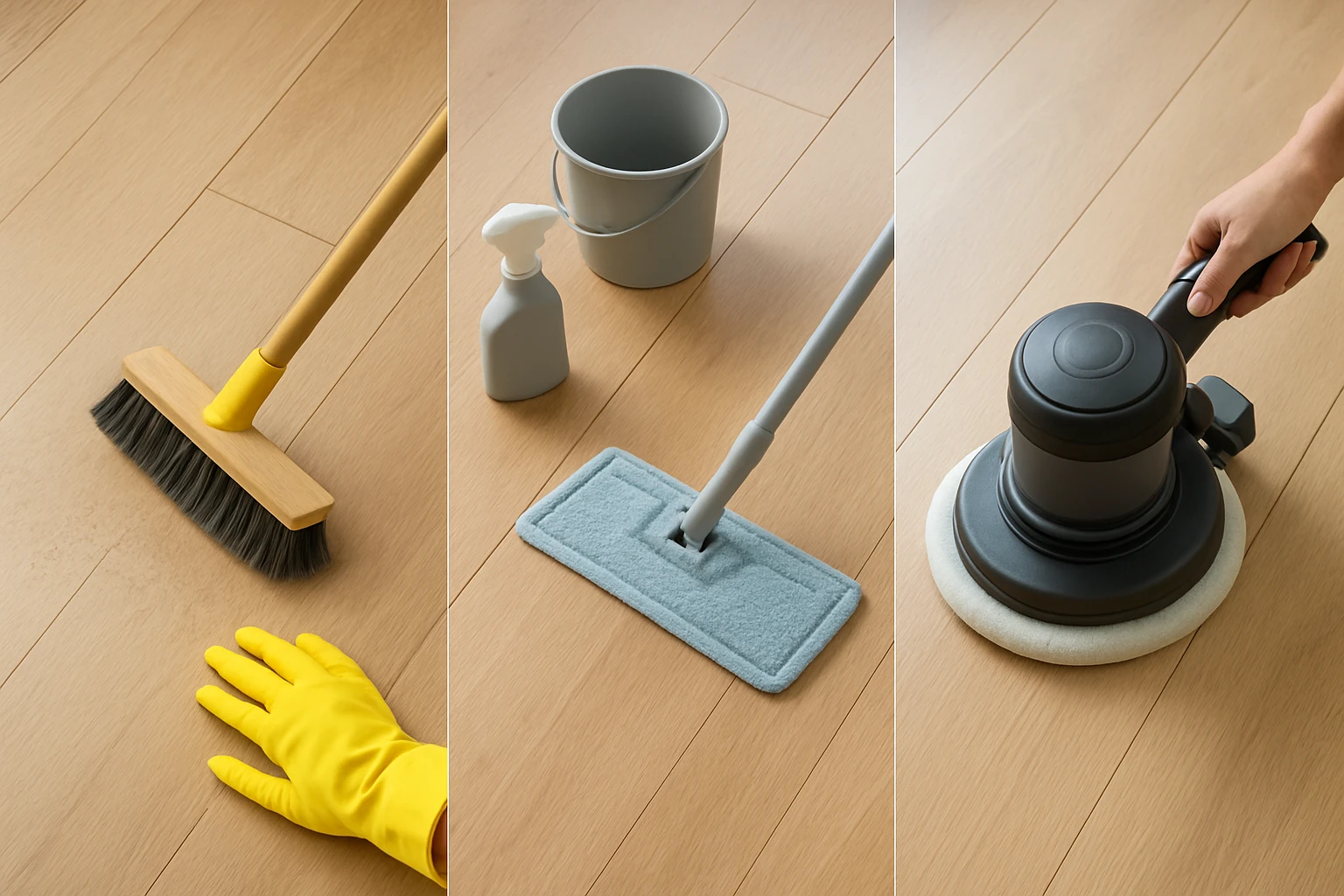
| Method | Best For | Frequency | Notes |
|---|---|---|---|
| Dry sweeping or vacuum | Daily grit removal | Daily | Use soft-brush attachments only |
| Damp microfiber mopping | Regular cleaning | Weekly | Use mild cleaners and avoid excess water |
| Machine cleaning with soft pad | Deep clean in high traffic areas | As needed, 6-12 months | Use low-agitation equipment and approved cleaners |
Choosing the Right Products and Tools
Pick cleaners made for vinyl or neutral pH floor cleaners and avoid harsh solvents, oil soaps, or abrasive powders. A soft broom, microfiber mop, and a vacuum with a hard floor setting cover most needs.
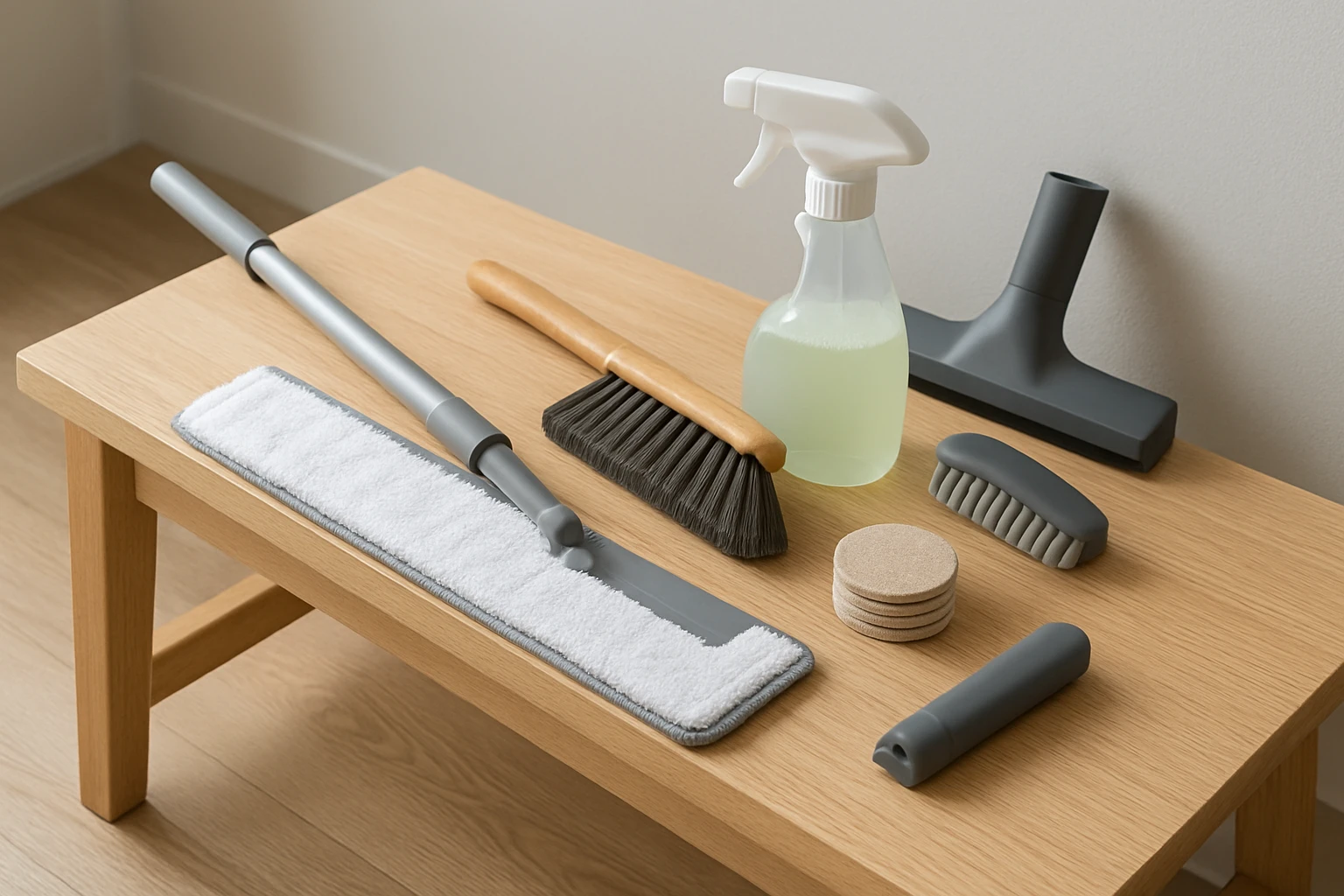
When in doubt, check the flooring warranty and the manufacturer’s care instructions. If your kitchen or other high moisture area needs special care, see flooring options made for kitchens at Kitchen Flooring.
Recommended Product Checklist
- Soft-bristle broom or hard-floor vacuum attachment.
- Microfiber flat mop and bucket with wringer.
- Manufacturer-recommended vinyl cleaner or a mild dish soap solution.
- Isopropyl alcohol for spot cleaning, used only after a test.
- Felt pads for furniture legs and door mats for entries.
When to Call a Professional
Call a pro when damage is beyond small repairs, when seams lift over a large area, or when you need to replace several planks and want a smooth match.
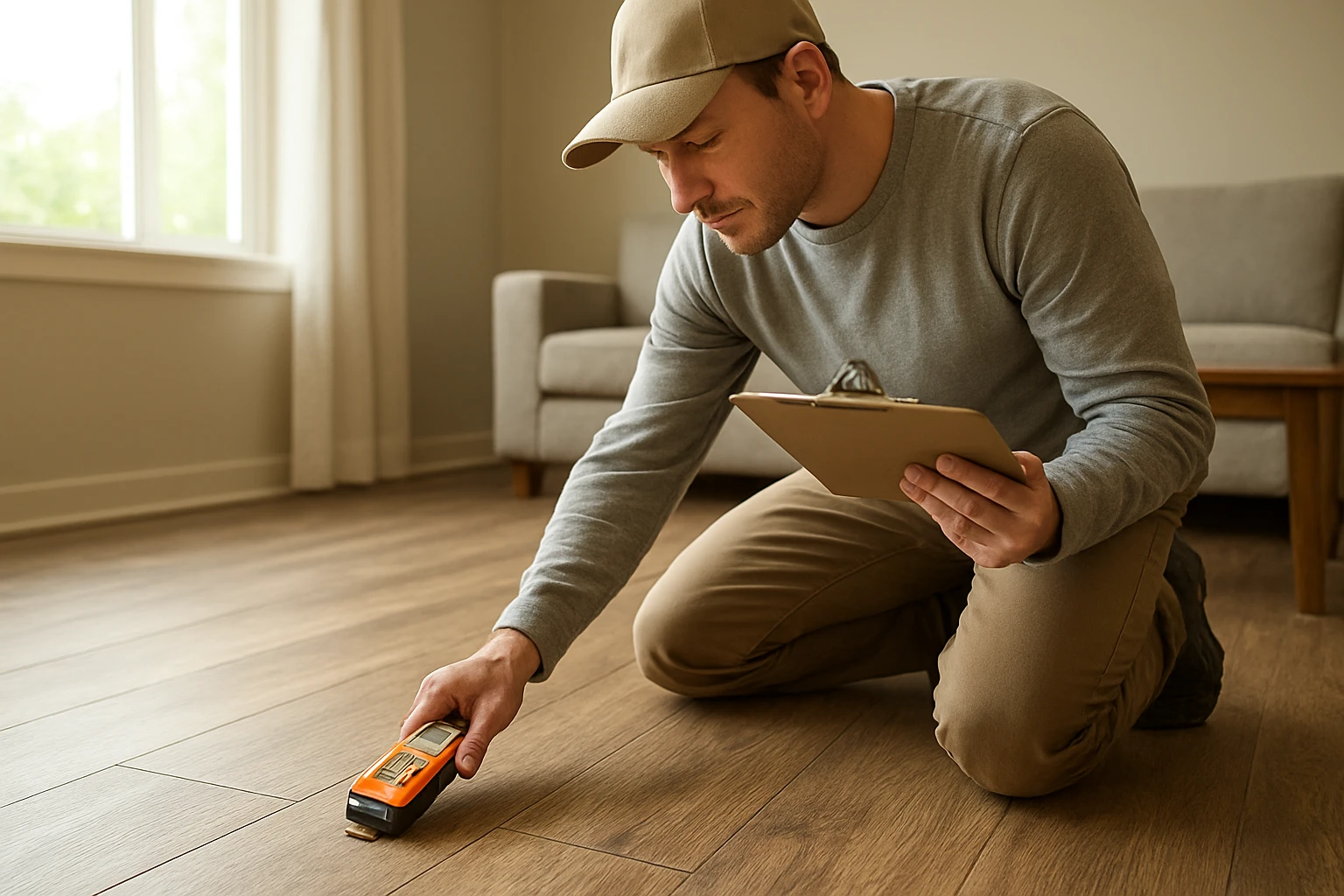
If the floor was installed incorrectly or shows big gaps and buckling, a pro can check the subfloor or moisture issues and recommend repair or replacement.
Final Care Checklist
- Sweep daily and damp mop weekly.
- Blot spills right away and treat stains with a tested method.
- Protect with mats, felt pads, and UV control for sunny rooms.
- Avoid waxes and solvent strippers unless the manufacturer allows them.
- Keep a small repair kit and call a professional for complex problems.
For product choices and professional services related to vinyl and similar flooring types, see these resources: PVC Flooring, Wooden Flooring, and the blog post on How to Clean Vinyl Flooring Safely and Easily. These links add more detail on materials and cleaning options.
Quick Lifespan and Cost Insight
Vinyl plank ranges from budget to premium. Simple maintenance helps push life toward the top of the lifespan ranges listed earlier. Thicker wear layers and a rigid core add durability but cost more up front.
Table 3. Quick Buying And Care Summary
| Budget Level | Typical Wear Layer | Expected Care | Price Range (per sq m) |
|---|---|---|---|
| Budget | 0.2 to 0.3 mm | Regular sweeping and damp mopping | Low |
| Mid-range | 0.3 to 0.5 mm | Weekly cleaning, occasional deep clean | Medium |
| Premium | 0.5 mm and up | Same as mid-range, better scratch resistance | Higher |
If you are choosing flooring for a new house, start with what you need most, whether moisture resistance, heavy traffic handling, or visual style, and consult local experts for samples and installation options. Floorlands.ae can help with selections for a new home.
Notes from Experience
A common mistake is using too much water when mopping, which lets moisture sit at seams and edges. Another frequent error is applying floor polish without checking compatibility, which leads to build-up and a dull finish. A short weekly routine and quick spill response prevent most issues.
Additional Reading
For more on related products and choices, see What Is LVT Flooring and Why Choose It for Your Home and Best Flooring Ideas for Modern Homes with Practical Style.
Frequently Asked Questions
How Often Should I Mop Vinyl Plank Flooring
Mop with a damp microfiber mop about once a week for normal household traffic. Increase frequency if you have pets, children, or heavy dirt. Avoid excess water so seams do not stay wet.
Can I Use Vinegar or Bleach on Vinyl Plank Flooring
Avoid regular use of vinegar or bleach because they can dull or damage the finish over time. For tough spots a diluted solution used sparingly and rinsed right away may be okay, but check the manufacturer instructions first.
Will Vinyl Plank Fade in Sunlight
Prolonged direct sunlight can cause mild color change over many years. Use UV-filtering window film, curtains, or rotate rugs and furniture to reduce uneven fading.
How Do I Fix a Chipped Vinyl Plank
Small chips can be reduced with a color-matched repair kit or filler made for vinyl. For larger damage replacing the plank is usually the best option and often requires a professional if the installation method is complex.
Is It Okay to Use a Steam Mop on Vinyl Plank Flooring
Most manufacturers do not recommend steam mops for vinyl plank because high heat and moisture can affect some cores and adhesives. Check the product warranty and use a gentle cleaning method instead.