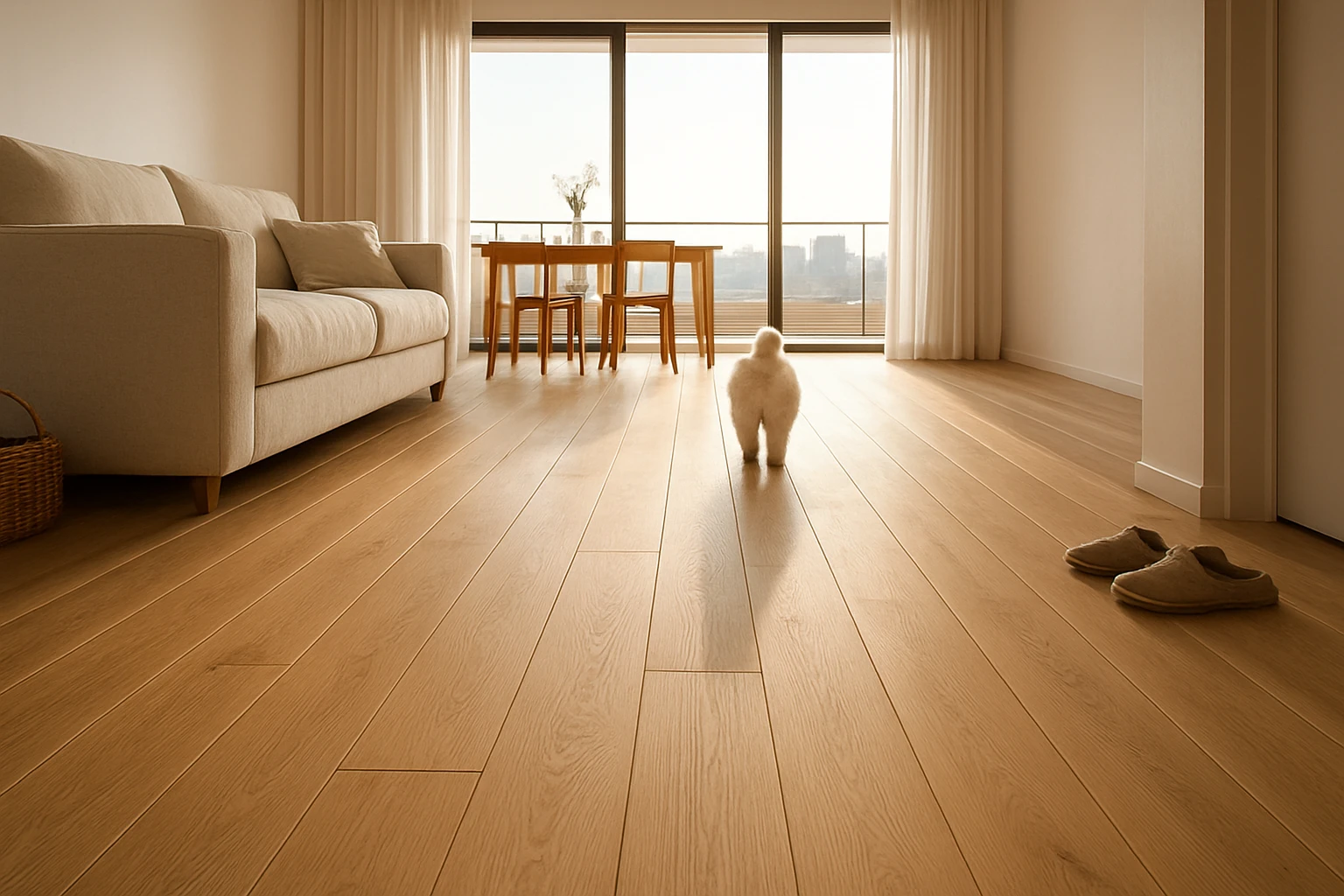
The best flooring for a modern home fits your daily life, the room’s use, and your personal style. Choose durable materials for busy rooms. Use lighter tones and wider planks to make spaces feel larger. Match finish and upkeep to how you live.
Key Statistics
- 68% of homeowners say durability is the top factor when choosing floors (national homeowner survey, 2023).
- Average lifespan: solid hardwood 25-50 years, engineered wood 15-30 years, SPC/LVT 10-25 years.
- Typical cost range per square meter: low-end vinyl PVC $8-$25, mid-range laminate $20-$45, hardwood $50-$150.
How to Choose Flooring for a Modern Home
Start with how you live. Think about foot traffic, pets, kids, and moisture. Set a real budget. Pick materials that match the room and how much care you want to give them.
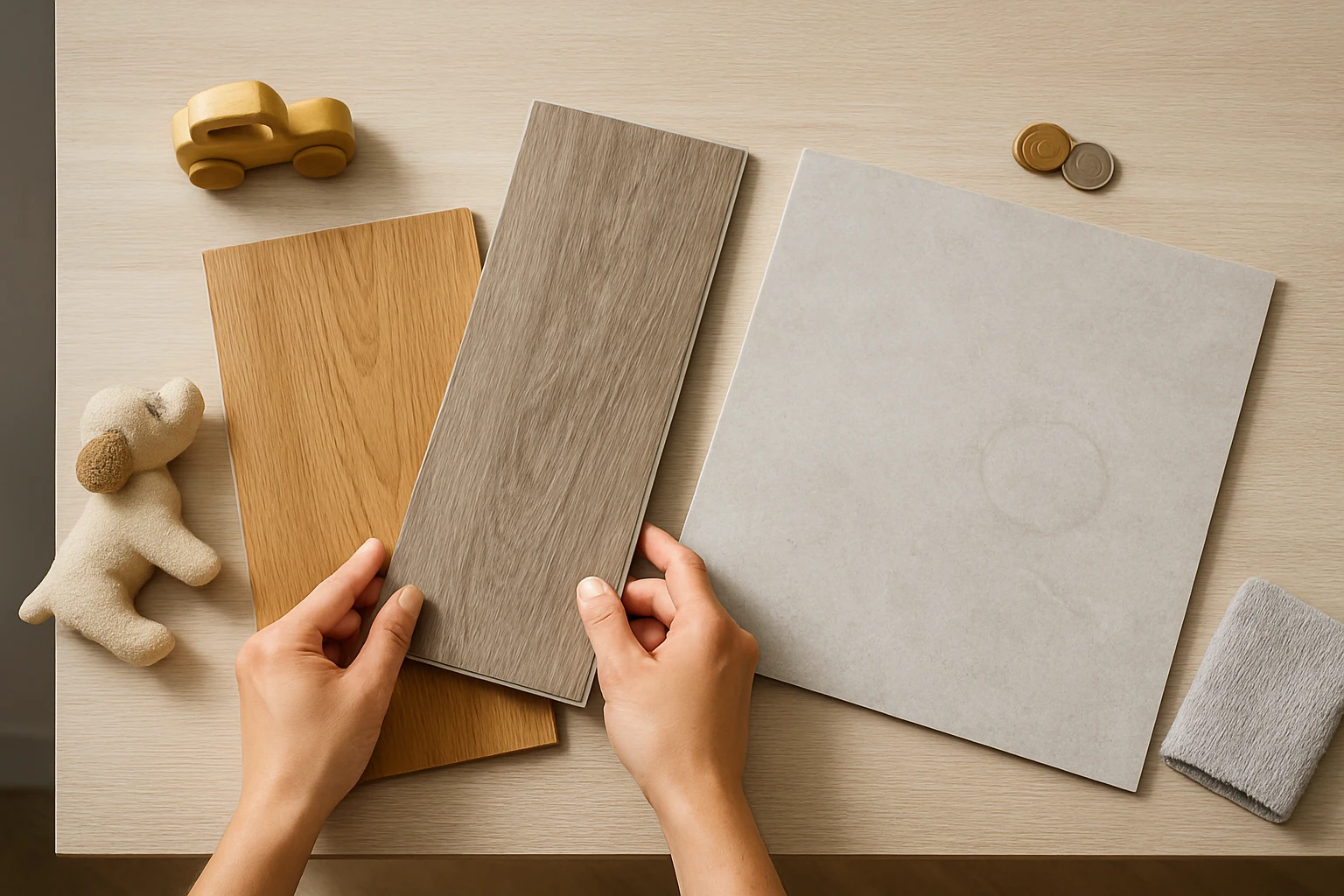
Key factors to weigh:
- Durability. High-traffic areas need tougher flooring.
- Water resistance. Use waterproof options for bathrooms and kitchens.
- Maintenance. Some floors need sanding or resealing over time.
- Warmth and comfort. Some materials feel cold underfoot.
- Style. Plank width, color, and pattern set the tone.
- Environmental impact. Look for certified or reclaimed options.
A common mistake is choosing a floor only for looks and not for daily use. Practical choices last longer and cost less over time.
Top Flooring Materials for Modern Homes
Modern homes mix classic and newer materials. Pick the one that meets function and style.
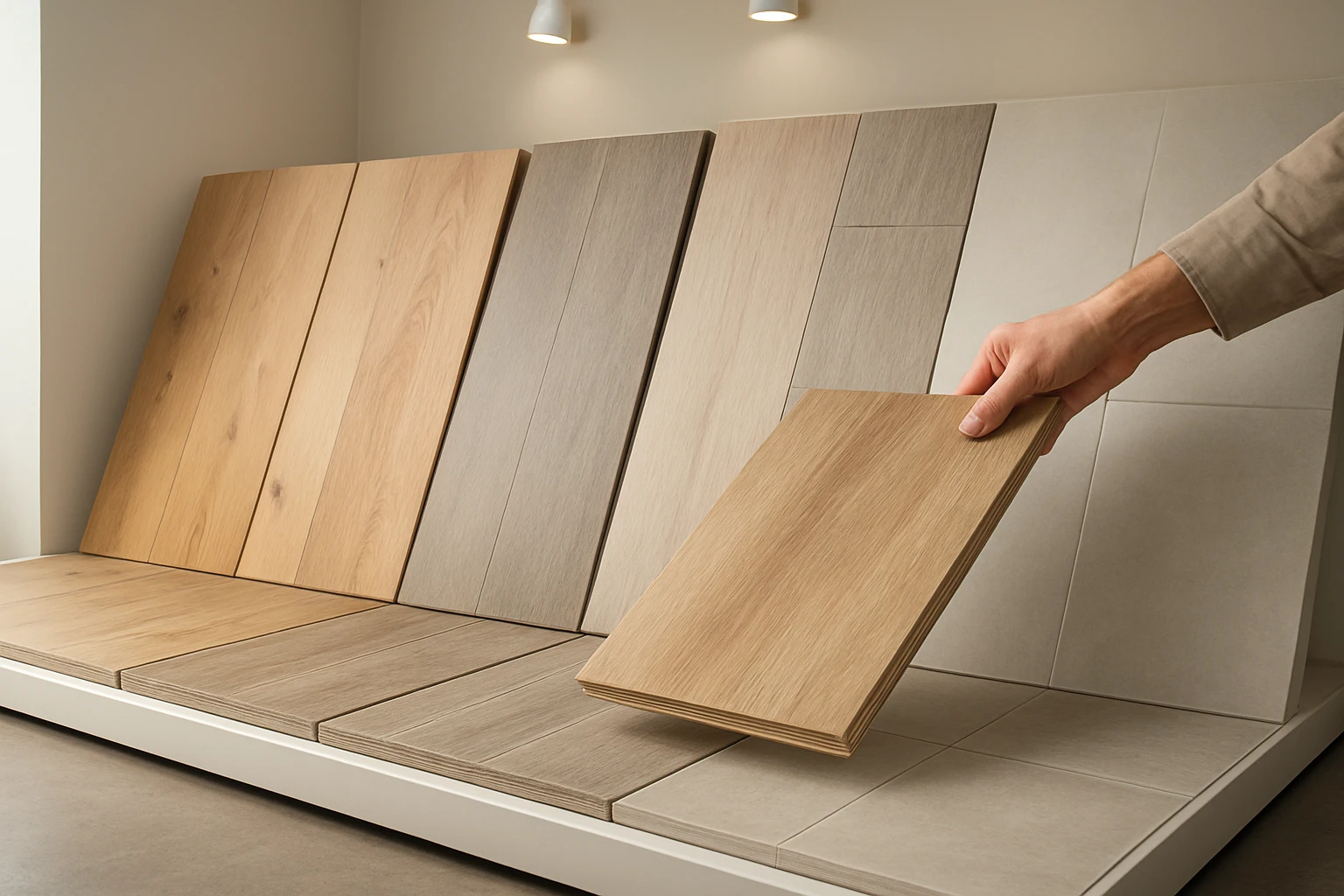
Hardwood
Solid hardwood feels warm and classic. It can be sanded and refinished several times. It suits living rooms and bedrooms well.
Pros and Cons:
- Pros: long lifespan, premium look, can refinish.
- Cons: sensitive to moisture, higher cost, needs acclimation before install.
Best Uses:
- Living rooms, dining rooms, and bedrooms.
Maintenance:
- Sweep or vacuum regularly. Use a slightly damp mop. Refinish as needed every 10-20 years.
Relevant service pages: see Solid Wood Flooring and Wooden Flooring.
Engineered Wood
Engineered wood has a real wood top layer over stable layers underneath. It copes with humidity better than solid wood. It looks like hardwood at a lower cost.
Pros and Cons:
- Pros: more stable in moist rooms, wide style range.
- Cons: limited refinishing, still not fully waterproof.
Best Uses:
- Open-plan areas and basements with controlled humidity.
Maintenance:
- Same care as hardwood but less frequent sanding.
SPC (Stone Plastic Composite)
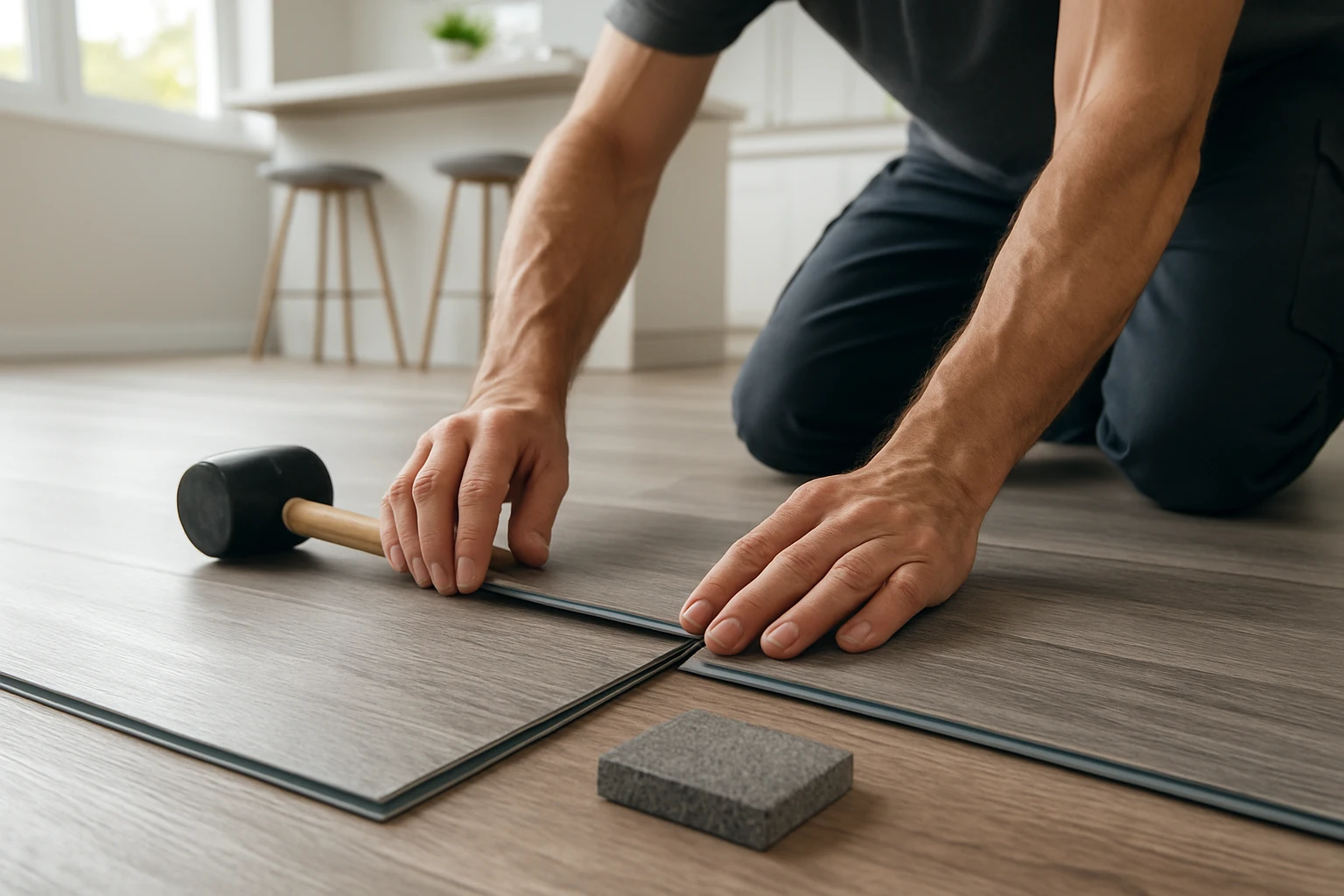
SPC is dense, rigid, and fully waterproof. It suits modern homes that need durable, low-maintenance floors.
Pros and Cons:
- Pros: waterproof, stable, great for busy homes.
- Cons: can feel firmer underfoot, some designs vary in realism.
Best Uses:
- Kitchens, mudrooms, family rooms, areas with pets.
Maintenance:
- Sweep and mop with mild cleaner. Avoid abrasive pads.
See our SPC flooring page for options: SPC Flooring.
Luxury Vinyl Tile (LVT) and Vinyl Plank
LVT can mimic wood and stone very well. It is waterproof and usually affordable.
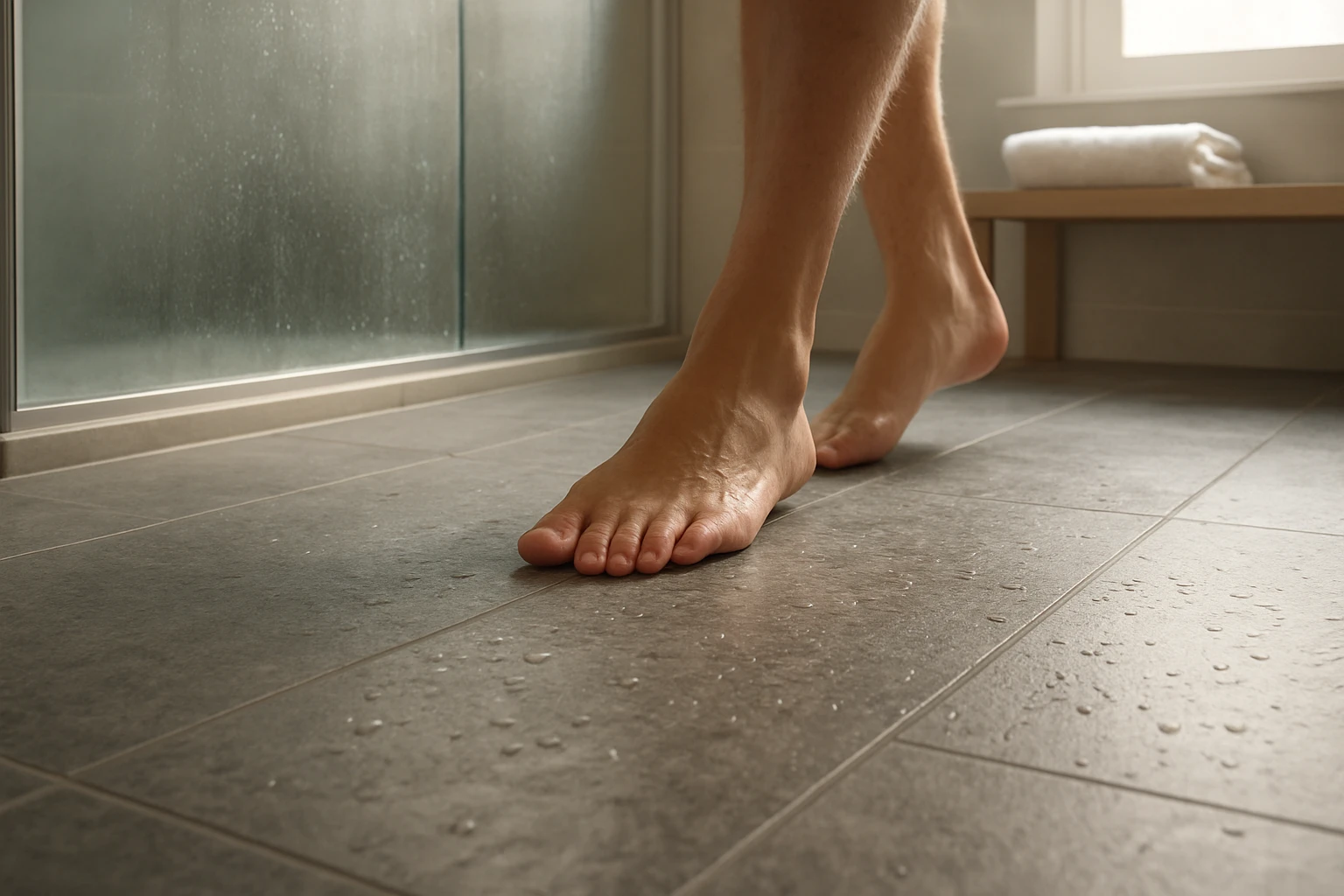
Pros and Cons:
- Pros: wide style range, waterproof, soft underfoot.
- Cons: quality varies, lower resale prestige than hardwood.
Best Uses:
- Bathrooms, kitchens, and rental units.
Maintenance:
- Regular sweeping. Damp mop with pH-neutral cleaner.
For a deeper look at LVT, read What Is LVT Flooring and Why Choose It for Your Home.
Laminate Flooring
Laminate is budget friendly and can look very real if you pick quality planks. It resists scratches and dents well.
Pros and Cons:
- Pros: budget friendly, scratch resistant.
- Cons: not fully waterproof unless specified, can sound hollow.
Best Uses:
- Living rooms, bedrooms, and low-moisture kitchens.
Maintenance:
- Sweep; use manufacturer-approved cleaners.
See Laminate Flooring service options.
Porcelain and Ceramic Tile
Tile is hard and waterproof. Large formats and thin grout lines suit modern styling.
Pros and Cons:
- Pros: very durable, waterproof, many finishes.
- Cons: cold underfoot, can be slippery when wet unless textured.
Best Uses:
- Bathrooms, kitchens, and entryways.
Maintenance:
- Mop with neutral cleaner. Regrout or seal grout when needed.
Polished Concrete
Polished concrete gives a modern, industrial look. It lasts a long time and needs little care.
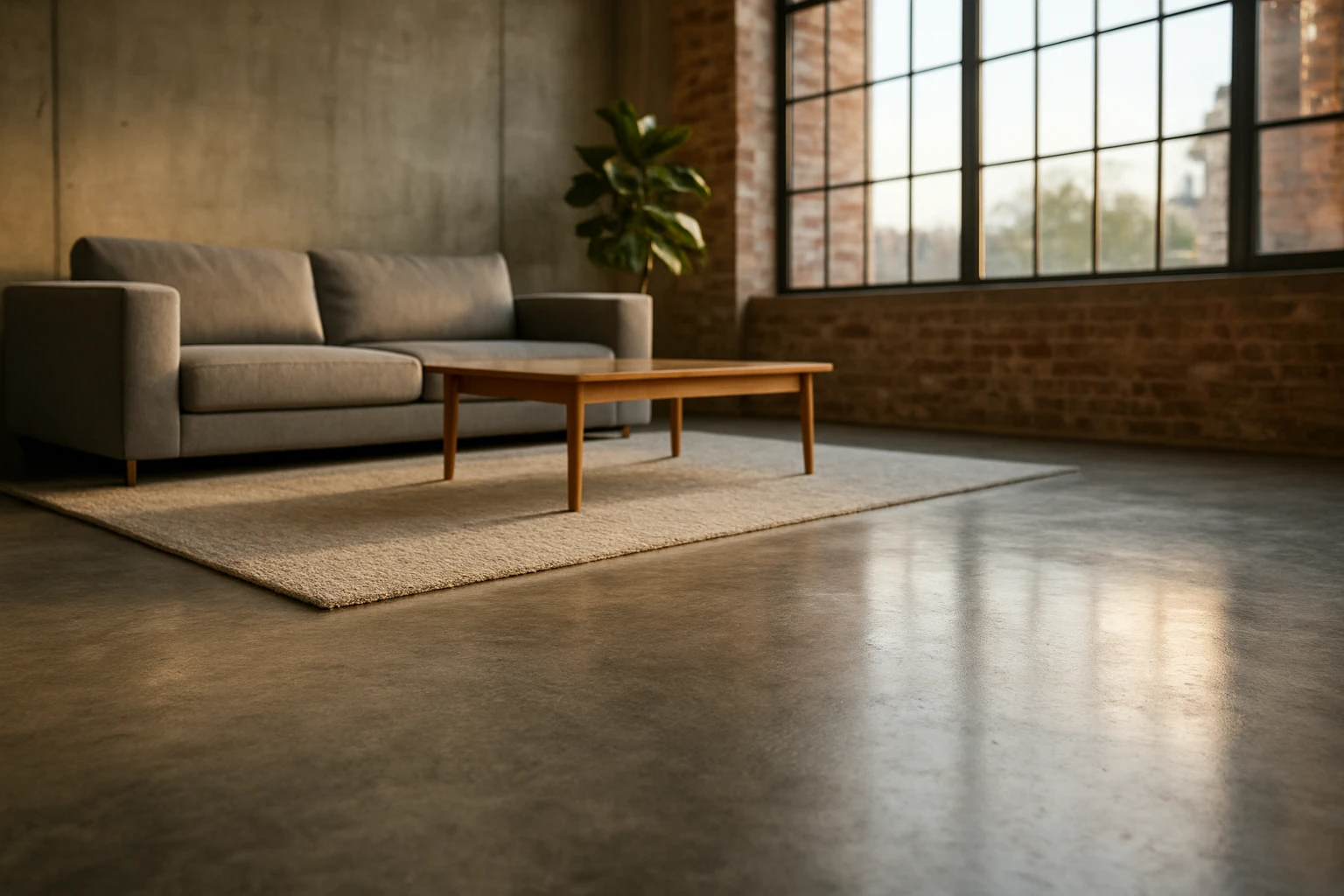
Pros and Cons:
- Pros: very durable, minimal upkeep, modern aesthetic.
- Cons: cold and hard, requires professional polishing.
Best Uses:
- Open-plan living, basements, modern kitchens.
Cork and Bamboo
Cork feels soft underfoot and keeps warmth. Bamboo grows fast and can look like hardwood. Both are eco-friendly when sourced responsibly.
Pros and Cons:
- Pros: comfortable, renewable options.
- Cons: both need protection from moisture and heavy wear.
Best Uses:
- Bedrooms, home offices, and low-moisture living areas.
Room by Room Flooring Recommendations
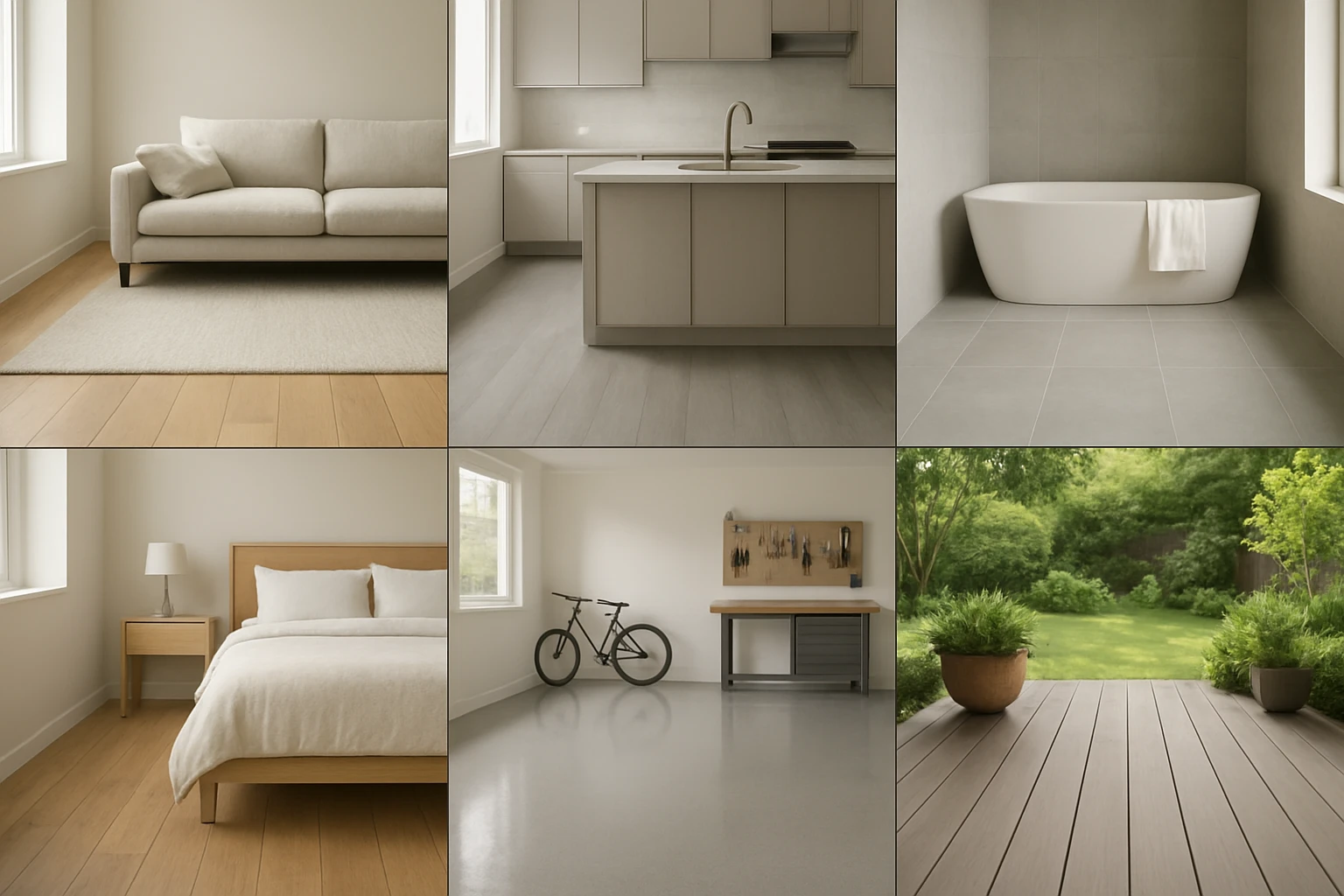
Different rooms need different floors. Match performance to use.
Living Room
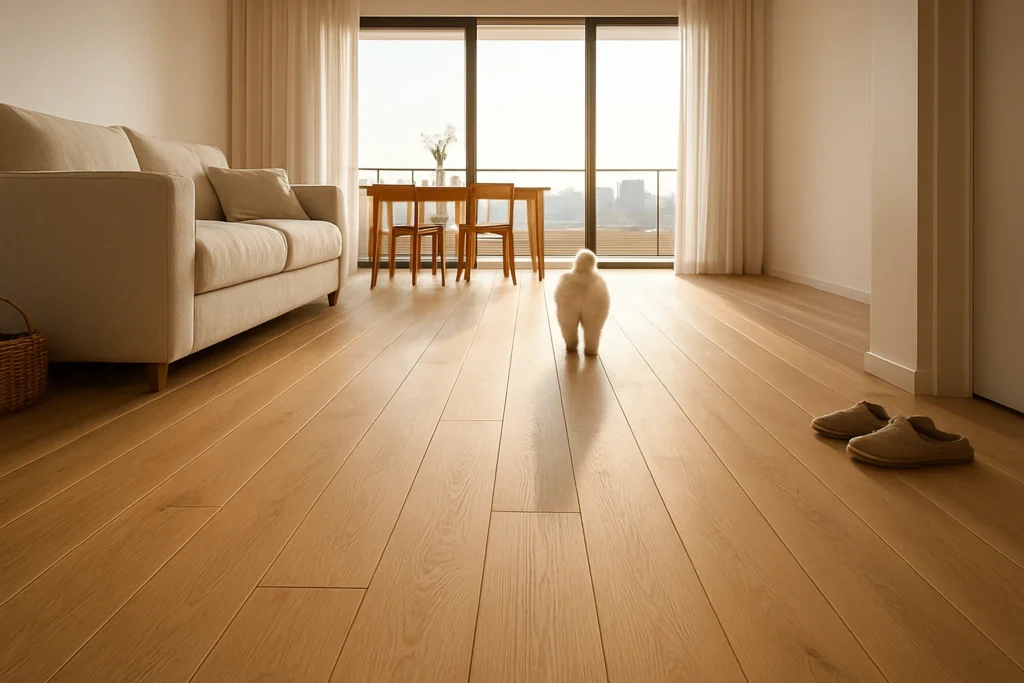
Choose wide planks in light tones to make the space feel larger. Hardwood, engineered wood, or quality LVT all work well.
Kitchen
Pick waterproof, hard-wearing floors. SPC and LVT are practical. If you prefer tile, pick large formats to reduce grout lines.
Relevant service page: Kitchen Flooring.
Bathroom
Use fully waterproof floors. Porcelain tile or LVT are the safest picks.
Bedroom
Comfort matters. Engineered wood, hardwood, cork, or soft carpet can work.
Garage
Garage floors need heavy duty finishes. Consider epoxy, rubber, or durable coatings.
Relevant service page: Garage Flooring.
Outdoor Deck
Use materials rated for weather. Composite decking or treated wood are common choices.
See Deck Flooring for outdoor options.
Installation and Cost Comparison
Budget for material and installation. Prices vary by location and finish.
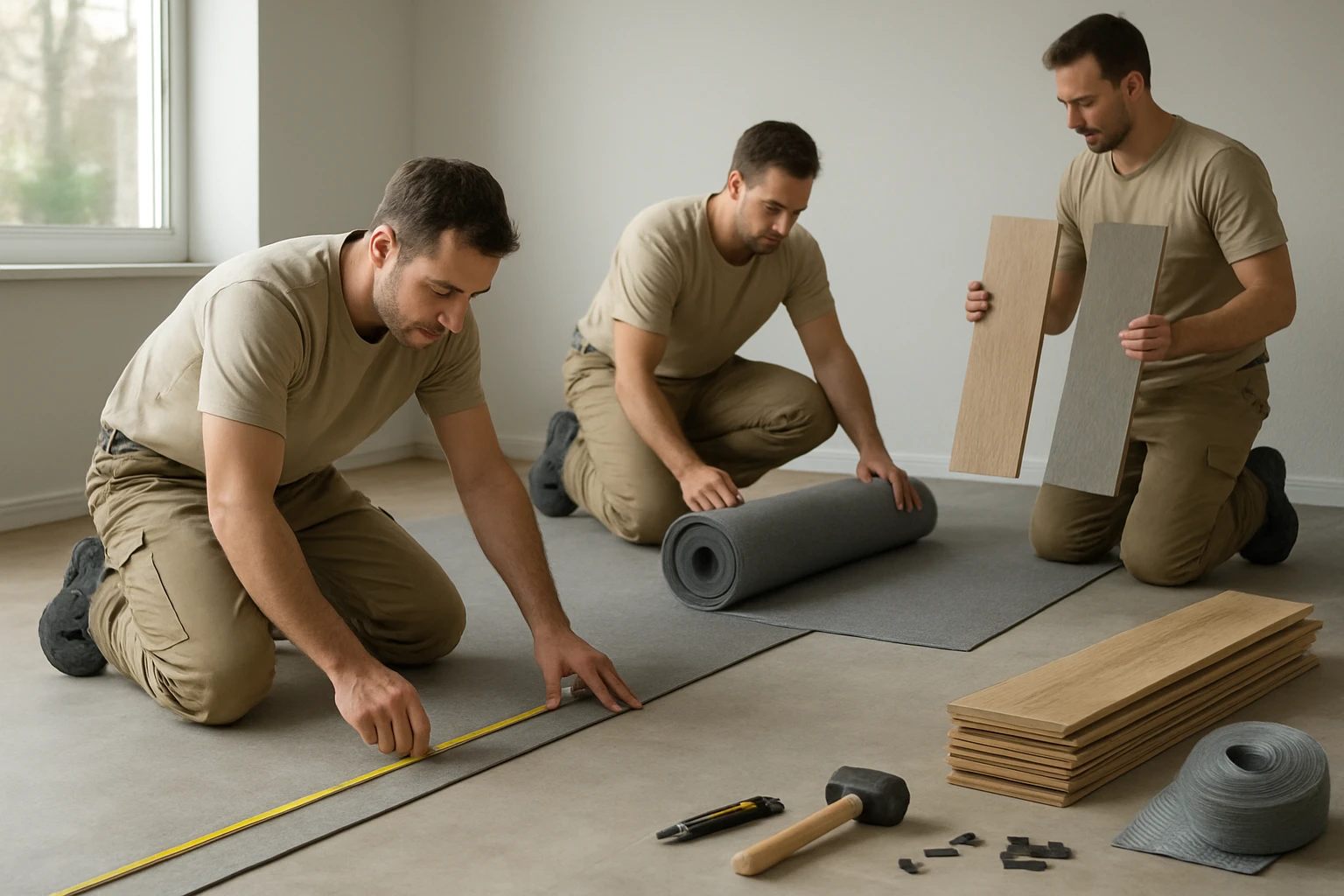
Use this table to compare common options at a glance.
| Material | Typical Cost per m2 (USD) | Lifespan (Years) | DIY Friendly |
|---|---|---|---|
| Vinyl PVC / LVT | 8-40 | 10-25 | Yes (some types) |
| Laminate | 20-45 | 10-20 | Yes |
| SPC | 25-60 | 10-25 | Yes (floating) |
| Engineered Wood | 35-100 | 15-30 | Somewhat |
| Solid Hardwood | 50-150 | 25-50 | No (pro recommended) |
| Porcelain Tile | 30-120 | 20-50 | Some DIY skill |
| Polished Concrete | 40-120 | 30+ | No |
For local price details and installation options read How Much Do Flooring Cost in Dubai: Prices by Material and Installation.
A tip: allocate 10-15% of the floor area cost for underlay, trims, and waste. In our experience, hidden costs are the most common budget gap.
Care and Maintenance for Each Material
Different floors need different care. Simple routines keep them looking new.
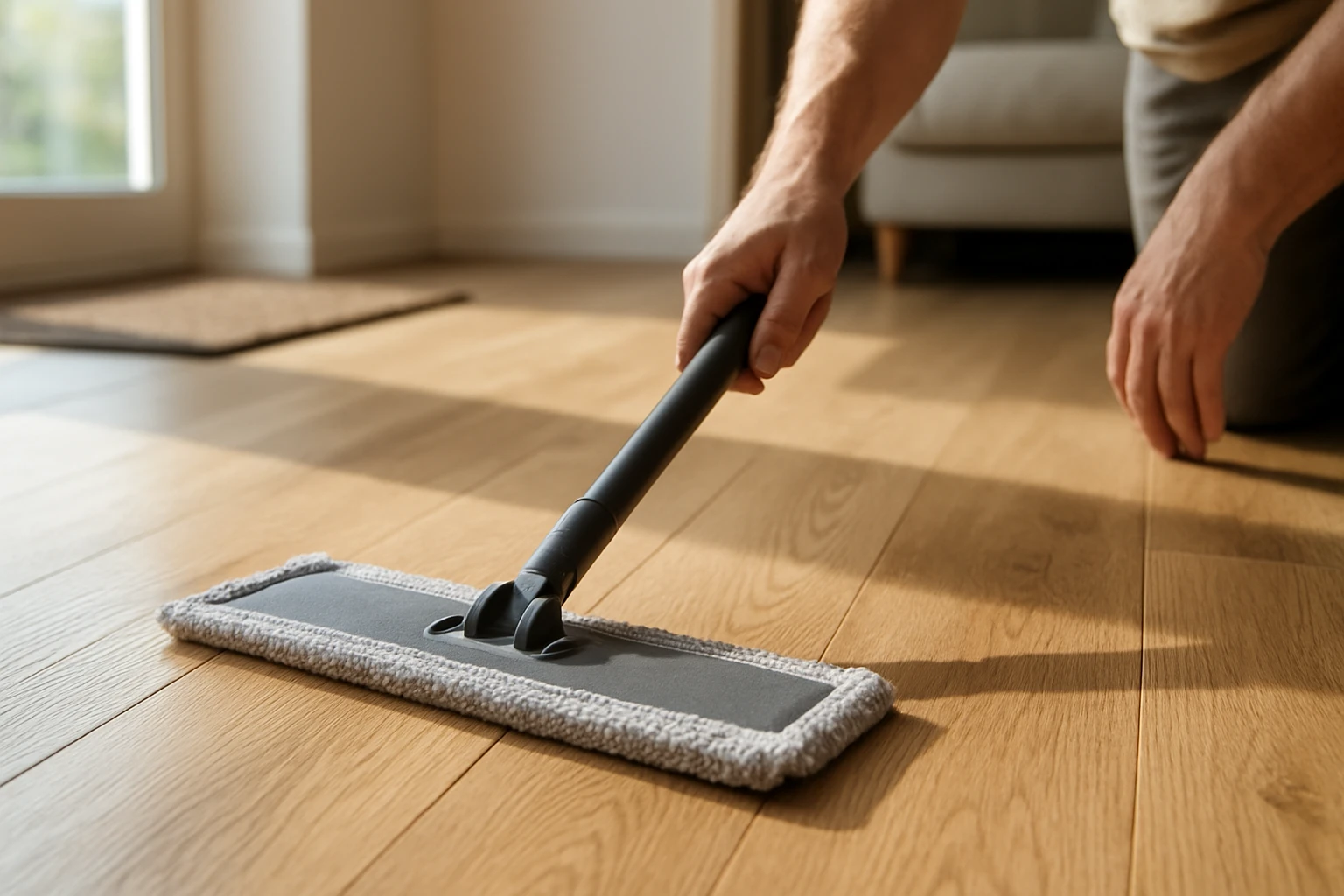
Quick Maintenance Rules
- Sweep or vacuum weekly. Use soft attachments to avoid scratching.
- Wipe spills quickly to protect finishes.
- Use protective pads under furniture legs.
- Place mats at entrances to trap grit.
Cleaning by Material
- Hardwood and Engineered Wood: dry cleaning and occasional damp mopping. Avoid excess water.
- SPC and LVT: damp mop with neutral cleaner. No waxing.
- Laminate: dry cloth or damp mop. Do not flood.
- Tile: mop with neutral cleaner. Seal grout if needed.
- Polished Concrete: dust mop and periodic re-polish.
Read safe cleaning steps for vinyl and SPC in our guides: How to Clean Vinyl Flooring Safely and Easily and What Is SPC Flooring and How It Works.
Design Tricks to Make Rooms Look Bigger and Brighter
Floor choice changes how a room feels. Use a few simple moves to improve space and light.
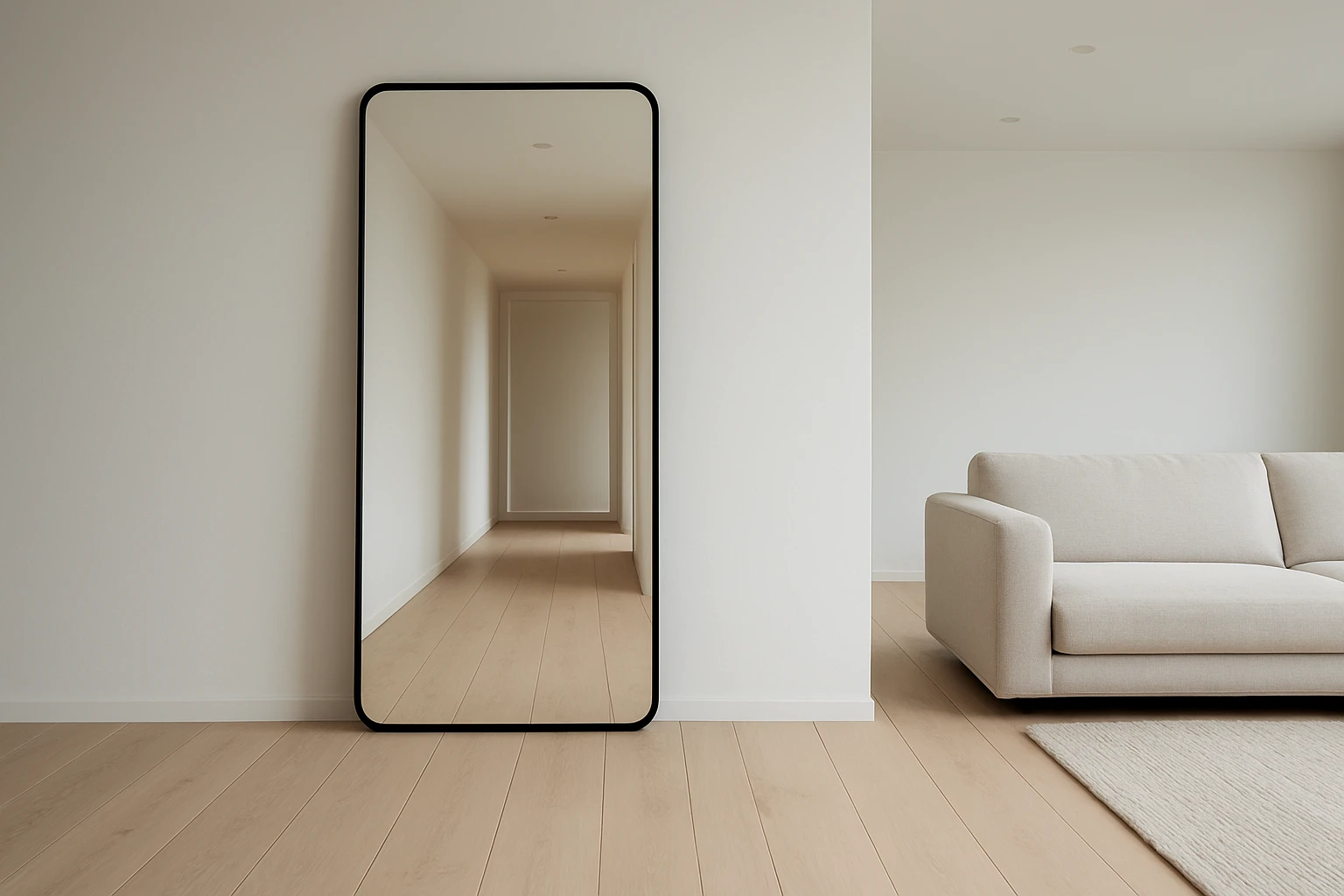
- Choose lighter tones to reflect light.
- Use long, wide planks to make rooms feel longer.
- Keep grout lines thin for a clean flow.
- Run the same flooring across connected rooms for continuity.
Using Patterns and Layouts
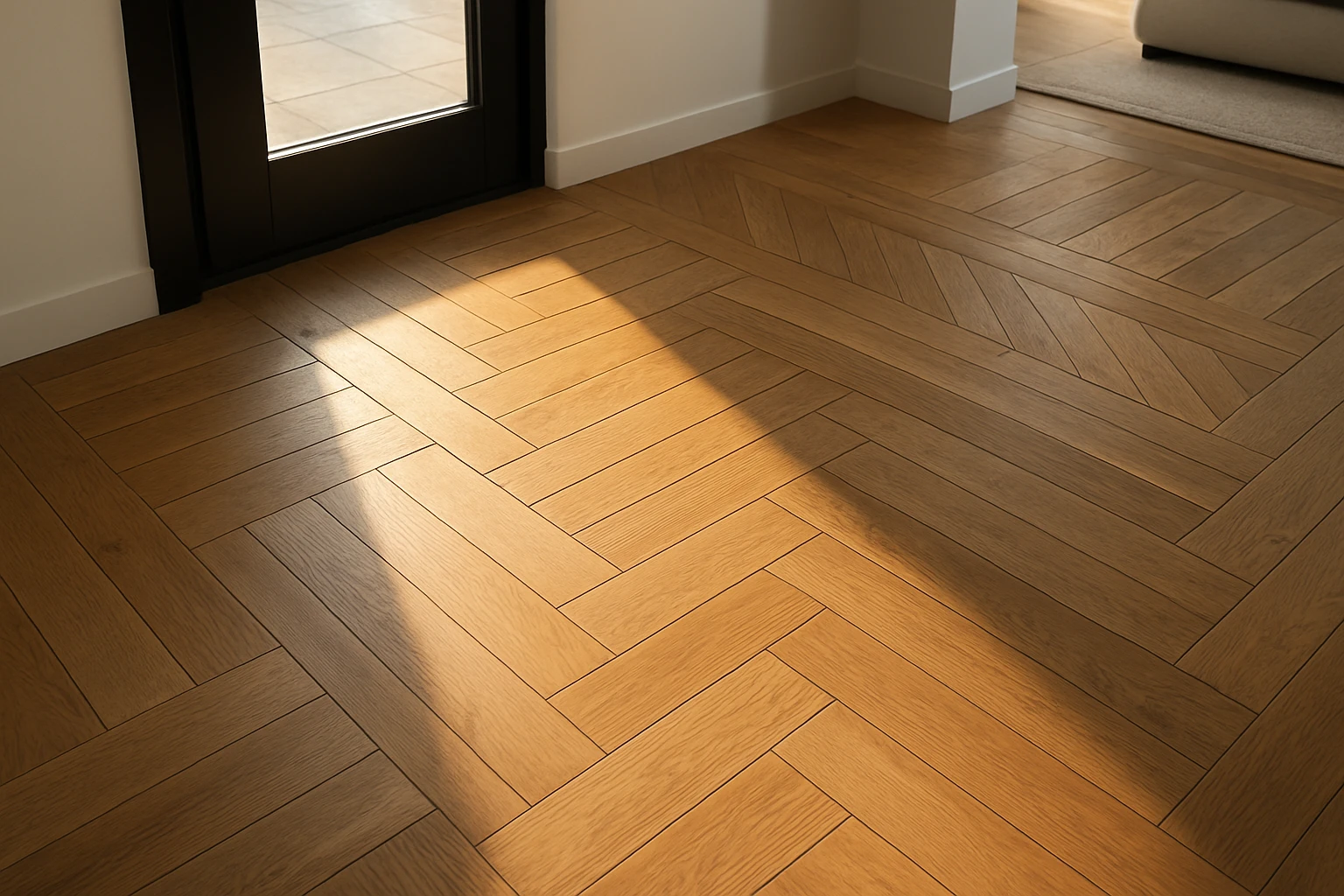
- Herringbone or chevron adds a designer touch. See Herringbone Flooring and Chevron Flooring.
- Parquet brings texture and classic style. See Parquet Flooring.
Small rooms often look larger with straight long planks laid toward the main view.
Final Thoughts and Next Steps
Pick floors that match daily life and your budget. Test samples in your rooms and view them at different times of day. When unsure, choose durability over trends. If you need help, contact a local pro for a sample layout and exact costs.
Relevant service pages for installations and specialty floors: SPC Flooring, Wooden Flooring, Laminate Flooring, PVC Flooring, Parquet Flooring, Herringbone Flooring, Chevron Flooring, Solid Wood Flooring, Garage Flooring, Deck Flooring, Kitchen Flooring, Rubber Flooring, EPDM Flooring.
If you want a quick comparison chart or a room-by-room sample plan for your home, save the room dimensions and preferred styles and share them with a flooring pro.
Frequently Asked Questions
What Is the Most Durable Flooring for a Busy Modern Home?
SPC and high-quality porcelain tile rank highest for durability. Both resist moisture and heavy traffic. SPC is softer underfoot and easier to install. Tile is very long lasting but feels colder.
Which Flooring Is Easiest to Keep Clean with Pets?
SPC and LVT are the easiest to clean. They are waterproof and resist scratches if you choose a textured, scratch-resistant wear layer. Regular sweeping and a damp mop keep them looking good.
Can I Use the Same Floor Across the Whole House?
Yes. Using the same floor across connected spaces makes rooms feel larger and more cohesive. Just pick a material rated for the wettest room. For example, use waterproof SPC or tile in kitchens and bathrooms if you want full continuity.
How Long Does Hardwood Last in a Modern Home?
Solid hardwood can last 25 to 50 years with care and refinishing. Engineered wood lasts 15 to 30 years depending on the wear layer. Avoid excess moisture to preserve both types.
Is Polished Concrete a Good Choice for Homes?
Polished concrete works well in modern, open homes. It is durable and low maintenance but can be hard and cold. Add rugs for comfort and insulation if needed.