SPC flooring is a rigid core luxury vinyl made from stone-plastic composite. It uses a dense mineral core for dimensional stability, a printed décor layer for appearance, a wear layer for durability, and a backing for balance. SPC resists water and dents better than laminate and is often installed as a floating click floor for a quick fit.
Key Statistics
- Typical wear layer thickness: 0.3 mm to 0.7 mm.
- SPC plank total thickness: usually 3.5 mm to 7 mm.
- Average lifespan in residential settings: 15 to 30 years when maintained.
- Typical installed cost range: US $3 to $8 per square foot depending on grade and region.
- Global rigid vinyl floor market growth: single-digit annual growth in recent years driven by commercial and residential demand.
What Is SPC Flooring and How It Works
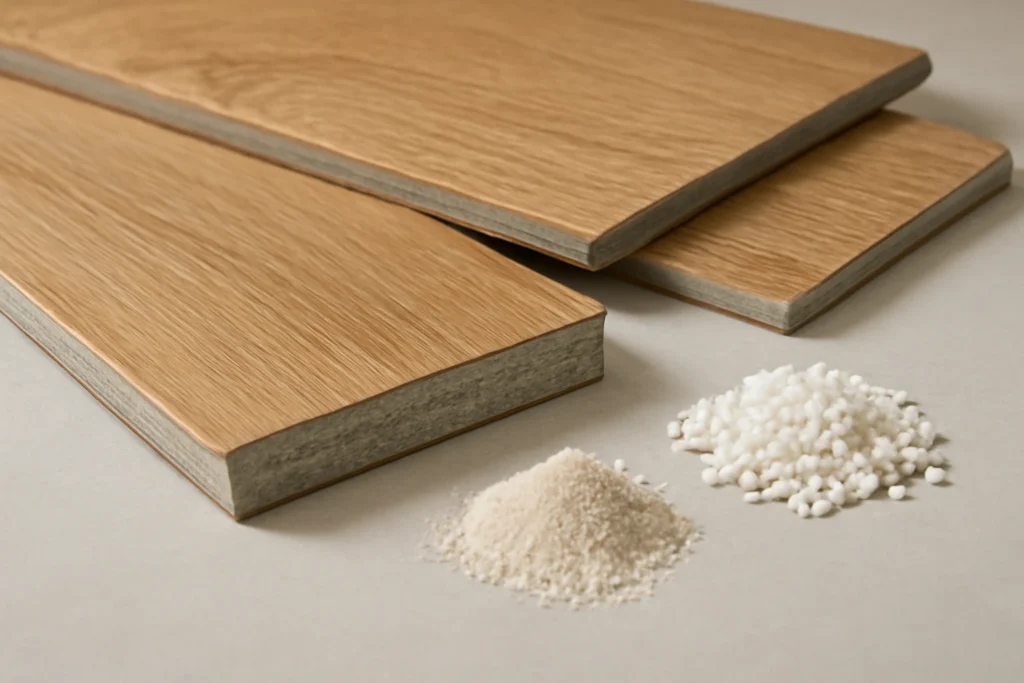
SPC stands for Stone Plastic Composite. The core mixes limestone powder, polyvinyl chloride, and stabilizers to form a dense, rigid plank. A printed décor layer copies wood, stone, or other finishes. A clear wear layer protects the image and fights scratches and stains. Many SPC products add a polymer backing to improve balance and cut sound.
How SPC Flooring Is Made
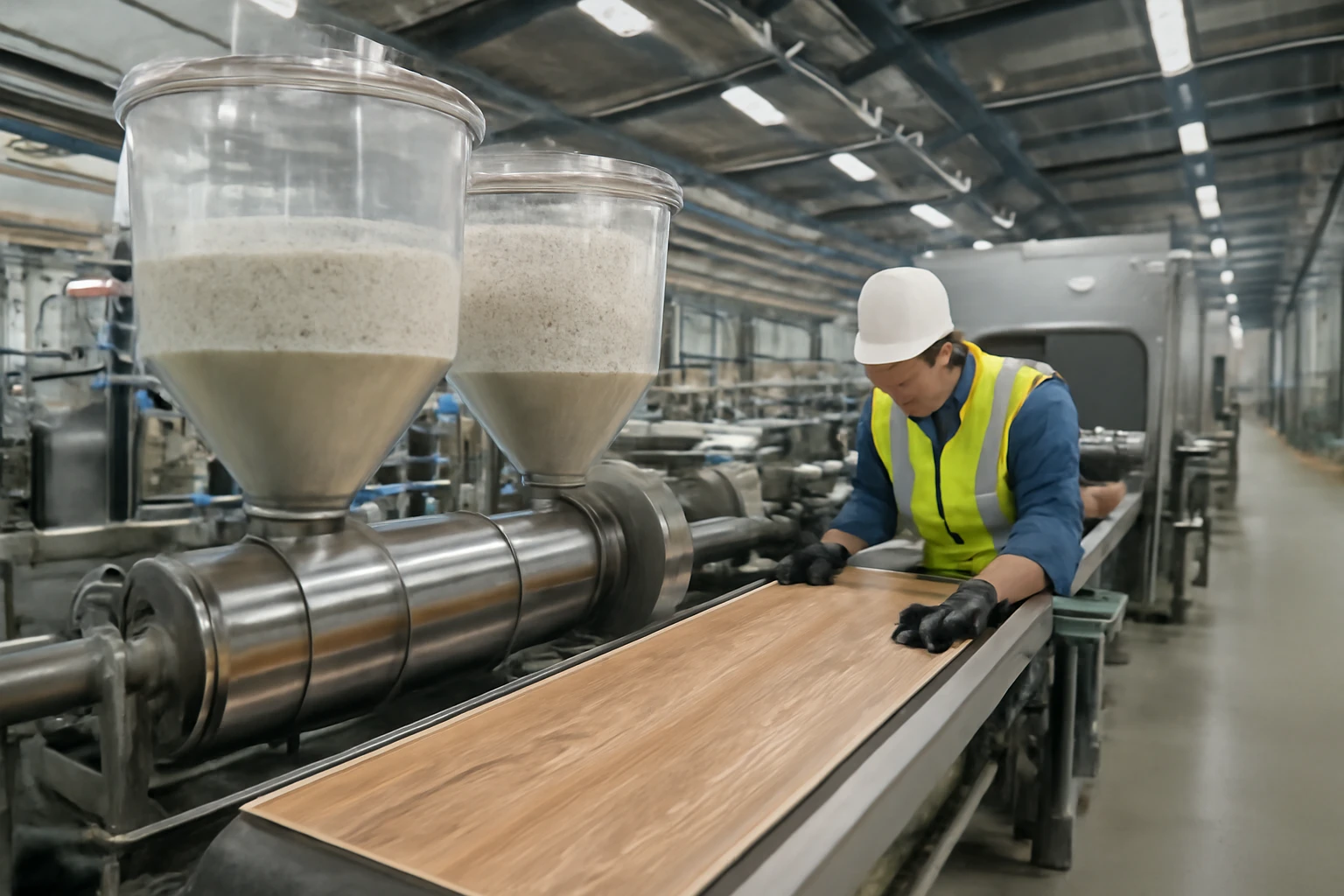
Production starts by mixing limestone powder and PVC resin into a stable mix. The blend is calendered and pressed to form rigid boards. A décor layer is printed in high definition and fused to the core. A UV-cured wear layer is added to boost scratch and stain resistance. Some factories attach an underlayment or acoustic foam at the end of the line.
Core Materials and Variations
SPC cores differ by formula. Standard cores use more limestone for extra density and stiffness. Some premium cores include impact modifiers to improve cold-weather flexibility. Core density and the compound change plank weight, sound transfer, and how the floor feels underfoot.
Wear Layers and Surface Finishes
Wear layers run from 0.3 mm on budget boards to 0.7 mm and up on commercial grades. Surface textures include embossed in register, hand-scraped, and wire-brushed. A thicker wear layer increases scratch resistance and extends useful life.
Benefits of SPC Flooring
In this guide, Floor Lands will tell you the SPC features that appeal to homes and commercial spaces. It is dimensionally stable, resists moisture, and most products install as a floating floor that clicks together.
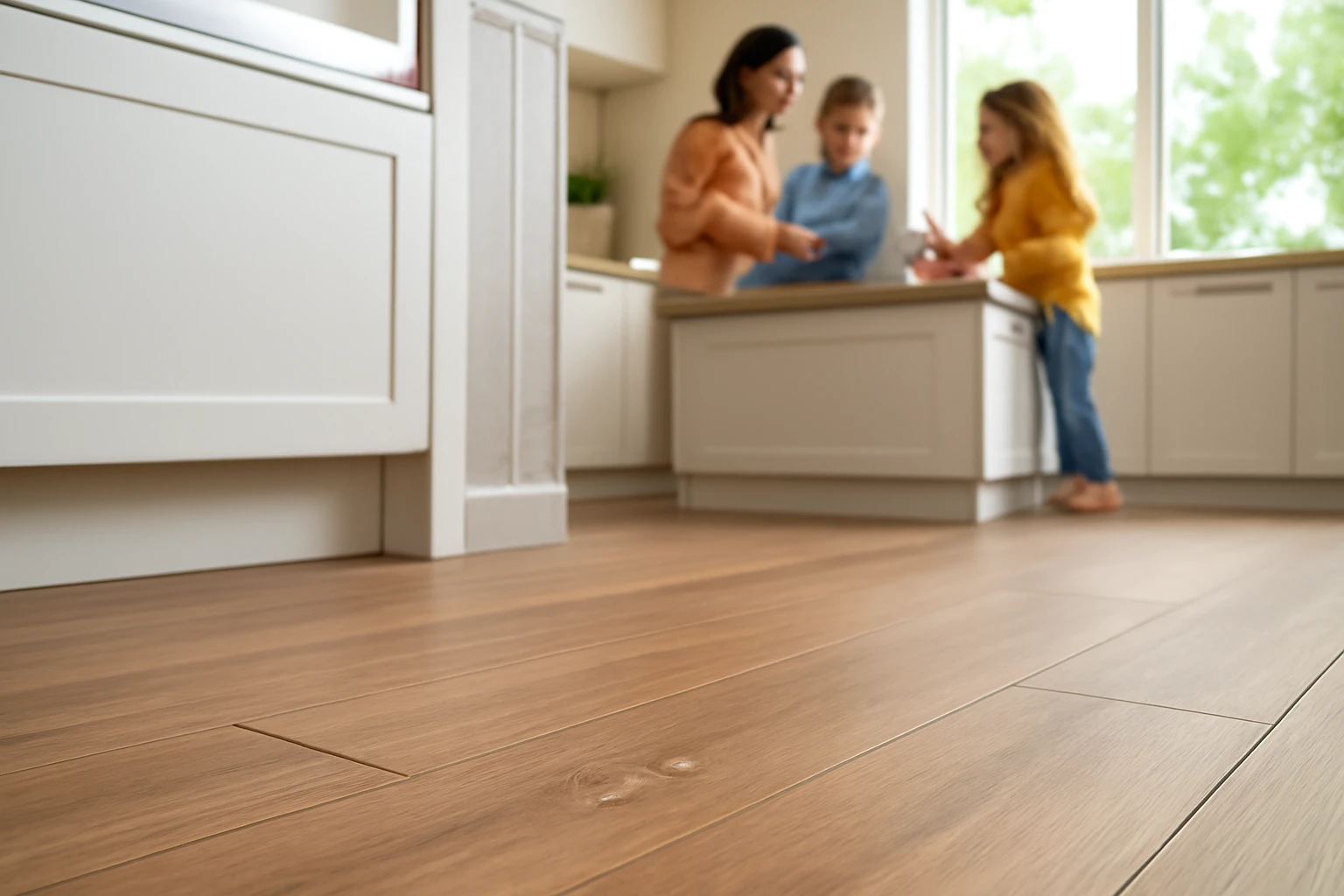
- Water resistance: Core does not swell from moisture like laminate.
- Dimensional stability: Keeps flat across temperature swings.
- Durability: Better resistance to dents and heavy traffic than many rigid vinyl types.
- Easy installation: Many boards use a floating click system for a fast fit.
- Wide style range: High-resolution décor layers mimic wood and stone closely.
- Low maintenance: Simple cleaning keeps the surface looking good.
Drawbacks and Limitations
SPC has trade-offs. It tends to be heavier and feels firmer than some floors. Thin wear layers reduce scratch resistance. Lower-cost SPC can have poor printing or lose finish quality over time.
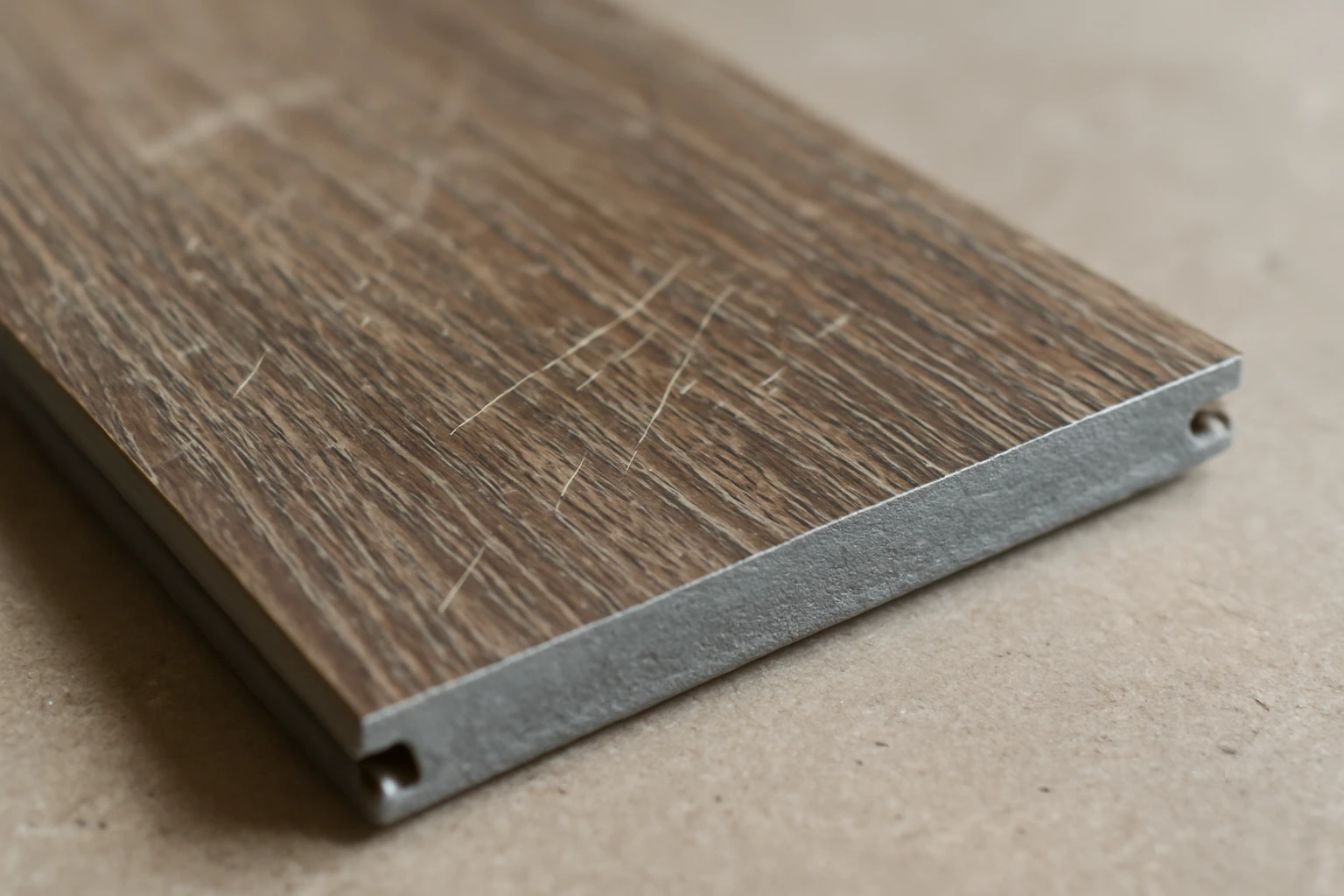
- Firm underfoot feel compared with cushioned vinyl.
- Not all SPC is the same; cheaper grades may show pattern repeat and rough edge finishing.
- Repairing individual planks can be harder when glued down rather than floating.
- Some formats do not reduce sound as well as thicker floors with dedicated underlayment.
How SPC Compares to Laminate and LVT
SPC sits between laminate and luxury vinyl tile (LVT) in construction and performance. The table below highlights key differences for a quick comparison.
| Feature | SPC Flooring | Laminate Flooring | Luxury Vinyl Tile (LVT) |
|---|---|---|---|
| Core Material | Stone-plastic composite, rigid | High-density fiberboard | Flexible vinyl or composite cores |
| Water Resistance | Very good, core waterproof | Poor to moderate | Good for many products |
| Dimensional Stability | Excellent | Moderate, swells with moisture | Good, flexible but less stiff |
| Typical Wear Layer | 0.3 to 0.7 mm | Decorative film with laminate overlay | 0.2 to 0.7 mm vinyl wear layer |
| Installation | Floating click or glue | Floating click | Floating, glue, or loose lay |
| Typical Use | Kitchens, basements, commercial | Living areas, dry rooms | Kitchens, bathrooms, retail |
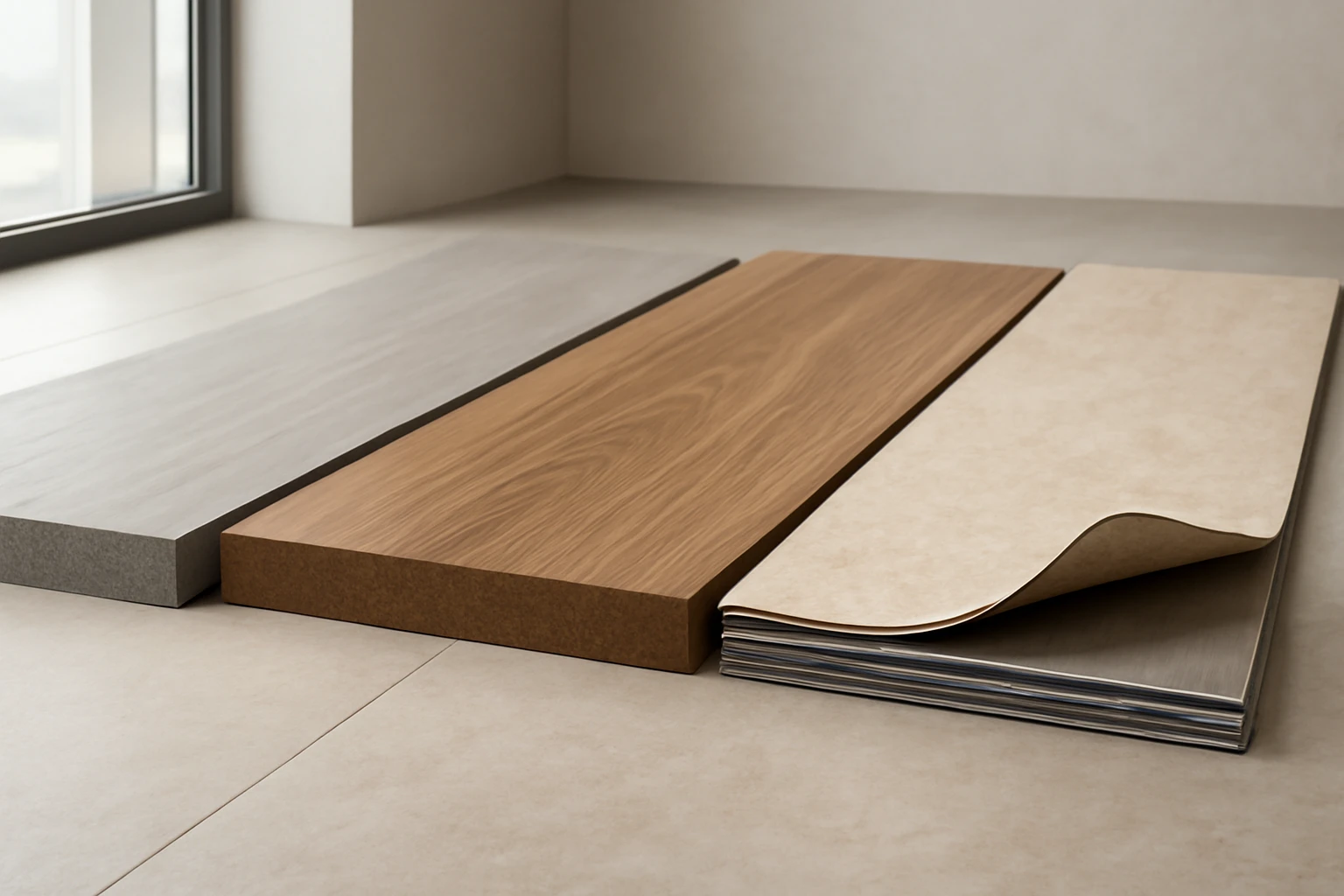
In projects where moisture resistance and dimensional stability matter, SPC is often the better choice. If you want a softer underfoot feel, pick cushioned vinyl or a laminate with a thick underlayment. You can read more about laminate options and care on the site’s Laminate Flooring page.
Installation Methods and Typical Costs
Installation method affects both cost and performance. SPC usually installs as a clicking floating floor but can be glued down or loose laid for heavy commercial use.
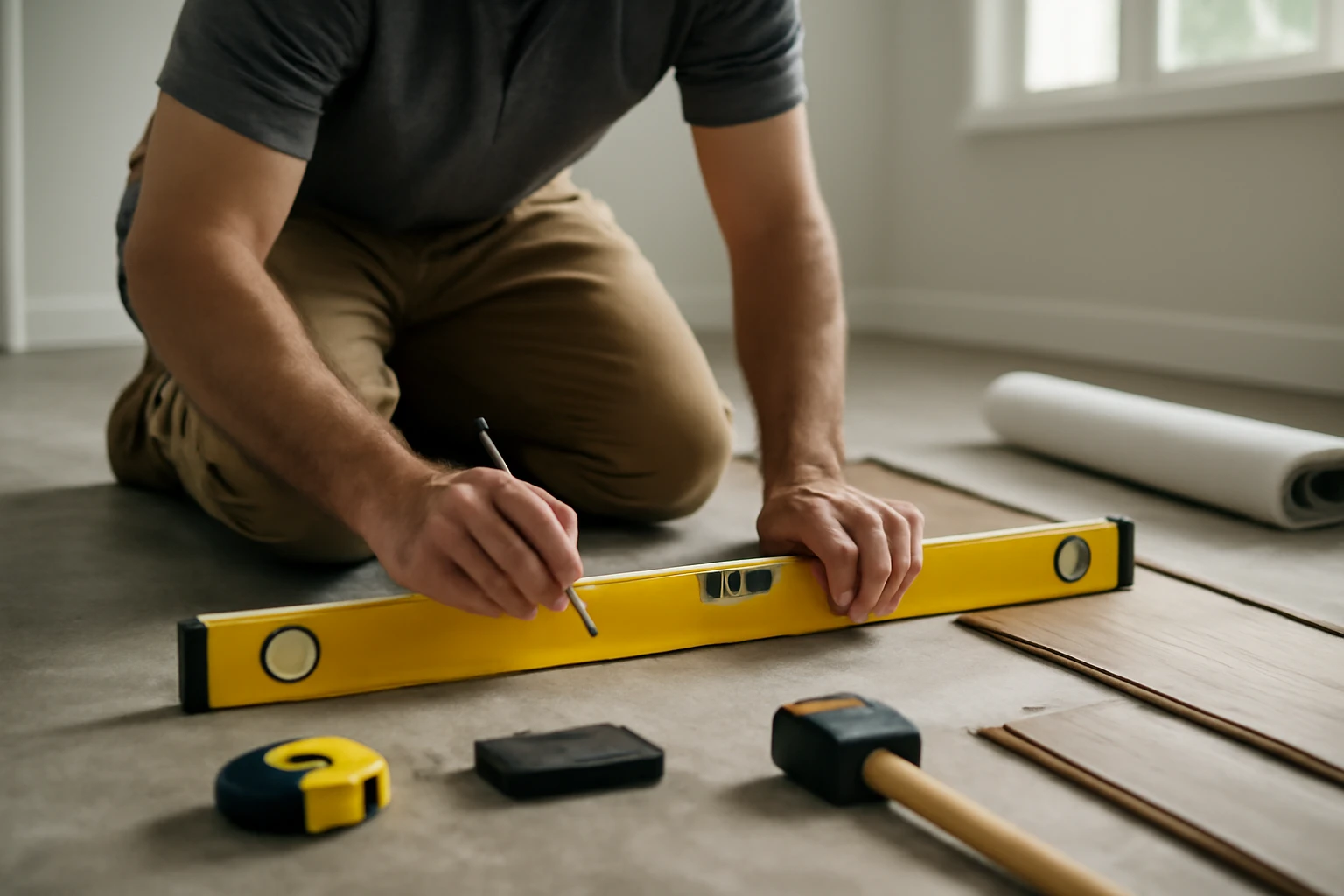
Floating Click Installation
Floating installation is the usual choice for homes. Boards lock together with a tongue-and-groove or angle-click system. A thin underlayment may help reduce noise. This method is quick and reversible.
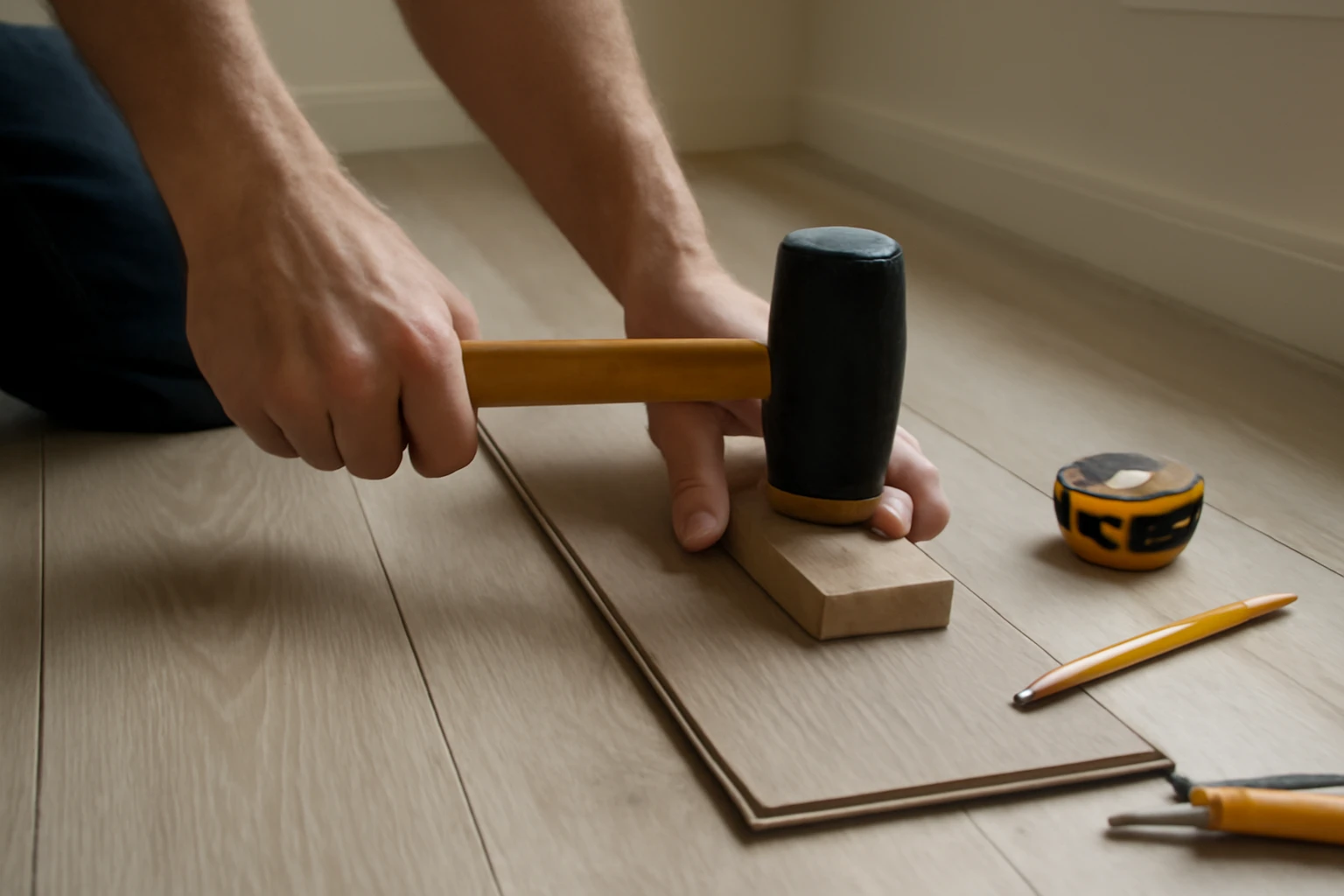
Tool Checklist:
- Pencil and tape measure
- Utility knife and pull bar
- Rubber mallet and tapping block
- Spacers and safety gear
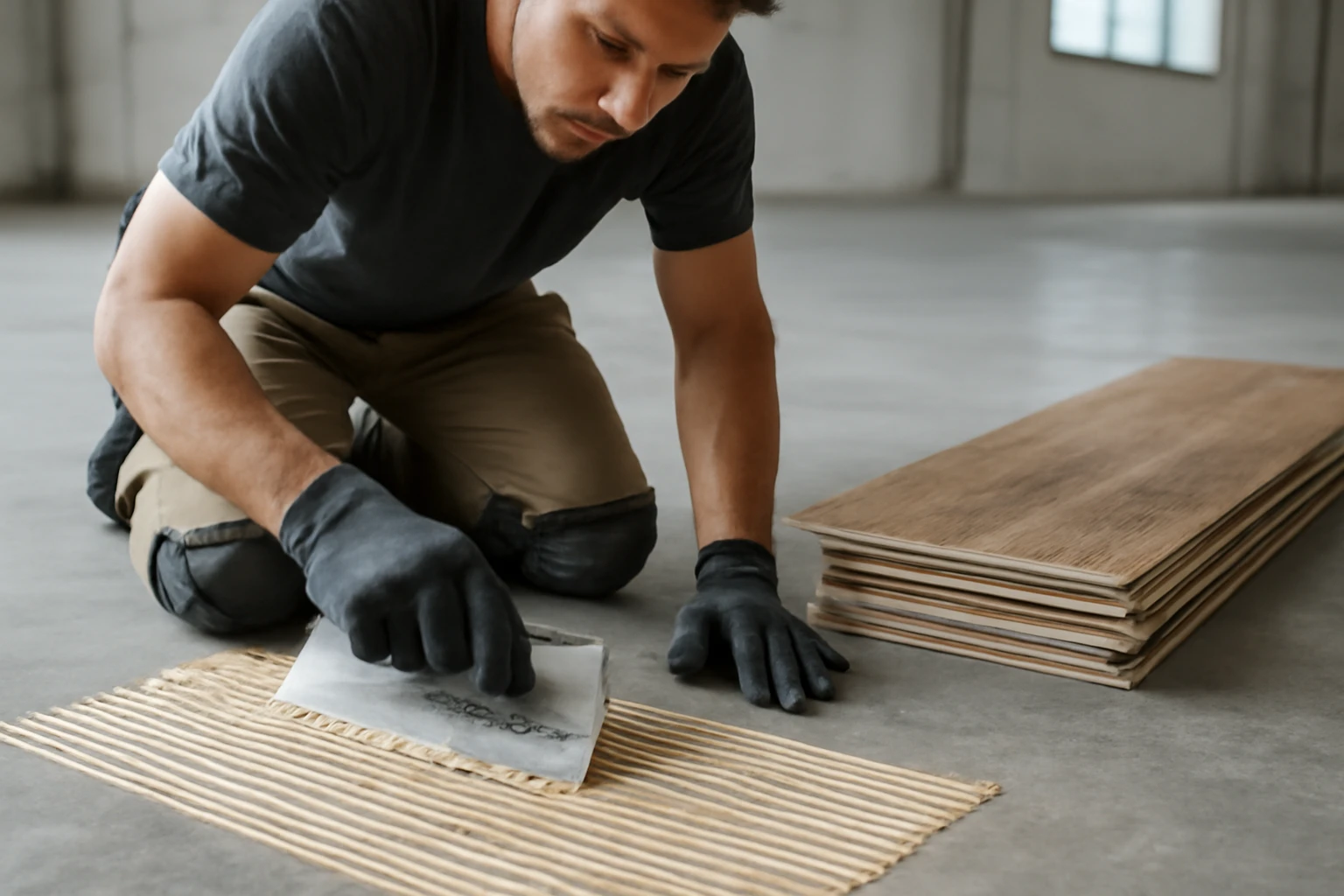
Glue Down Installation
Glue down makes sense for heavy commercial traffic or where a very flat surface is needed. Adhesives add permanence and can reduce hollow sounds underfoot.
Cost Table
| Task | Typical Cost Range (USD per sq ft) | Notes |
|---|---|---|
| Material Only | $1.50 to $4.00 | Depends on wear layer and décor quality |
| Basic Floating Installation | $1.50 to $3.50 | Includes underlayment and labor |
| Glue Down Installation | $2.50 to $5.00 | Includes adhesive and extra prep |
| Total Installed | $3.00 to $8.00 | Regional variation and site prep affect price |
Maintenance and Cleaning Tips
SPC is low maintenance, but a few habits extend its life and keep it looking new. Wipe up spills quickly and use nonabrasive cleaners.
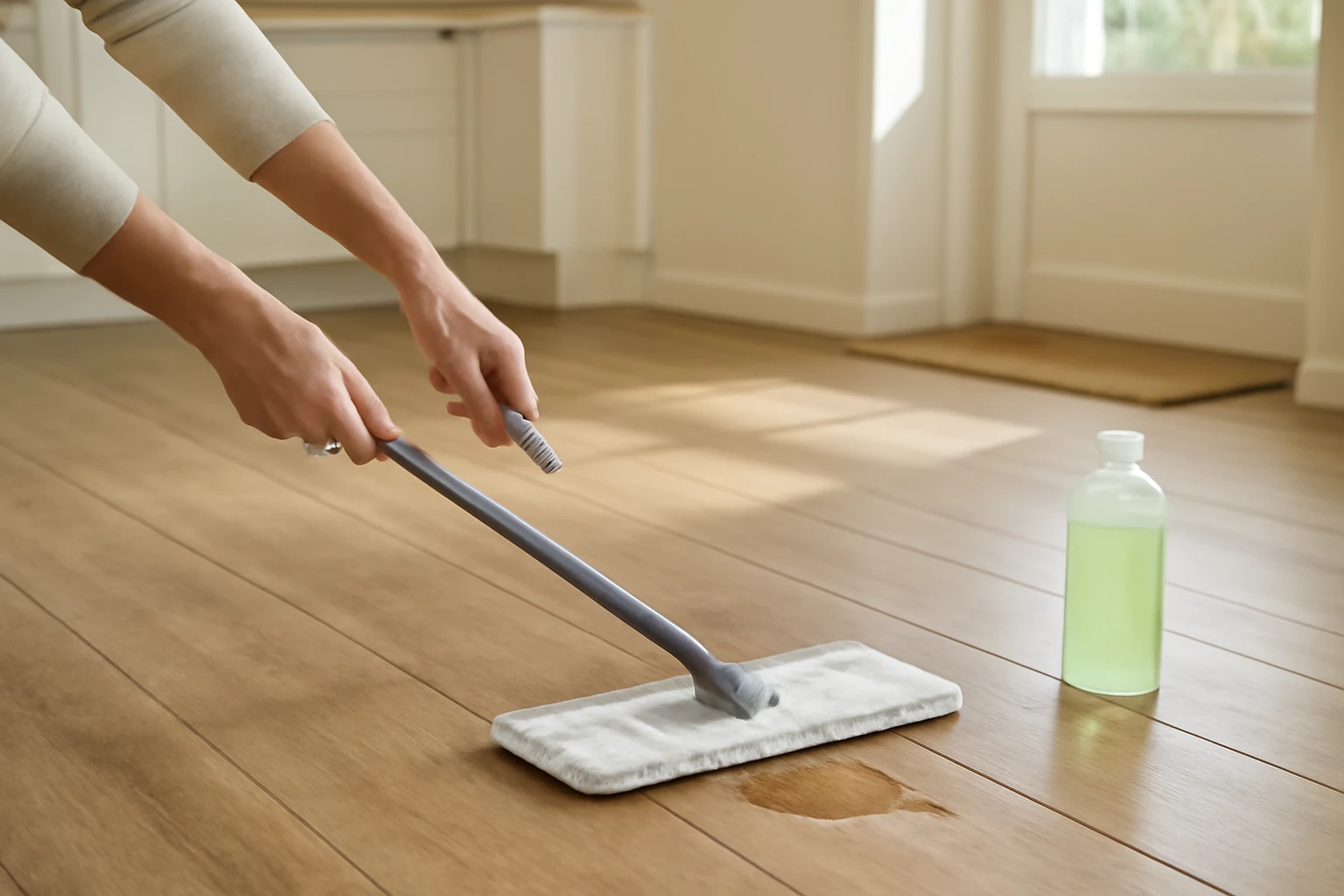
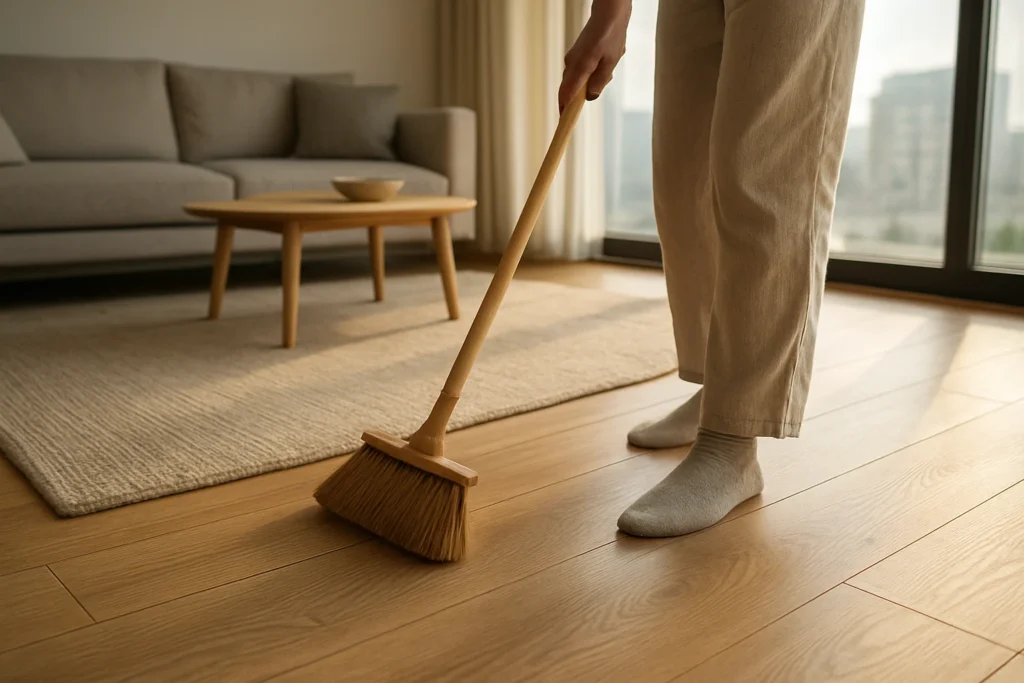
- Sweep or vacuum regularly to remove grit that wears the surface.
- Use a damp microfiber mop and a pH-neutral cleaner for deeper cleaning.
- Avoid steam cleaners unless the manufacturer allows them.
- Put protective pads under heavy furniture.
- Use mats at entries to trap sand and dirt.
For cleaning routines and product tips for other floor types, see the site’s guides for How to Clean Laminate Flooring Safely and Effectively and How to Clean Bamboo Flooring Without Damaging the Finish.
Choosing SPC for Your Project
Choose SPC based on the room and the performance you need. For kitchens, basements, and busy commercial corridors, SPC is a strong choice. For luxury rooms where a warm, soft feel is a priority, add underlayment or consider other wood-floor options.
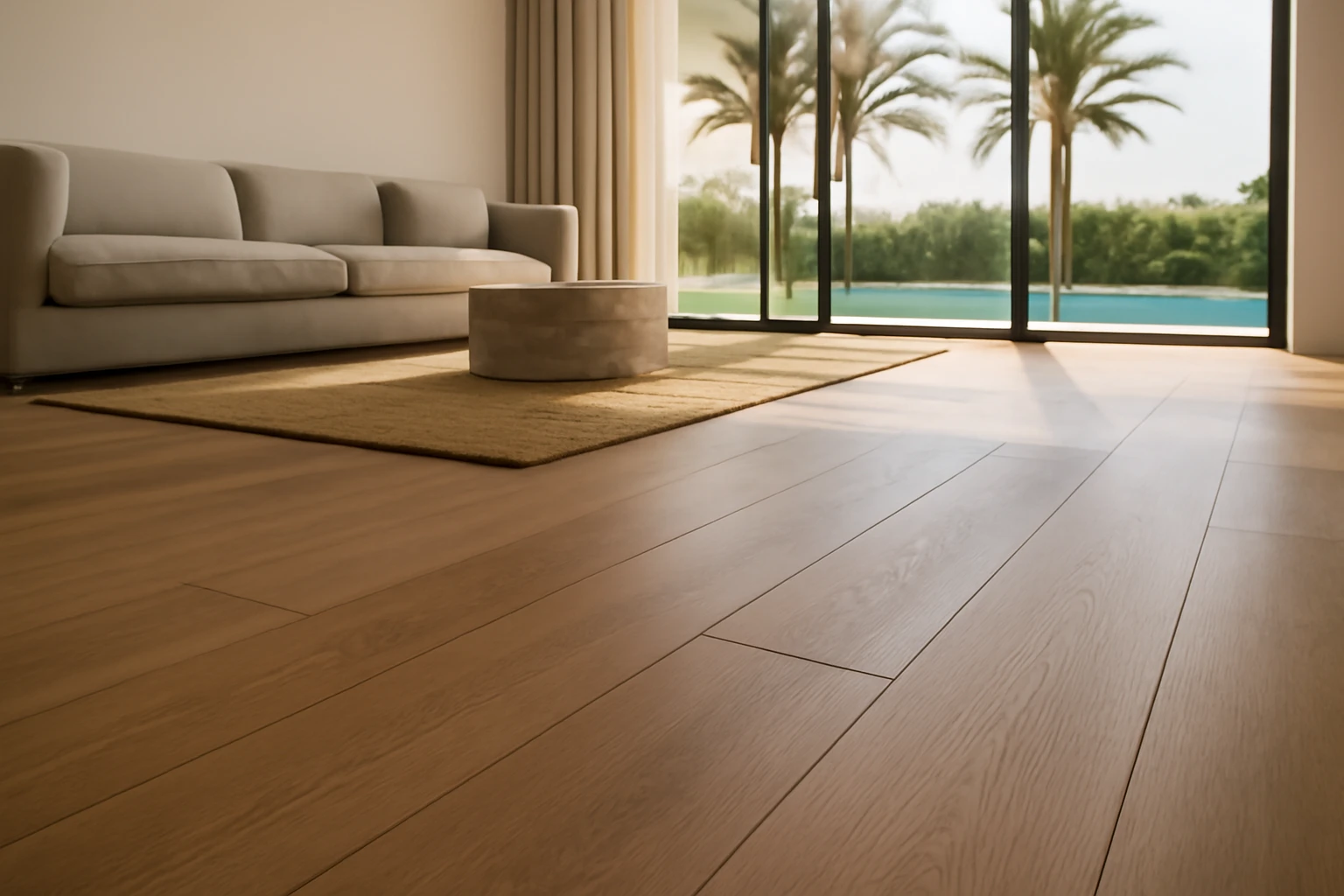
A common mistake is assuming all SPC is the same. Check wear layer thickness, edge quality, and backing before you buy. A mid-range wear layer with a well-finished edge often gives the best balance of cost and lifespan.
For broader comparisons of flooring choices in the region, consult the site’s review of Best Flooring Options in Dubai for Homes, Offices and Villas.
Environmental Impact and Health Considerations
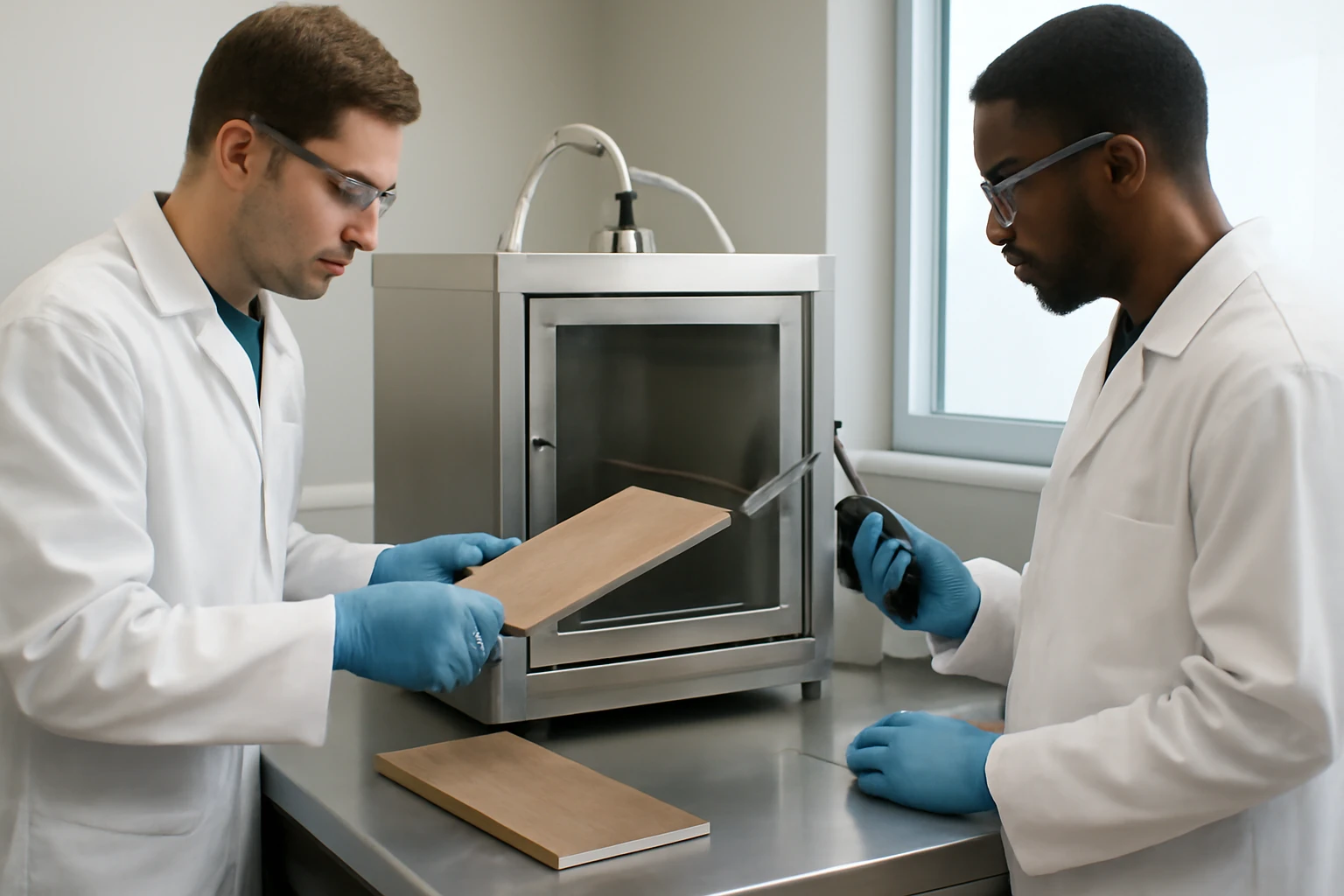
SPC includes PVC and mineral fillers. Modern factories limit harmful additives and follow emissions standards. Low VOC rated SPC and certified manufacturing help reduce indoor air concerns. Recycling options lag behind wood, but some makers offer take-back programs for production waste.
Common Mistakes and How to Avoid Them
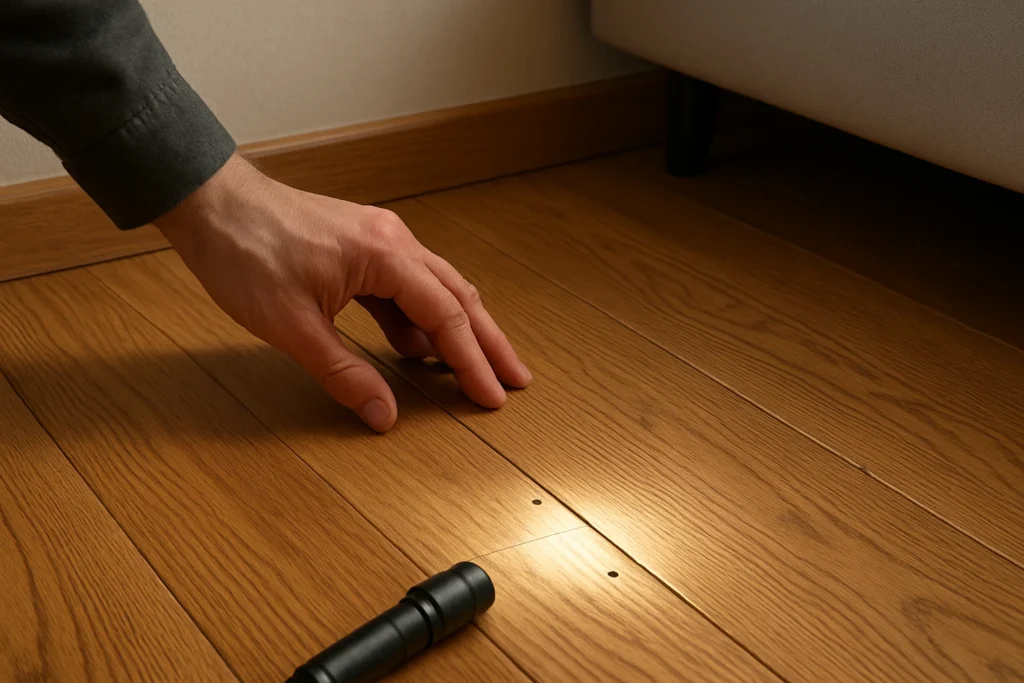
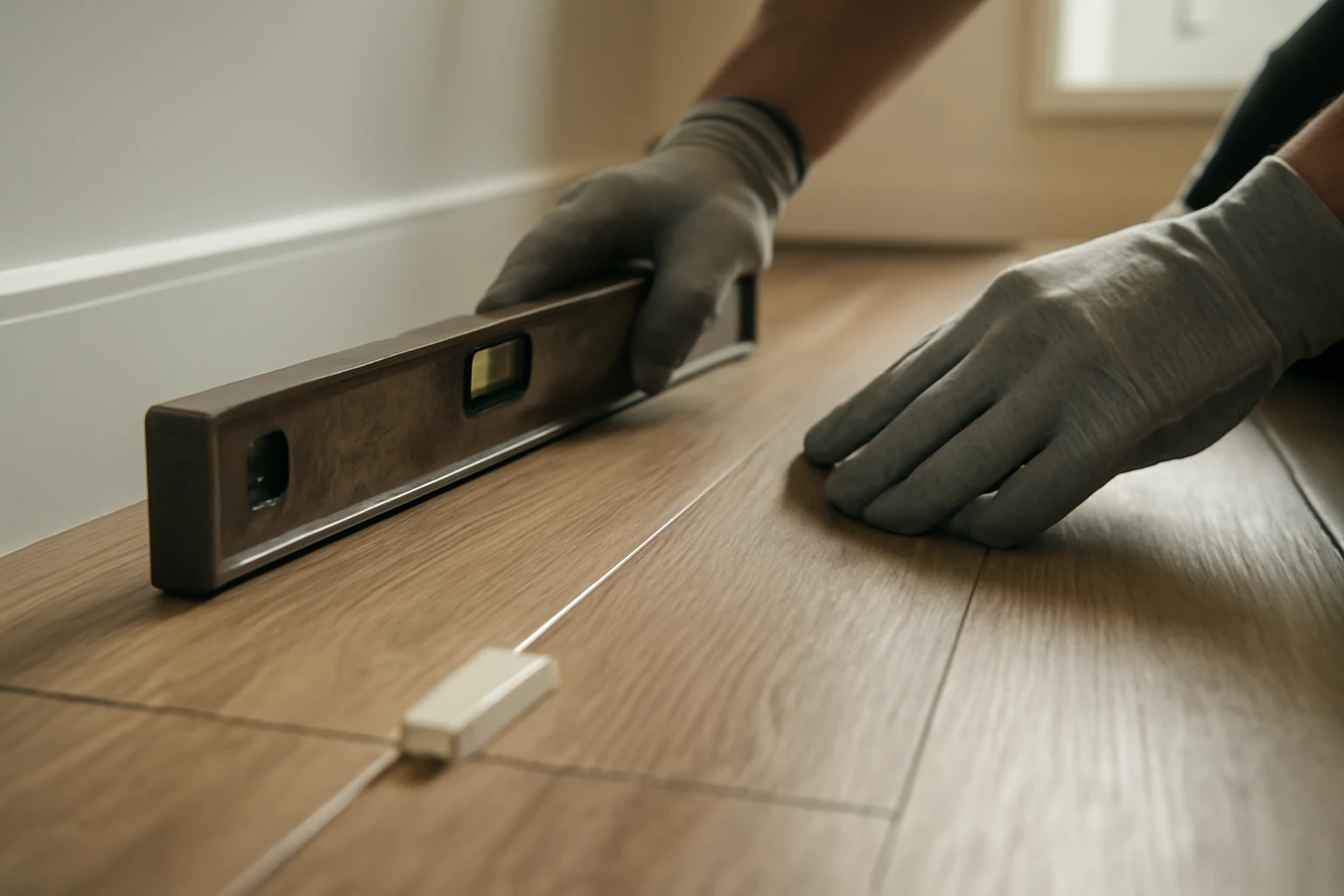
- Skipping subfloor prep. Use a long level to check flatness. Uneven subfloors cause clicking and early wear.
- Choosing too thin a wear layer. For busy homes pick at least 0.5 mm for longer life.
- Installing without expansion gaps in high-humidity areas. Always follow manufacturer gap recommendations.
When Not to Use SPC
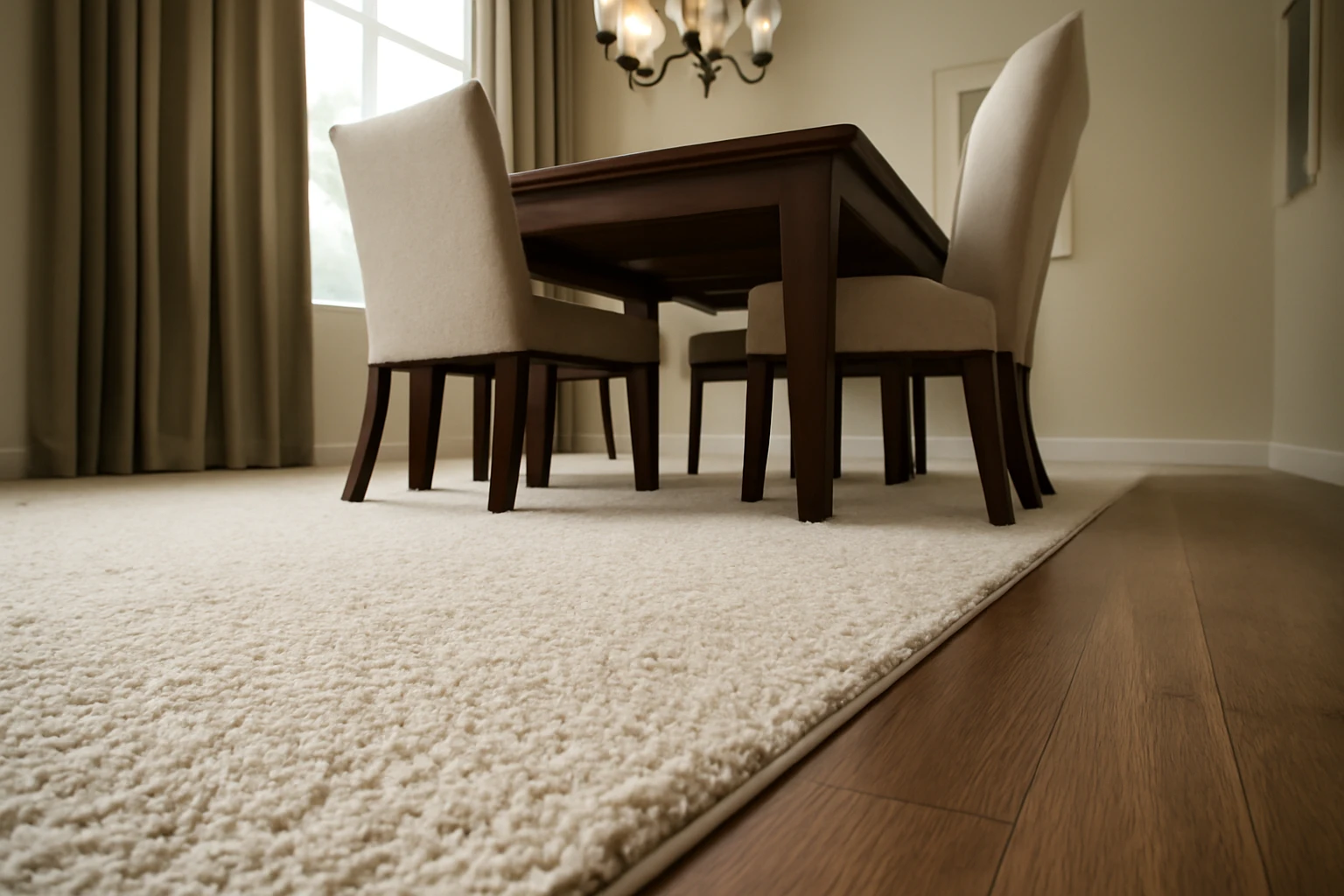
SPC is not the best pick when you need a very soft underfoot feel, or when a project calls for authentic nail-down hardwood. It may also fall short for impact noise control in multi-story buildings unless you add an acoustic underlayment.
Final Selection Checklist
- Confirm required wear layer for your traffic level.
- Check core and edge quality in person if you can.
- Decide on an installation method and budget for subfloor prep.
- Verify warranty terms and return policies.
- Consider acoustic underlayment if noise control is needed.
For project-specific help, and to compare SPC with other resilient floors such as PVC Flooring or wood options like Solid Wood Flooring, contact a trusted installer and request samples.
Frequently Asked Questions
Is SPC Flooring Waterproof or Water Resistant?
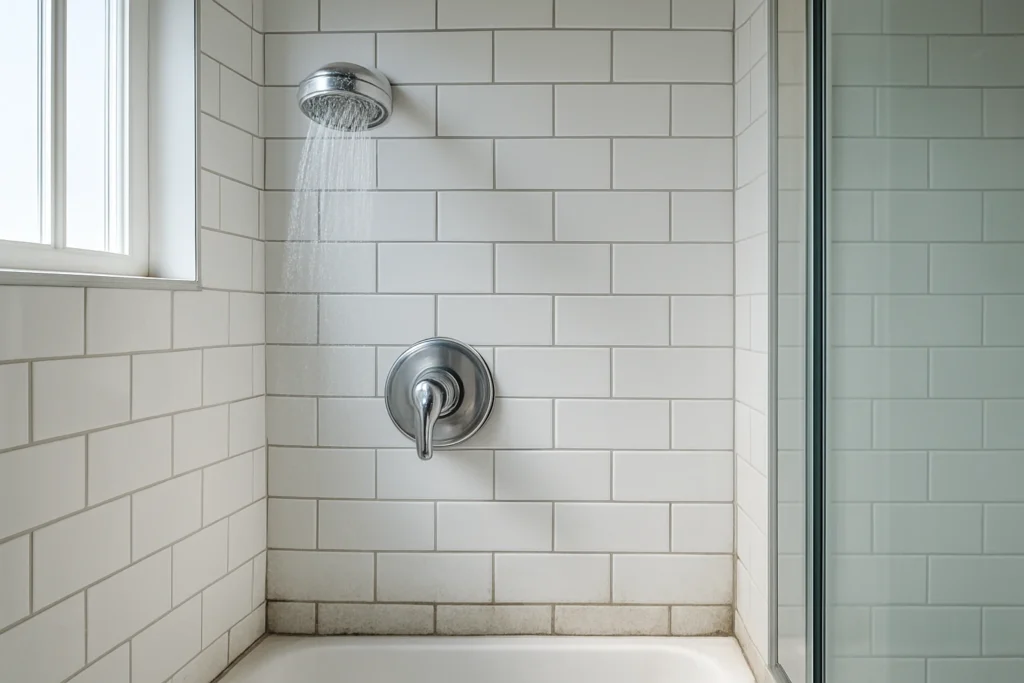
SPC flooring is highly water resistant because the core does not swell with moisture. It is suitable for kitchens, bathrooms, and basements when installed with proper perimeter gaps and sealed transitions. Seams and edges should be kept clean and dry for best results.
How Long Does SPC Flooring Last in a Home?
A quality SPC floor with an adequate wear layer typically lasts 15 to 30 years in residential use. Lifespan depends on wear layer thickness, traffic, maintenance, and installation quality. Heavier commercial use shortens service life.
Can SPC Flooring Be Installed Over Existing Tile or Wood?
Yes. SPC can be floated over many flat, stable surfaces including tile and some wood floors. The subfloor must be level within manufacturer tolerances and clean. Large grout lines or high spots should be leveled before installation.
Is SPC Flooring Easy to Repair If a Plank Is Damaged?
If installed as a floating click system, single damaged planks can be removed and replaced with moderate effort. Glue-down installations are more difficult to repair since adhesive can complicate plank removal.
How Does SPC Compare to LVT for Durability?
SPC is generally stiffer and more dimensionally stable than flexible LVT, which improves resistance to indentation and thermal movement. Both can be very durable, but SPC often performs better under heavy loads and in fluctuating temperatures.