How to clean laminate flooring: Sweep or vacuum loose dirt. Use a damp microfiber mop with a pH-neutral cleaner. Blot spills quickly and avoid soaking the seams. For heavier soil, use a diluted vinegar solution or a manufacturer-approved cleaner and dry the floor right away to prevent swelling.
Key Statistics
- Typical laminate plank wear layers range from 6 to 12 mil for residential use.
- A daily sweep or vacuum reduces loose grit that causes about 70 to 90 percent of surface wear.
- Average consumer cost for laminate ranges from $1.50 to $5 per square foot, which affects replacement planning.
Laminate looks like wood but acts differently when wet. Clean it gently and on a schedule to protect the finish and keep seams tight. Small habits save you from big problems later: sweep first, use very little water, and dry the surface after cleaning.
Prepare the Room Before Cleaning
Clear loose items, rugs, and move furniture out of the way before you start. This prevents missed spots and cuts the chance of scratching.
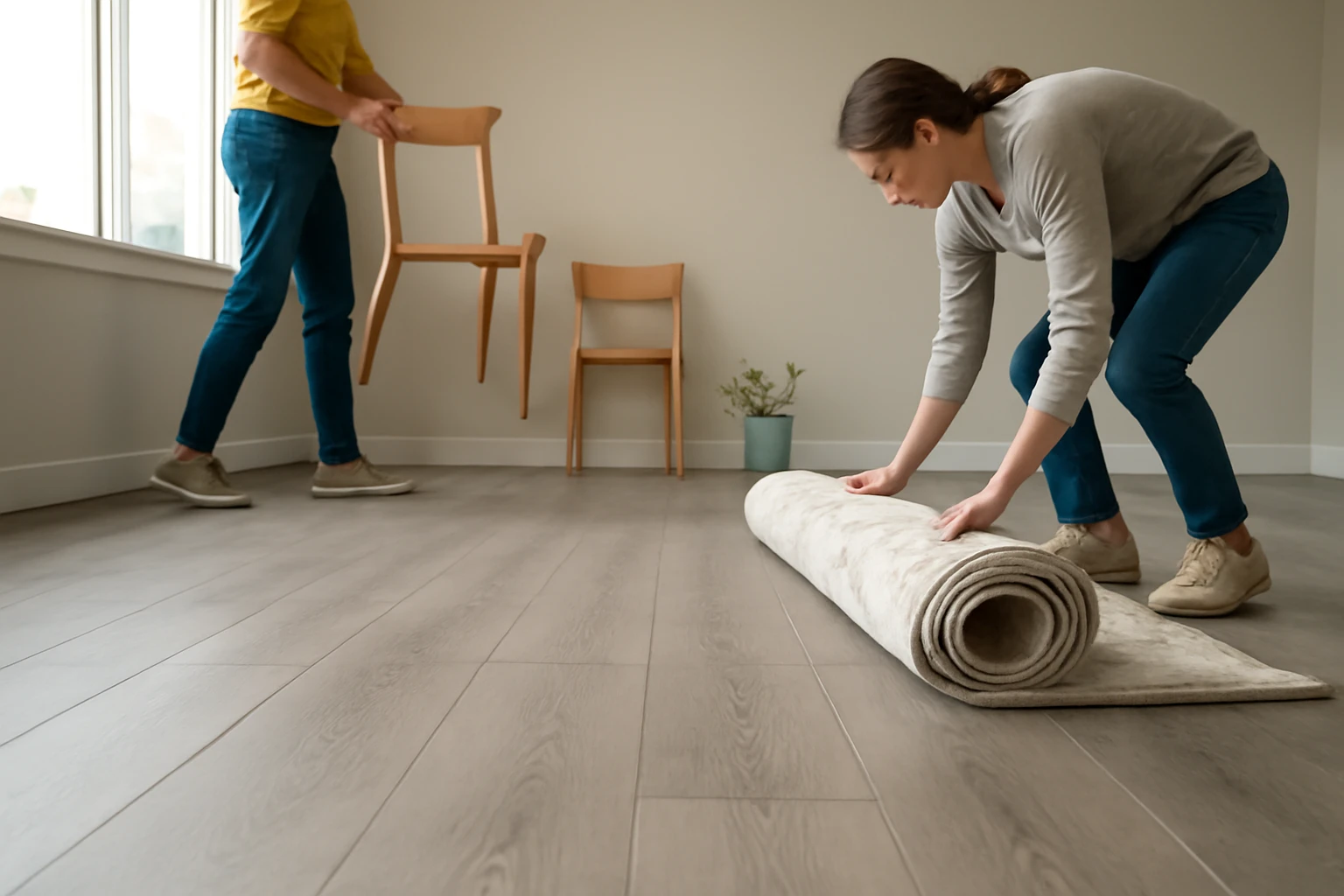
What to do first
- Pick up toys, cords, and small debris by hand.
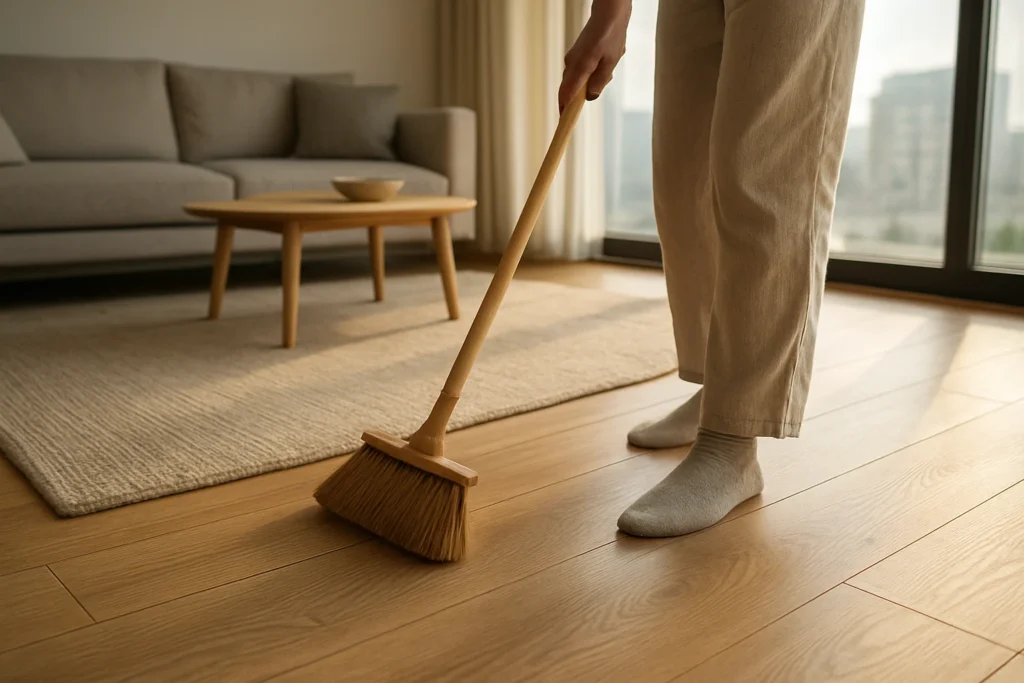
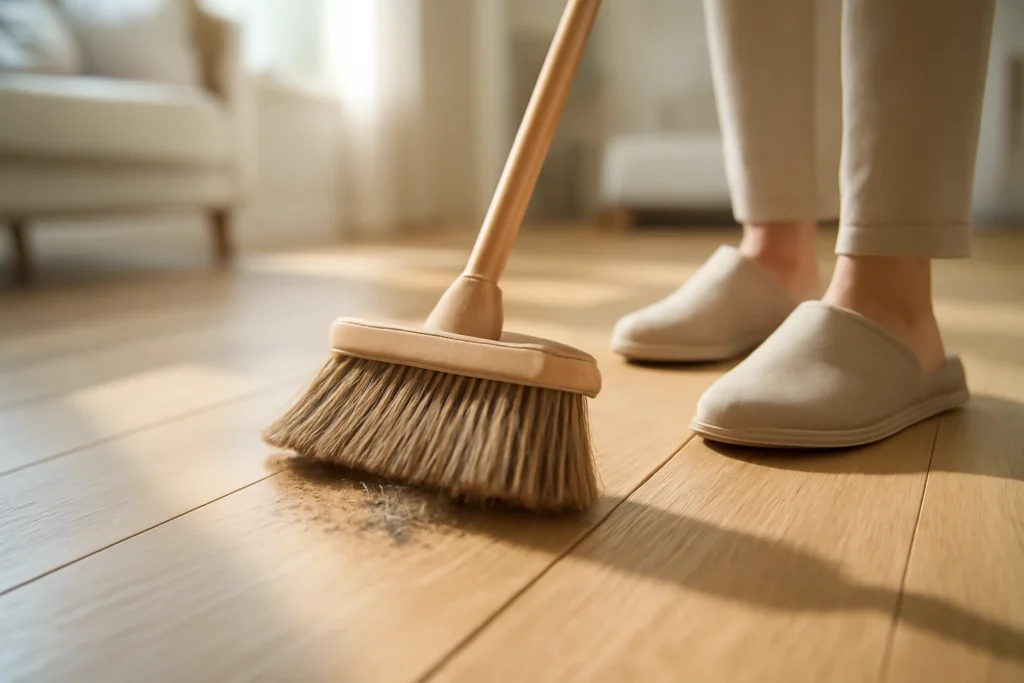
- Vacuum with a hard-floor setting or sweep with a soft broom.
- Protect baseboards and appliances with painter tape if you plan a wet clean.
Tool Checklist
| Tool | Purpose |
|---|---|
| Microfiber dust mop | Daily dust and grit removal without scratching |
| Vacuum with hard-floor nozzle | Picks up grit from grooves and edges |
| Microfiber mop or flat mop | Damp mopping with minimal water |
| Spray bottle | Apply cleaner sparingly on problem spots |
| Soft cloths | Buff and dry small areas |
Tip: Use the right vacuum head. A beater bar can scuff a laminate surface. If you want a quick primer on product types, see types of laminate flooring to match cleaners to your finish.
Daily and Weekly Care
A short routine keeps laminate looking new and prevents dirt from wearing the finish.
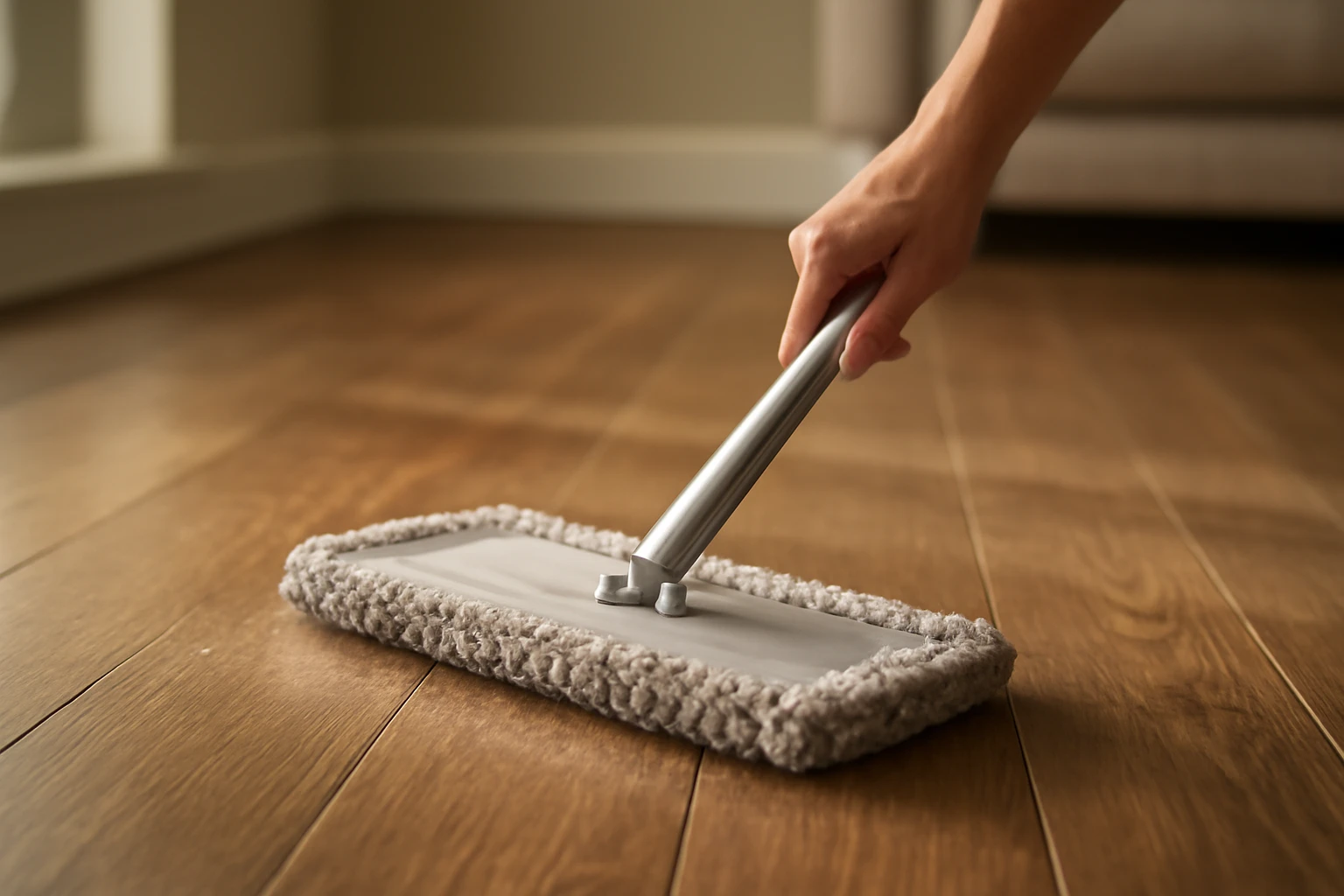
Daily habits
- Sweep or dust-mop once a day in high-traffic zones. This removes abrasive grit.
- Wipe spills immediately with a soft cloth. Rapid action prevents staining and swelling.
Weekly routine
- Vacuum edges and grout lines with a crevice tool once a week.
- Damp-mop with a minimal amount of cleaner once a week in living areas. Excess moisture is the main cause of seam swelling.
Quick tips
- Use felt pads on furniture legs and replace them when worn.
- Track-in grit from shoes is the top cause of surface wear. Use entry mats and remove high heels indoors.
Step by Step Deep Cleaning for Laminate Flooring
When dirt builds up, follow a careful multi-step process to clean without damaging the finish.
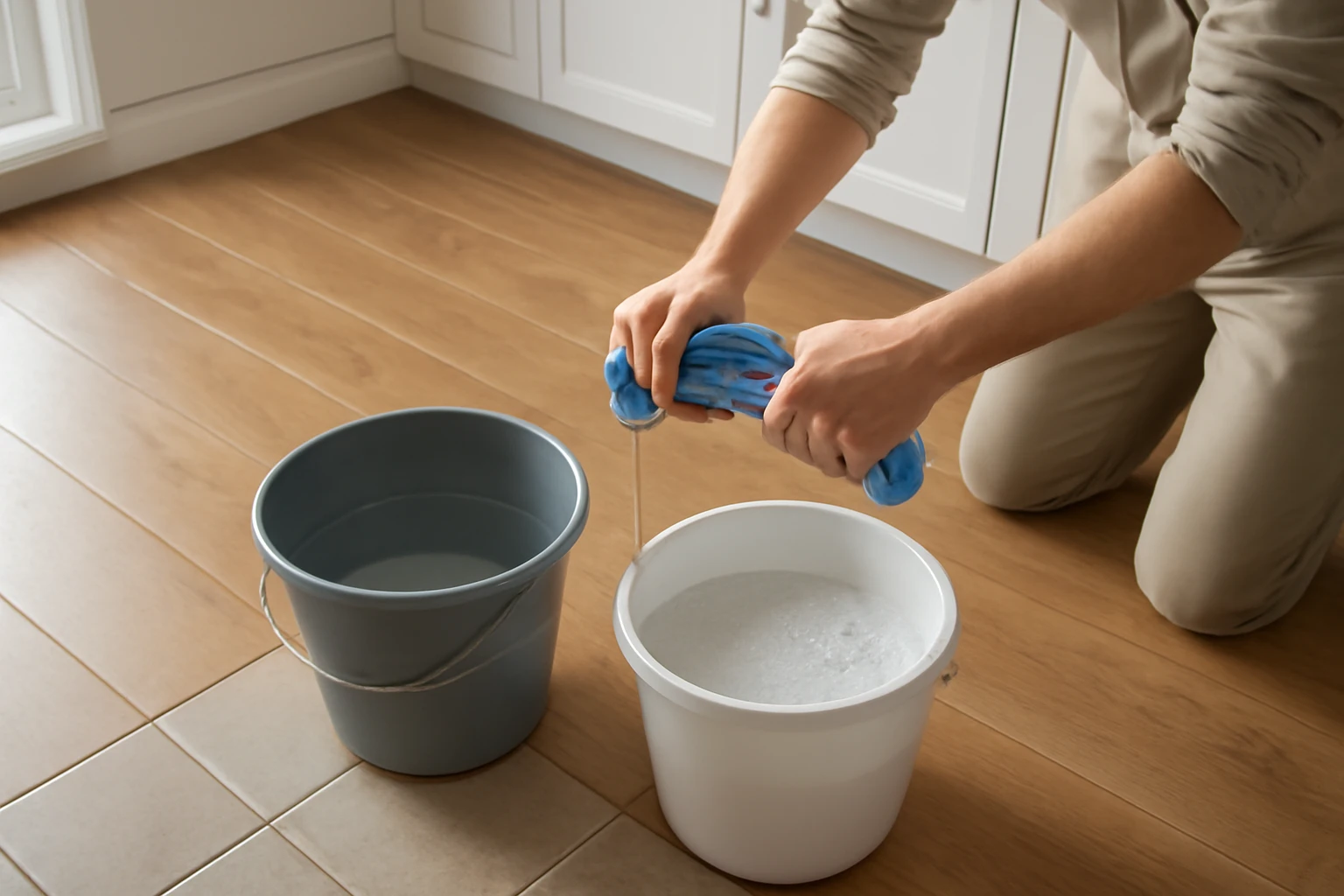
Deep clean steps
- Remove loose debris by vacuuming or sweeping.
- Mix a cleaner: manufacturer-approved cleaner or a mild DIY mix (one cup water to one cup white vinegar for heavy soil, then dilute further to a 1:4 ratio for mopping). Test in an inconspicuous spot first.
- Use a microfiber mop dampened and well wrung. Work in small sections.
- Rinse the mop often and change water when it becomes cloudy.
- Immediately dry each section with a clean cloth or microfiber pad.
Safety note: Some laminate manufacturers warn against vinegar regularly because long-term use can dull some finishes. When in doubt, follow the floor maker’s instructions on product pages or labels.
Step by Step Treating Coffee and Tea Stains
Treat fresh spills by blotting. For set stains, apply cleaner and gently rub with a soft cloth. Avoid abrasive scrubbing.
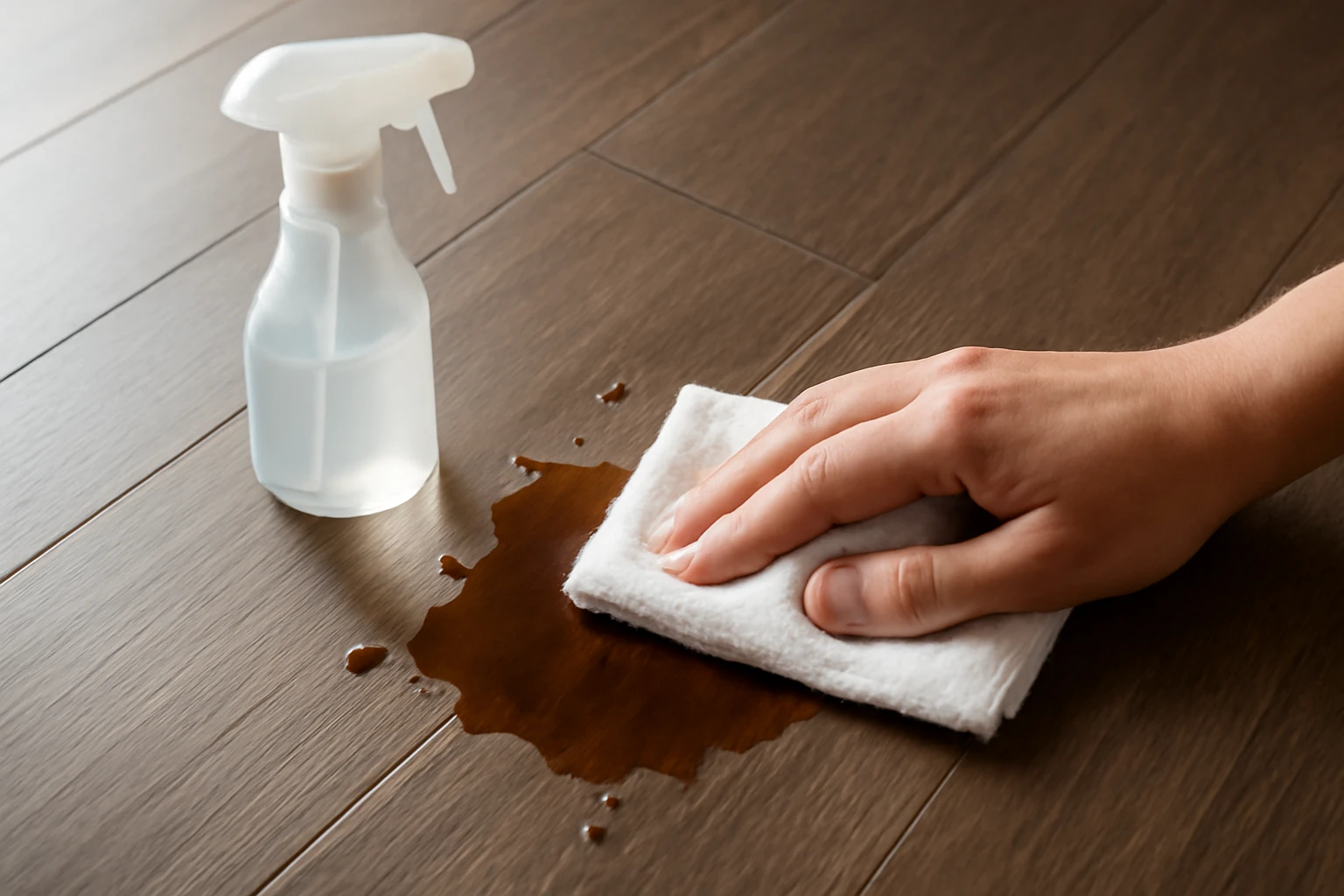
Process
- Blot, do not rub, to catch pigment without pushing it deeper.
- Spray a little cleaner on the cloth, not the floor, then wipe.
- Rinse the cloth frequently. Finish by drying with a fresh cloth.
Remove Scuff Marks and Surface Scratches
Light scuffs usually lift with an eraser or vinyl floor cleaner. For small scratches, use a manufacturer-approved repair kit.
- Gently rub scuffs with a rubber eraser or a melamine sponge dampened slightly.
- If the scratch catches your fingernail, consider a repair kit designed for laminate.
Cleaning Solutions That Are Safe for Laminate Flooring
Pick products that clean without stripping the wear layer. Check pH and purpose before use.
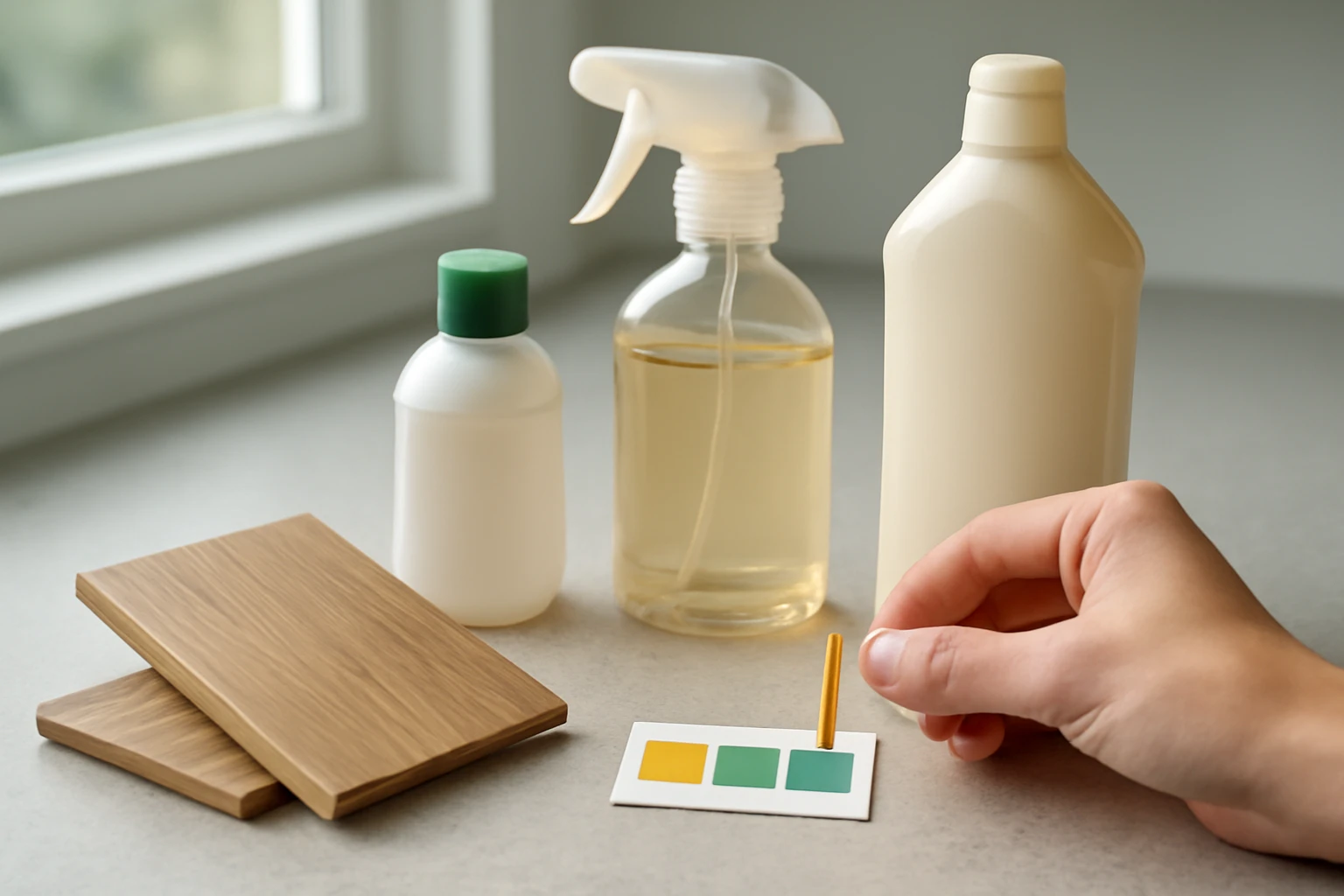
Cleaner Comparison Table
| Cleaner Type | pH Range | Best Use | Notes |
|---|---|---|---|
| pH-neutral commercial laminate cleaner | 7 to 8 | Weekly and deep cleaning | Manufacturer recommended for many laminates |
| Diluted white vinegar solution | 2.5 to 3 | Heavy soil when diluted 1:4 | Test first; avoid frequent use on sensitive finishes |
| Isopropyl alcohol spot cleaner | ~7 | Sticky residue removal | Use sparingly and wipe dry fast |
| Wax or oil-based cleaners | N/A | Not recommended | Can leave residue and change sheen |
In many cases a modern laminate will respond well to a cleaner listed on the floor’s product page. For related types of resilient floors, you can compare methods on pages for Lvt Flooring or Vinyl Flooring to see subtle differences in recommended products.
What to Avoid with Laminate Flooring
Certain habits cause the most damage to laminate and are easy to stop.
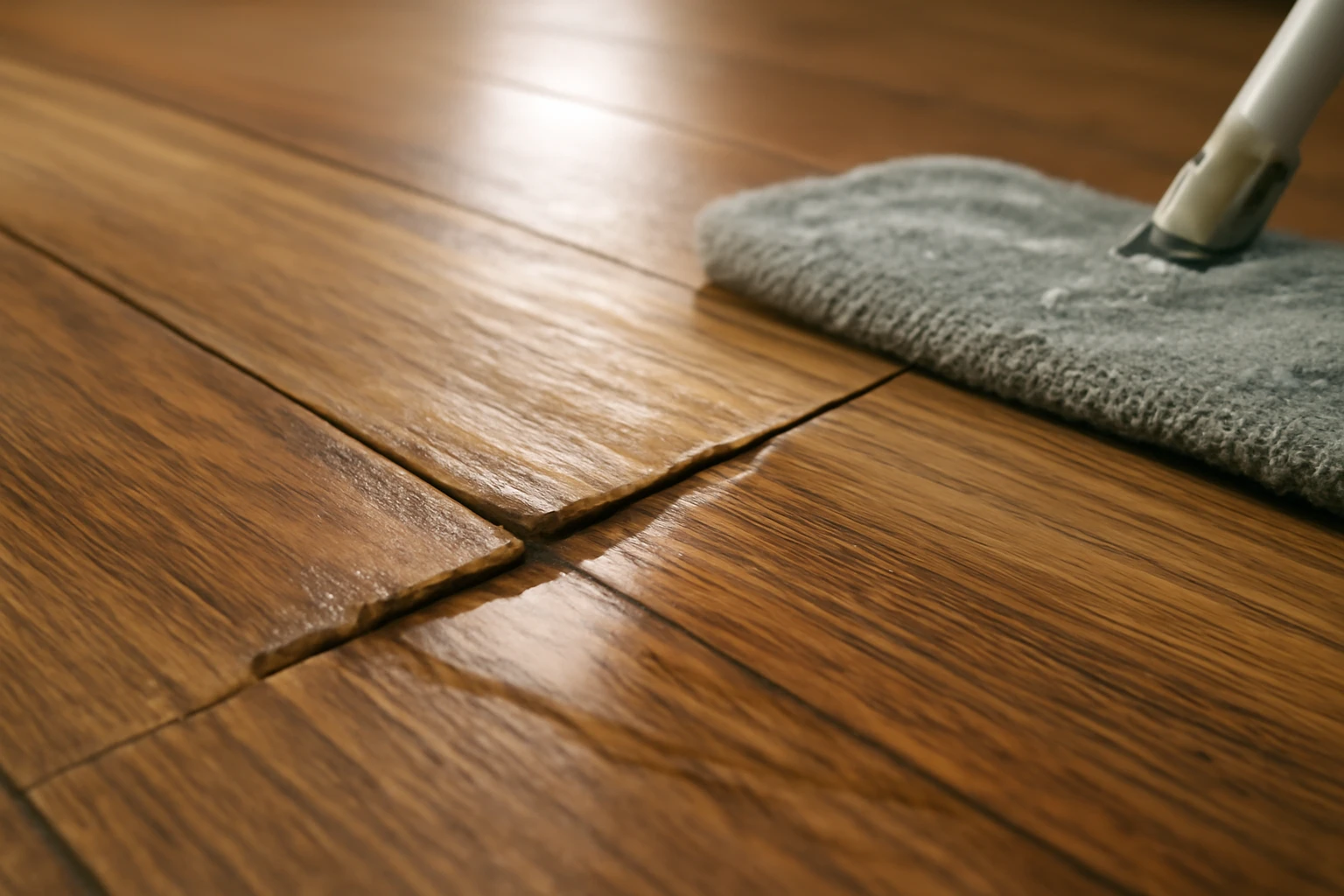
Avoid these common mistakes
- Do not use steam mops. Heat and moisture can force seams apart and warp planks.
- Do not flood the floor. Standing water soaks into seams and core layers.
- Do not use abrasive cleaners or pads. These can remove the wear layer.
- Avoid wax, polish, or oil-based products. They can leave residue and make the floor slippery.
A common mistake is thinking more water cleans better. It rarely does. Use a damp mop, not a wet one.
Regular Maintenance and Long Term Care
A predictable maintenance plan extends life and keeps the finish consistent across rooms.
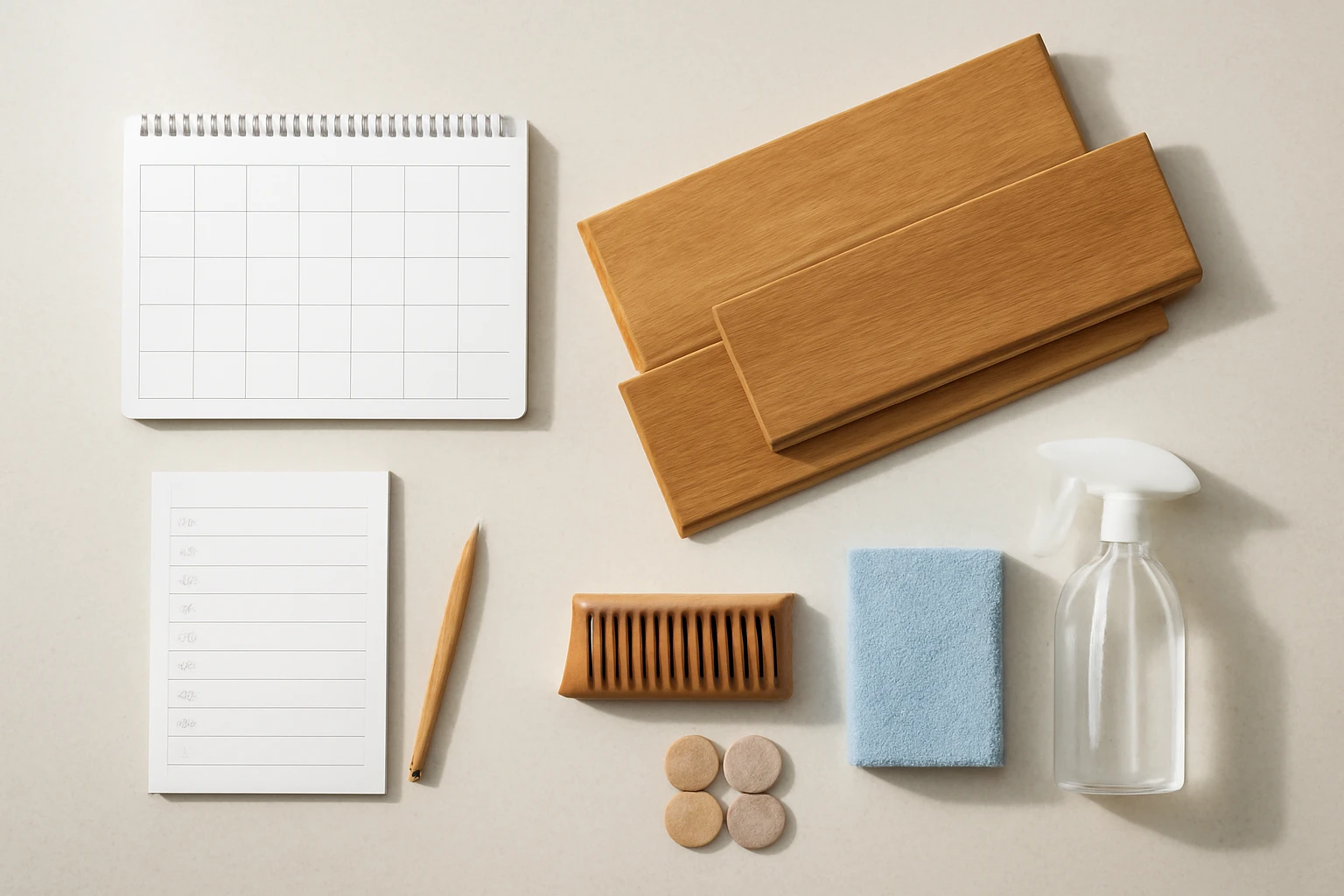
Maintenance Schedule
| Frequency | Task |
|---|---|
| Daily | Sweep or dust-mop high-traffic areas |
| Weekly | Vacuum edges and damp-mop with pH-neutral cleaner |
| Monthly | Check and replace felt pads on furniture |
| Annually | Inspect seams and transition strips; consider recoating if recommended by manufacturer |
Protective steps
- Use area rugs in entryways and under dining tables.
- Maintain indoor humidity between 30 and 50 percent to reduce expansion and shrinkage.
- When installing or replacing floors in moisture-prone rooms like kitchens, consult specific guidance for kitchen-grade products on the Kitchen Flooring page.
We find that a small investment in door mats and furniture pads pays off many times over in reduced wear.
Costs, Time and Environmental Considerations
Estimate time and cost before you begin a big cleaning or repair project.
Time and cost estimates
- Weekly cleaning: 15 to 30 minutes for a 200 to 300 square foot area.
- Deep clean: 1 to 2 hours for the same area, depending on furniture movement.
- Professional restoration or plank replacement: variable, typically scheduled by the installer.
Eco options
- Use diluted vinegar or a mild plant-based pH-neutral cleaner for lower environmental impact.
- Recycle old laminate where facilities exist. Many municipal programs accept laminate with wood-like content.
Quick Troubleshooting and When to Call a Professional
Small issues are often fixable at home. Major problems need an expert assessment.
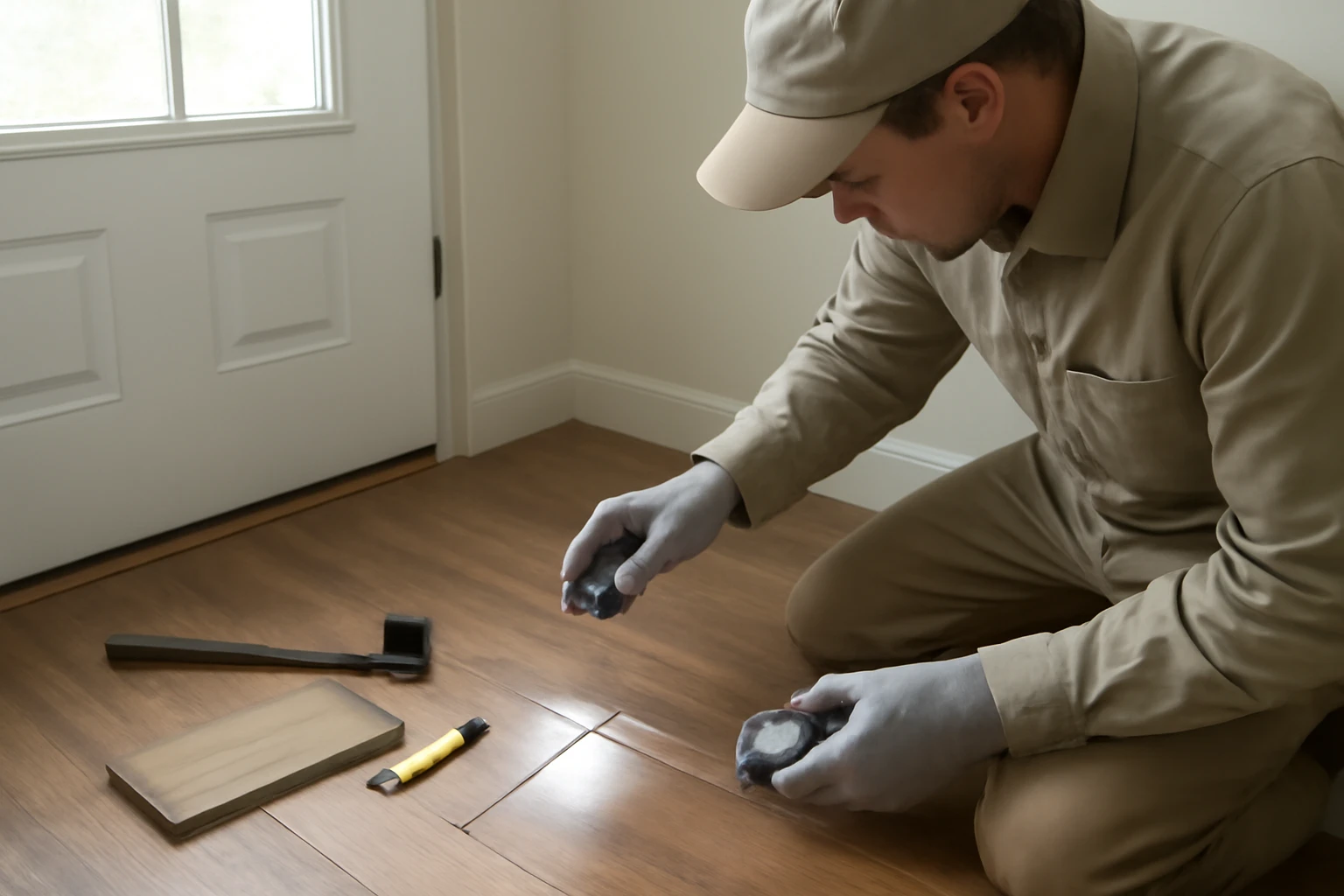
Signs you can handle
- Small surface stains, scuffs, mild dirt buildup.
- Individual plank replacement if you can match the pattern and locking system.
Signs to call a pro
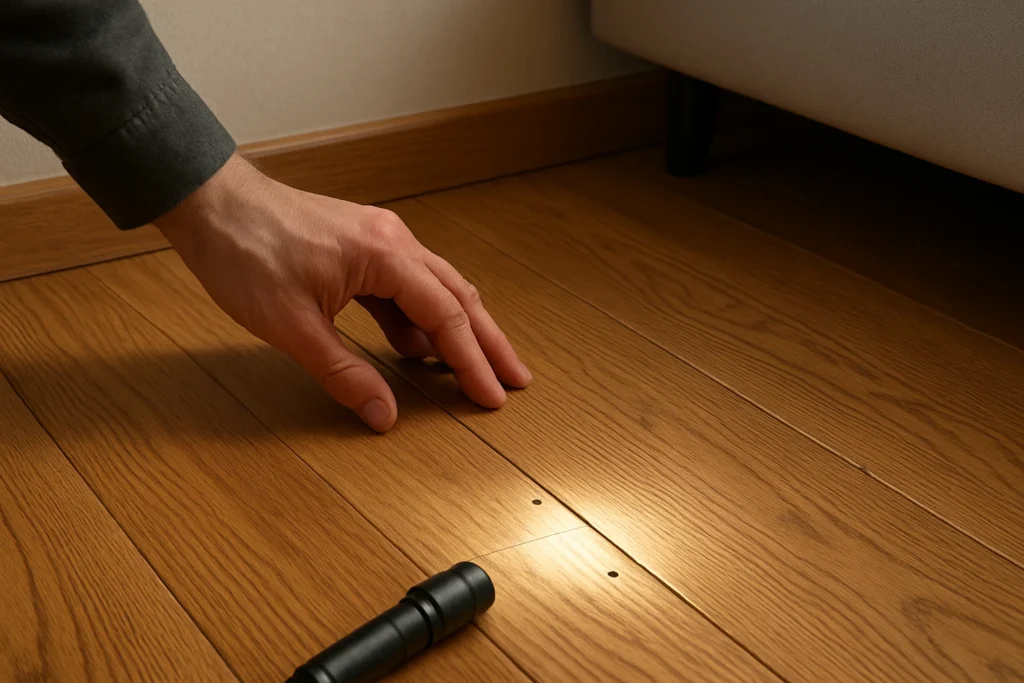
- Multiple swollen planks after a leak.
- Structural movement under the floor or widespread buckling.
- Failure of joints across several planks.
If the damage is localized, many installers will replace a few planks. For widespread issues, replacement may be the best long-term option. Compare product lifespans and installation types on pages like Solid Wood Flooring to decide if a different floor suits your space better.
Final Practical Tips
- Keep a simple kit: microfiber mop, neutral cleaner, soft cloths, and a repair kit suited to your plank type.
- Train household members to wipe spills and avoid dragging heavy items.
- Record the product name and color of your laminate for future repairs or additions.
Small actions today prevent costly fixes tomorrow. Follow these steps, use the right products, and the floor will retain its look and durability for many years.
Frequently Asked Questions
Can I Use Vinegar to Clean Laminate Flooring?
You can use diluted white vinegar for occasional deep cleaning but test a small area first. Mix one part vinegar to four parts water for mopping, use a well wrung microfiber mop, and dry the floor immediately. Frequent vinegar use can dull some finishes, so prefer a manufacturer-approved cleaner when available.
What Should I Do If Water Seeps into the Seams?
Blot the water quickly and dry the area with a fan or towel. Remove baseboards if needed to inspect the subfloor. If planks swell or separate after drying, contact a flooring professional; localized plank replacement may be required.
Are Steam Mops Safe for Laminate Floors?
No. Steam mops generate heat and moisture that can force seams open and warp laminate cores. Use a damp microfiber mop instead and always dry the surface promptly.
How Often Should I Deep Clean My Laminate Flooring?
For most homes, a deep clean every three to six months is sufficient. High-traffic areas may need deeper cleaning more often. Maintain weekly dusting and monthly checks to keep the surface in good condition.
What Is the Best Way to Remove Scuff Marks from Laminate?
Try a soft rubber eraser or a damp melamine sponge for light scuffs. For tougher marks, use a small amount of isopropyl alcohol on a cloth and rub gently, then dry the area. Avoid abrasive pads to prevent finish damage.