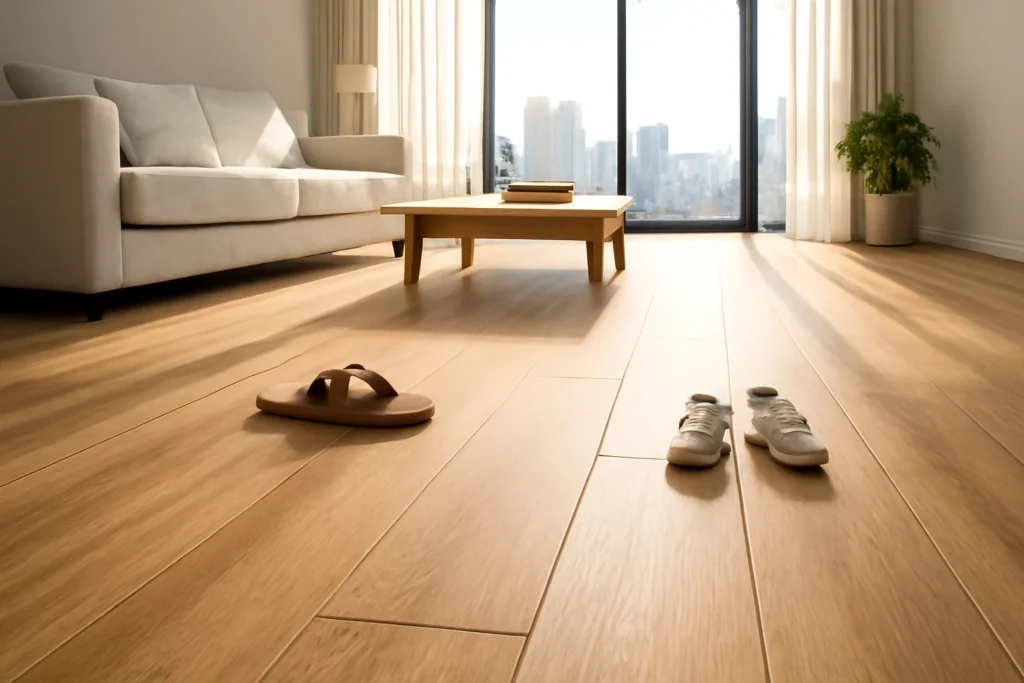
Luxury vinyl tile, or LVT, is a layered synthetic flooring that copies the look of wood, stone, and other materials while standing up to wear and moisture. It uses a printed decorative layer over a stable core and a clear wear layer to resist scratches and stains. That makes LVT a good pick for kitchens, bathrooms, and busy commercial spaces. You can find it in click-lock, glue-down, and loose-lay formats, so it suits different budgets and design needs.
Key Statistics
- Global luxury vinyl tile market estimated CAGR 4.8% in 2021-2026.
- Typical retail cost range: AED 70 to AED 220 per square metre depending on quality and installation.
- Average durable lifespan: 10 to 25 years with proper maintenance.
How LVT Flooring Is Made
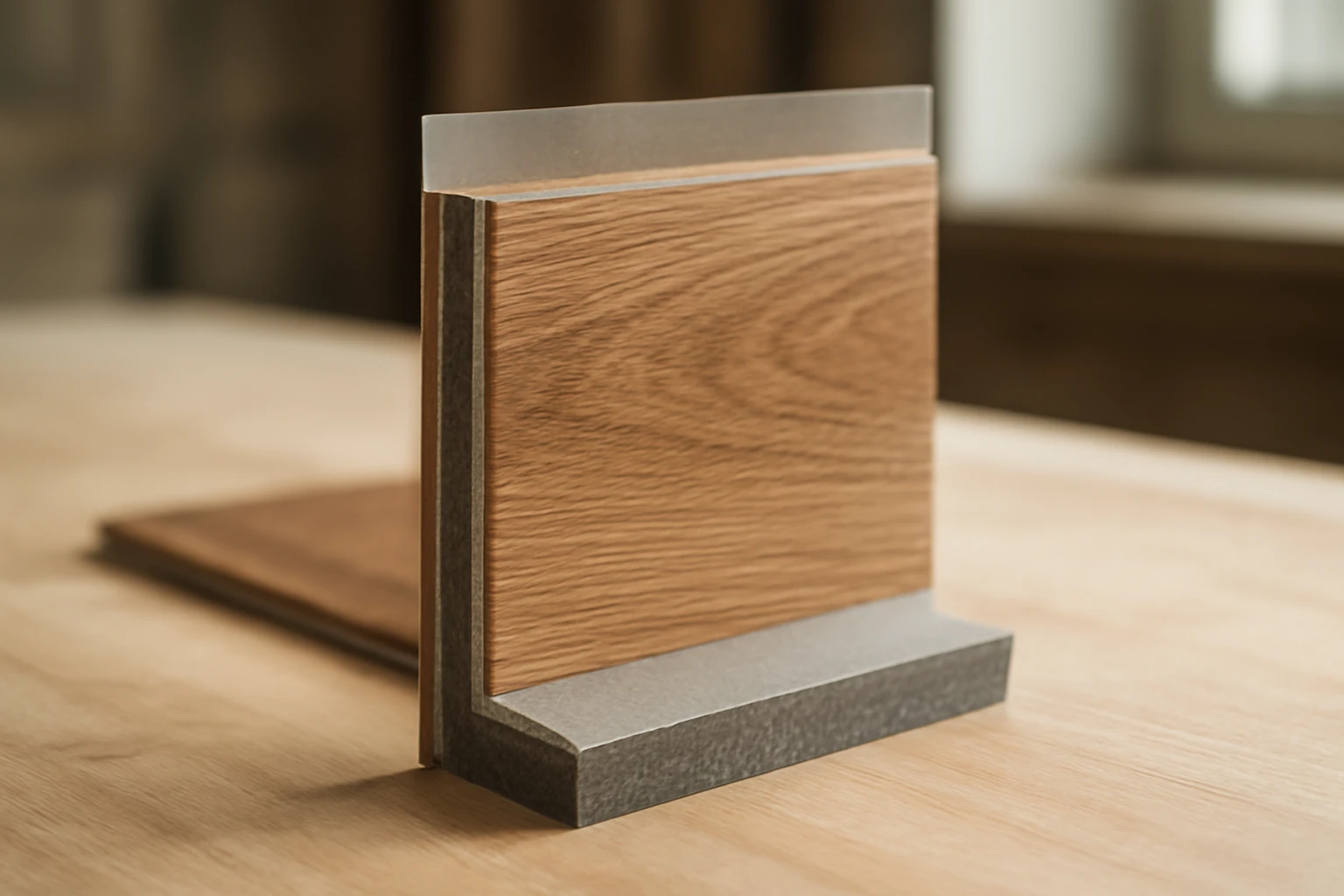
LVT is built from stacked layers. The top clear wear layer protects against scuffs and stains. Under that is a printed design layer that recreates wood, stone, or tile looks. Below the design layer sits a core, and a backing layer finishes the plank. Those base layers add stability and support.
Common Materials and Core Types
LVT cores differ by product. A flexible vinyl core gives a softer feel underfoot. Rigid cores use stone polymer composite or enhanced vinyl compounds to keep the plank stable. The core type affects water resistance, thickness, and how the floor feels.
Visual Texture Options:
- Wood grain prints in planks.
- Stone and tile visuals with grout lines.
- Abstract or geometric industrial patterns.
Types of LVT Flooring
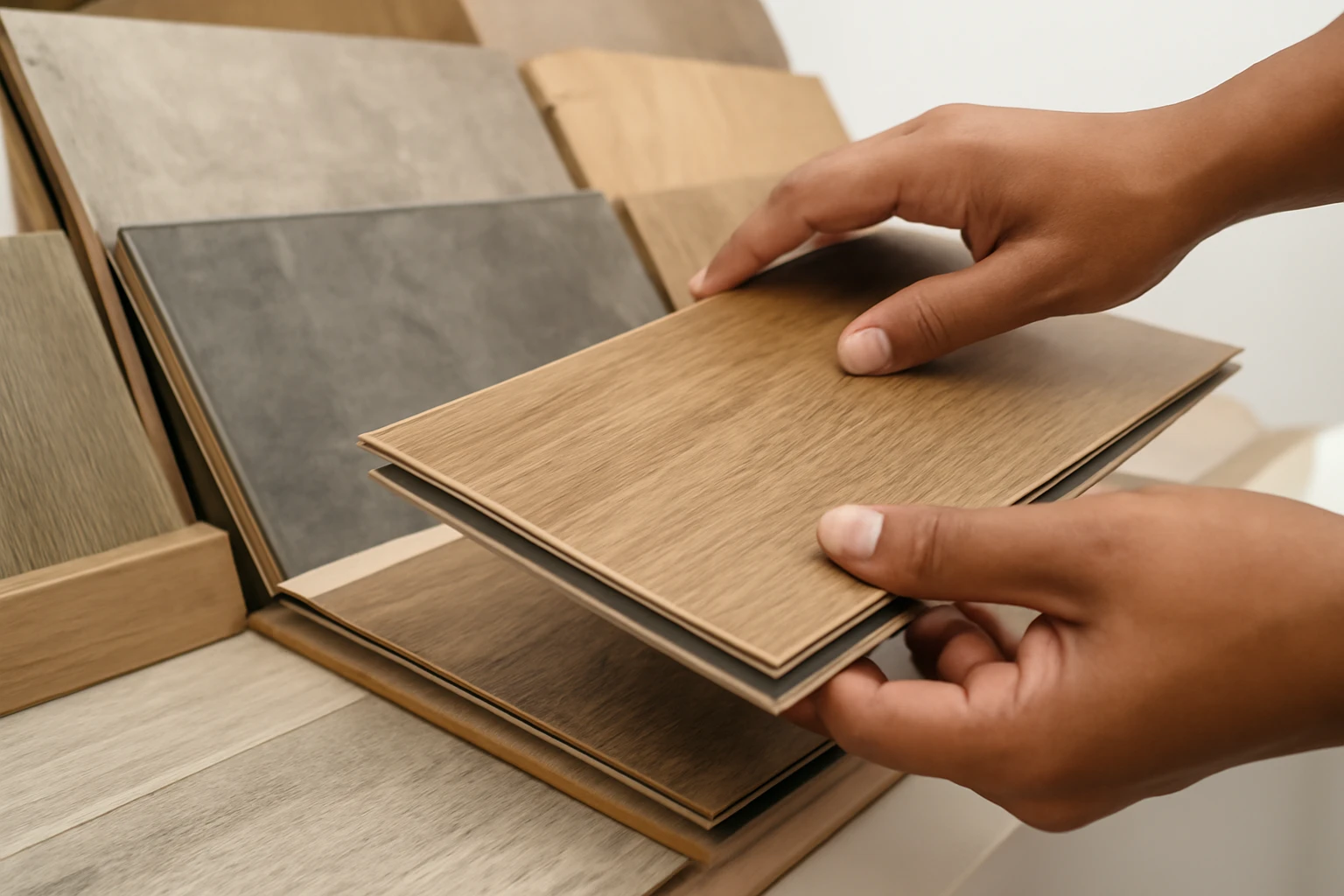
Manufacturers offer several installation formats. Your choice depends on the subfloor, how the room will be used, and whether you plan to install it yourself or hire a pro.
Glue-Down LVT
Glue-down boards or tiles are fixed directly to a properly prepared subfloor. This method usually produces a firmer feel and can be better for very busy areas.
Click-Lock or Floating LVT
Click-lock systems snap together and float over the subfloor. They install faster and make it easier to replace single planks later.
Loose-Lay LVT
Loose-lay planks stay in place by weight and friction. They work well in rentals and for temporary commercial layouts.
LVT Versus Other Flooring Materials
A clear comparison helps when you pick a floor. The table below contrasts LVT with SPC and laminate.
| Feature | LVT Flooring | SPC Flooring | Laminate Flooring |
|---|---|---|---|
| Water Resistance | High for many LVT types | Very High, fully rigid core | Low to moderate, vulnerable at edges |
| Feel Underfoot | Softer to medium | Firmer, stone-like | Firm, can be hollow sounding |
| Thickness Range | 2 mm to 8 mm+ | 3.5 mm to 8 mm | 6 mm to 12 mm |
| Scratch Resistance | Good with thick wear layer | Excellent | Moderate |
| Installation | Click, glue, loose-lay | Click or glue | Click only |
| Typical Use | Homes, retail, kitchens | High-traffic commercial, wet areas | Residential living areas |
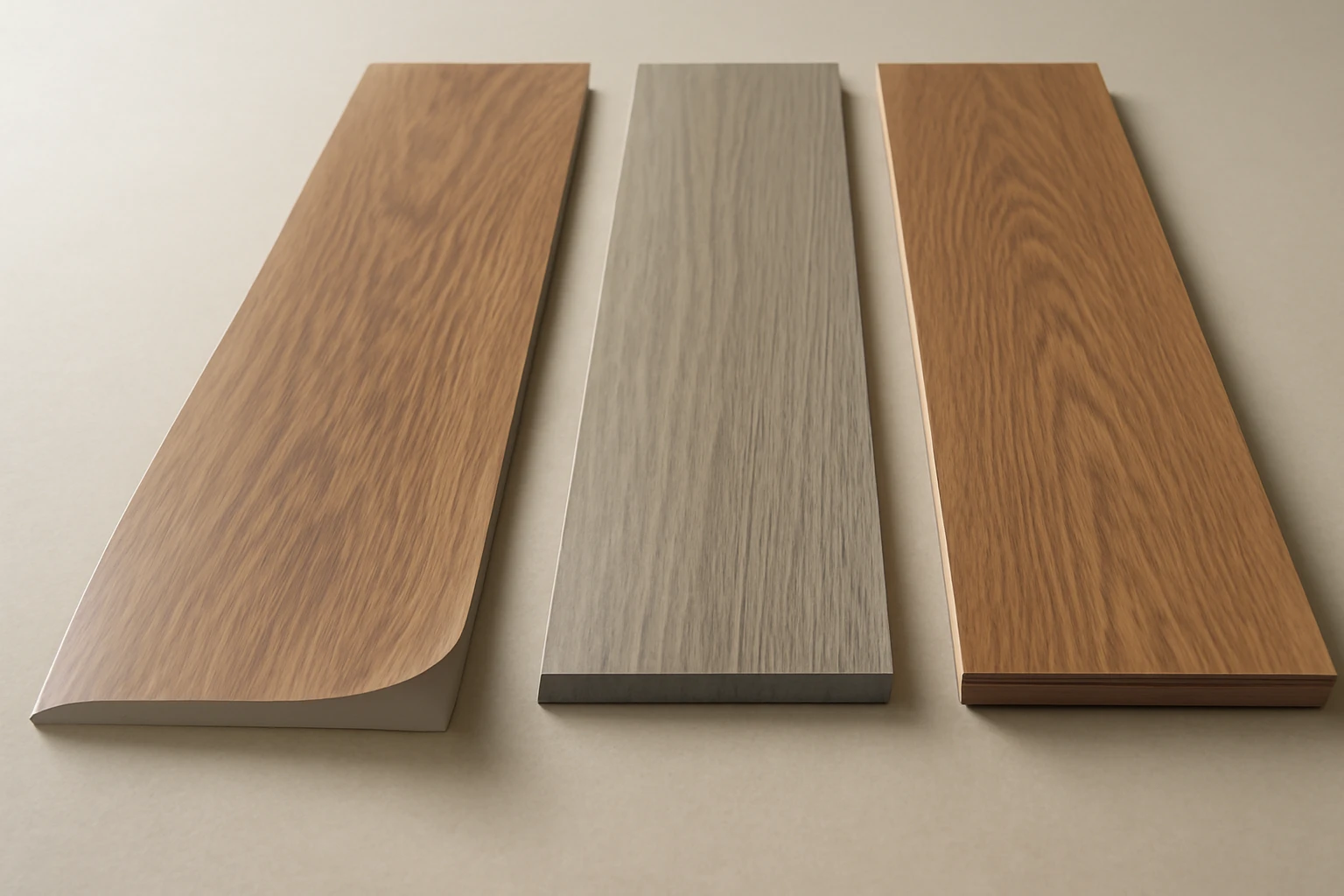
Many homeowners choose LVT for its mix of realism, comfort, and water tolerance. One common mistake is assuming all vinyl products are the same. Check the wear layer thickness and the core quality before you buy.
Related reading includes the site page on LVT Flooring and comparisons with SPC Flooring.
Benefits of LVT Flooring
LVT offers practical advantages that matter day to day for homes and businesses.
- Water Tolerance: Many LVT products handle damp areas well.
- Design Variety: Lots of patterns, textures, and plank sizes.
- Comfort: Warmer and softer than hard tile.
- Durability: Wear layers protect against normal scratches.
- Ease of Repair: You can replace single damaged planks.
When LVT Is a Strong Choice
- Homes with children or pets.
- Kitchens and bathrooms where moisture is likely.
- Retail spaces that need an attractive, durable floor.
Installation and Maintenance
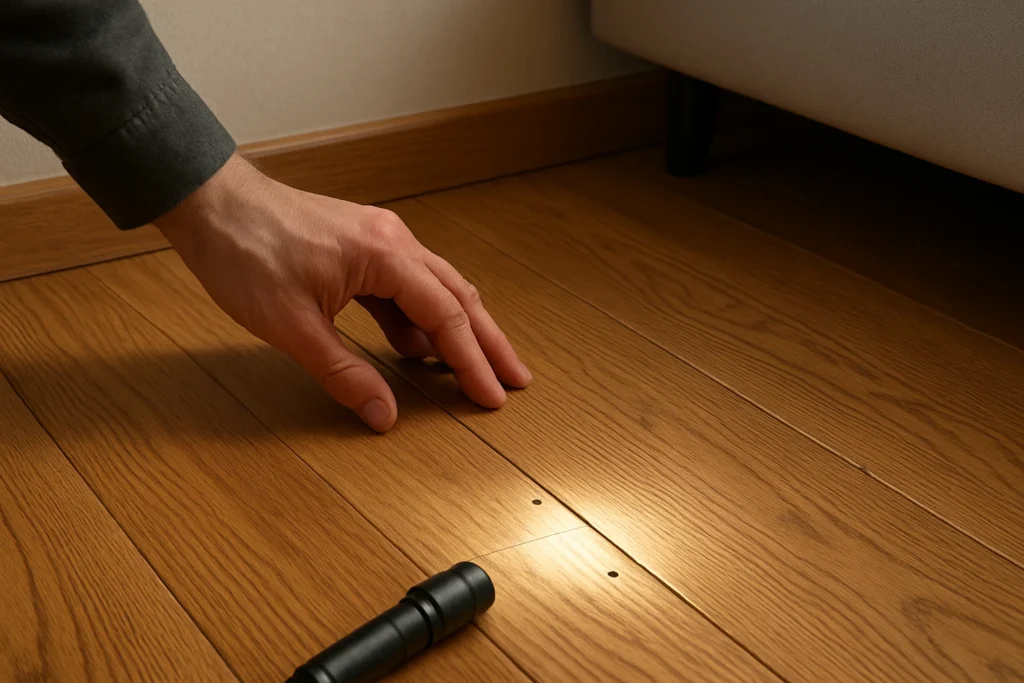
A long-lasting installation starts with proper subfloor prep. A flat, clean surface prevents imperfections from showing through and helps the floor last longer. Regular cleaning preserves the wear layer and keeps the floor looking new.
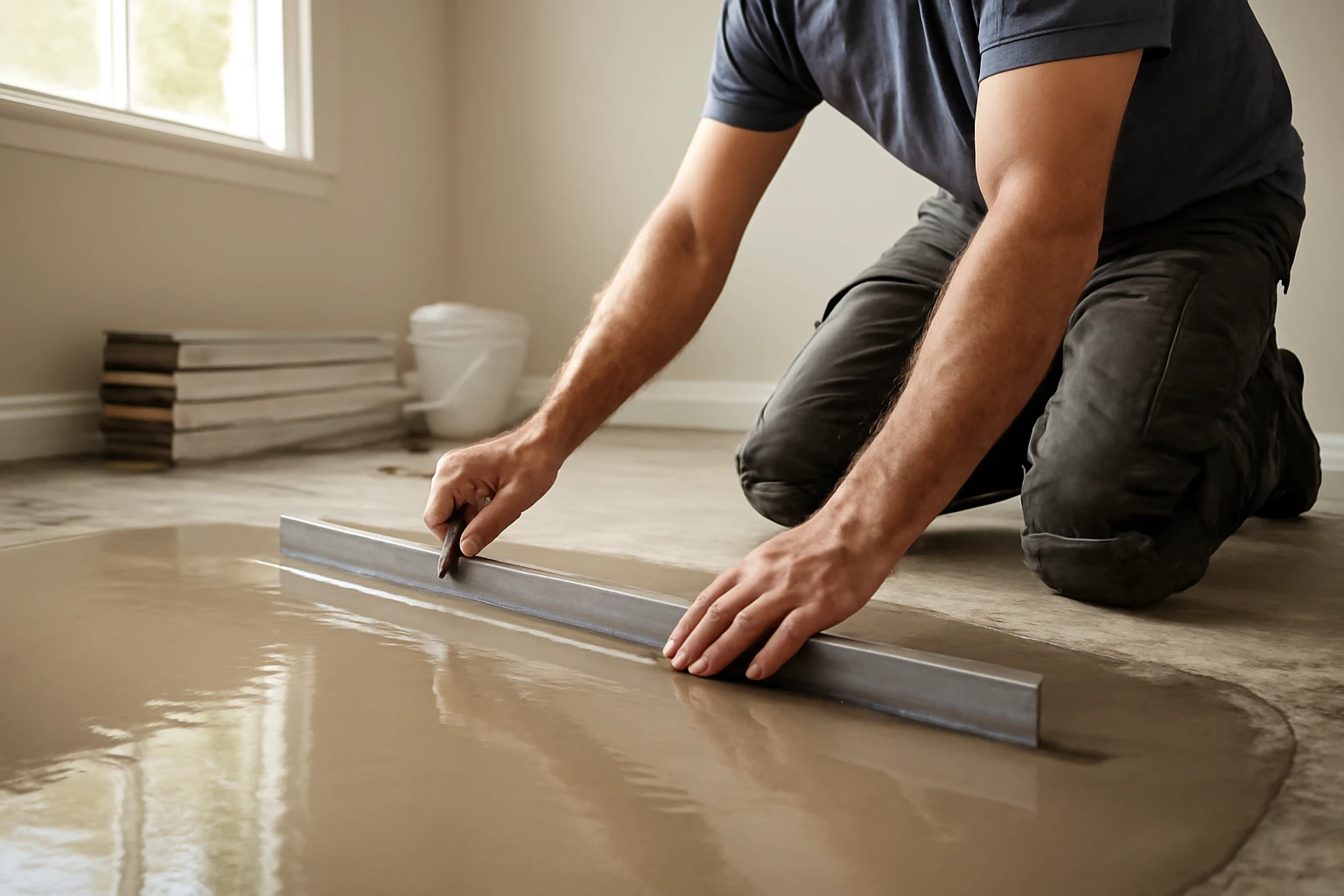
Preparing the Subfloor:
Check Moisture Levels:
Use a reliable moisture meter on concrete and plywood. Too much moisture can cause the adhesive to fail or cause bubbling.
Level and Clean Surface:
Remove dust, paint, and nails. Smooth dips that exceed the manufacturer’s limits.
Step-by-Step Installation Image and Guide
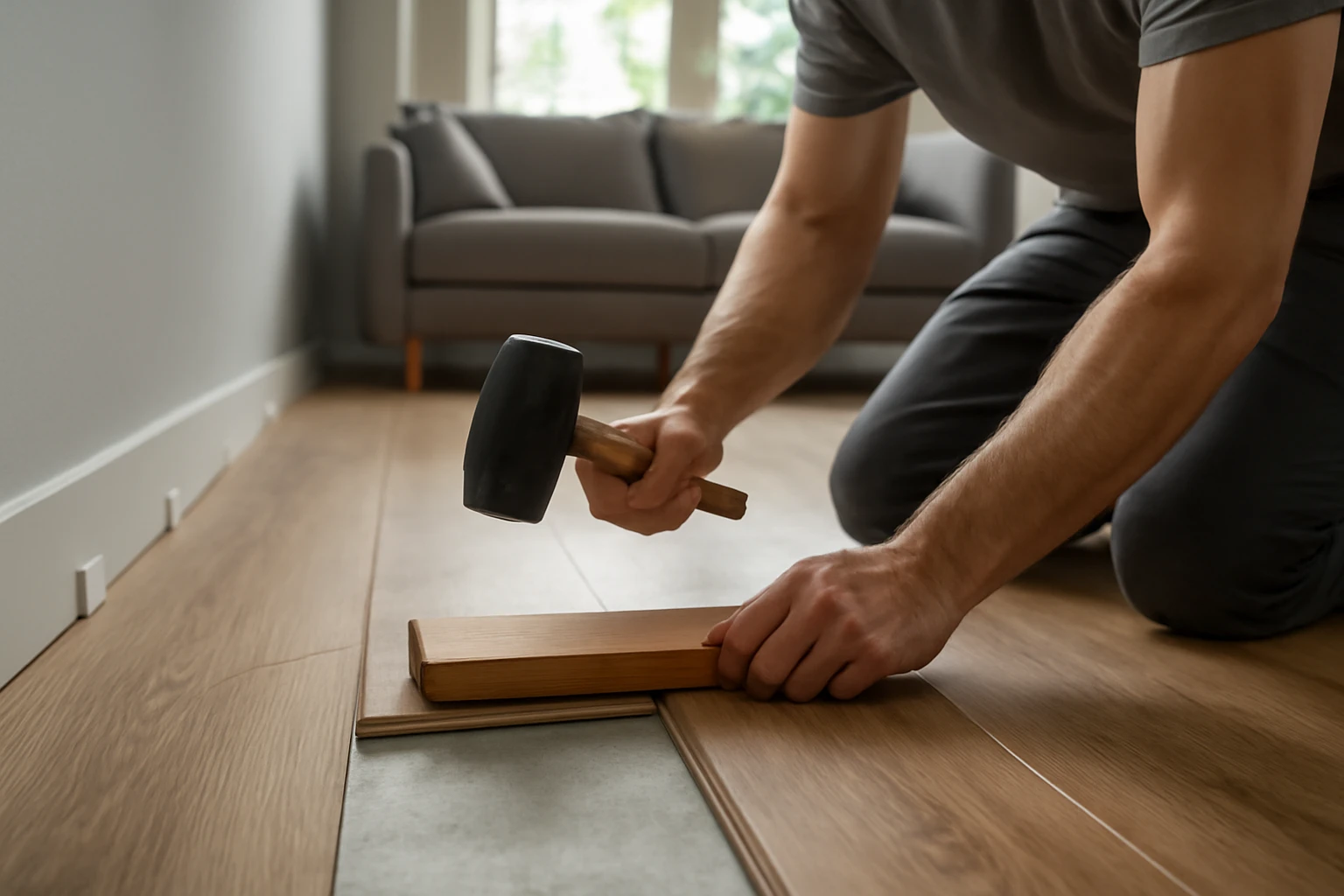
Tool Checklist:
- Tape measure and chalk line.
- Utility knife and straight edge.
- Tapping block and mallet.
- Roller for glued installations.
Click systems suit many capable DIYers. For glue-down jobs or large commercial areas, hire a professional. Another common error is skipping expansion gaps. Follow the manufacturer’s tolerances.
Cleaning and Ongoing Care
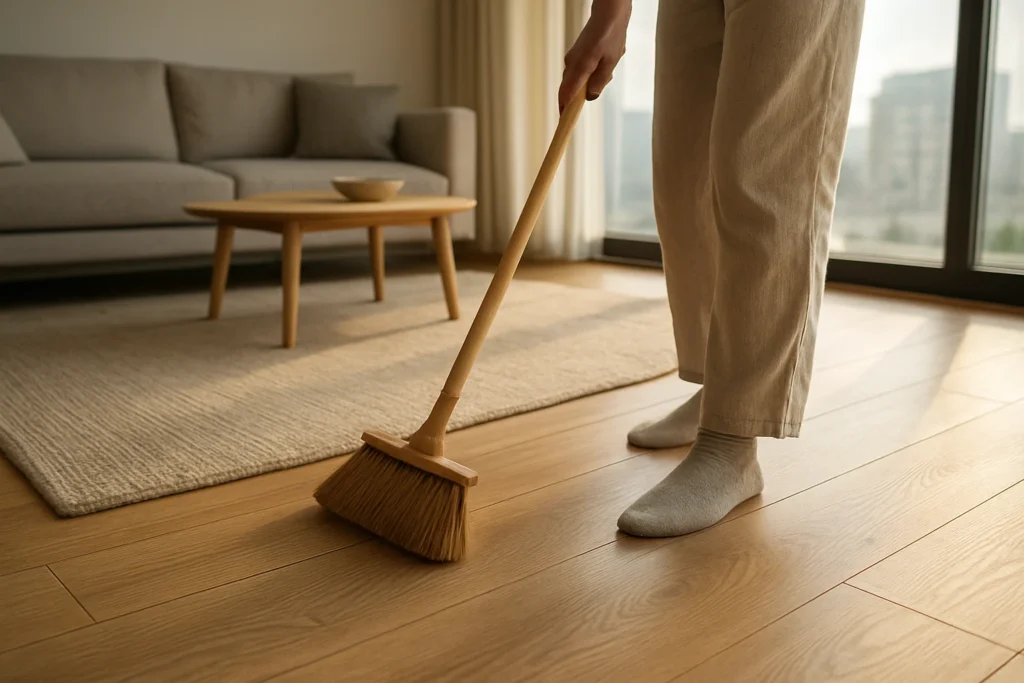
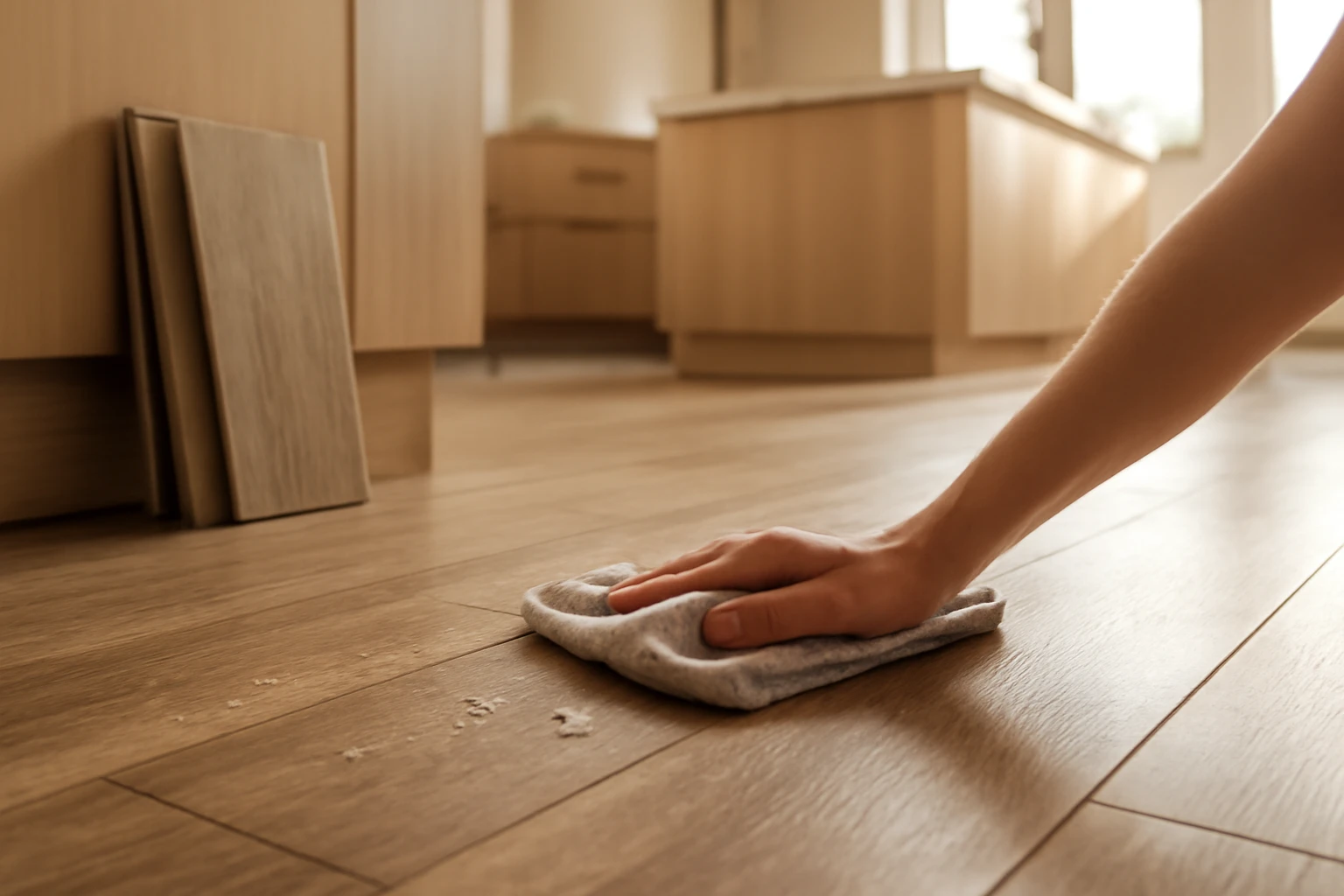
Daily dusting keeps grit from wearing the finish. Do not use steam cleaners or abrasive pads. For tougher stains, a pH-neutral cleaner will protect the wear layer.
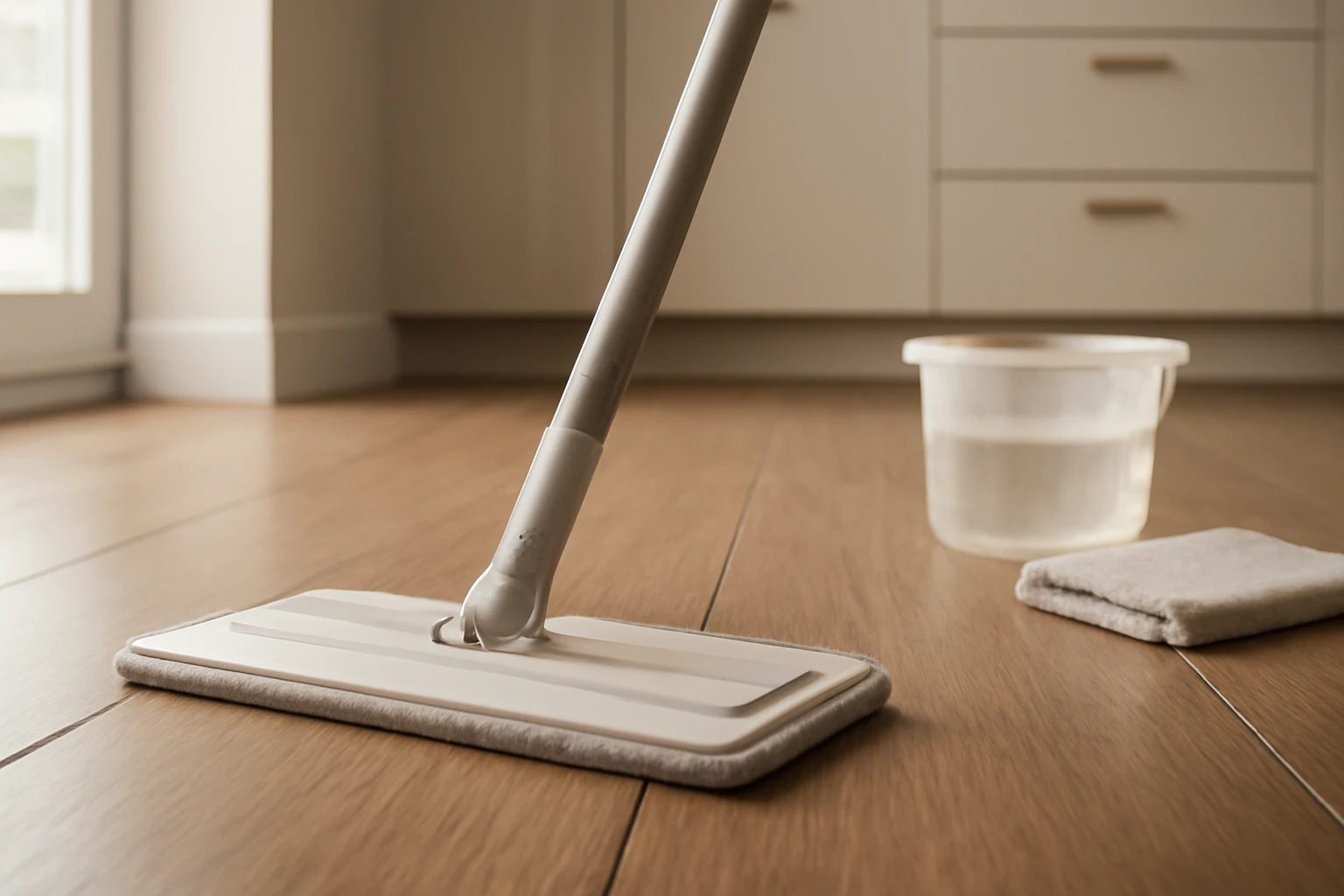
Tip: For similar guidance, see How to Clean Laminate Flooring Safely and Effectively.
Cost, Warranty and Expected Lifespan
Price depends on brand, thickness, wear layer, and installation type. Warranties show a manufacturer’s confidence, but read the fine print for commercial use.

| Component | Typical UAE Range (AED/m2) | Notes |
|---|---|---|
| Entry-Level LVT | 70 – 120 | Thinner wear layers, basic prints |
| Mid-Range LVT | 120 – 180 | Better textures, thicker wear layers |
| Premium LVT | 180 – 220+ | Deep embossing, heavy-duty wear layers |
| Installation | 30 – 90 | Varies by method and site prep |
Most residential LVT lasts 10 to 20 years. Commercial lines with heavy wear layers can go beyond 25 years. Even a strong warranty cannot replace correct installation and proper care.
Choosing LVT for Different Rooms
Match the product to how the room will be used. Water resistance and slip ratings matter in kitchens, bathrooms, and entryways. Thicker wear layers help in busy corridors and retail stores.
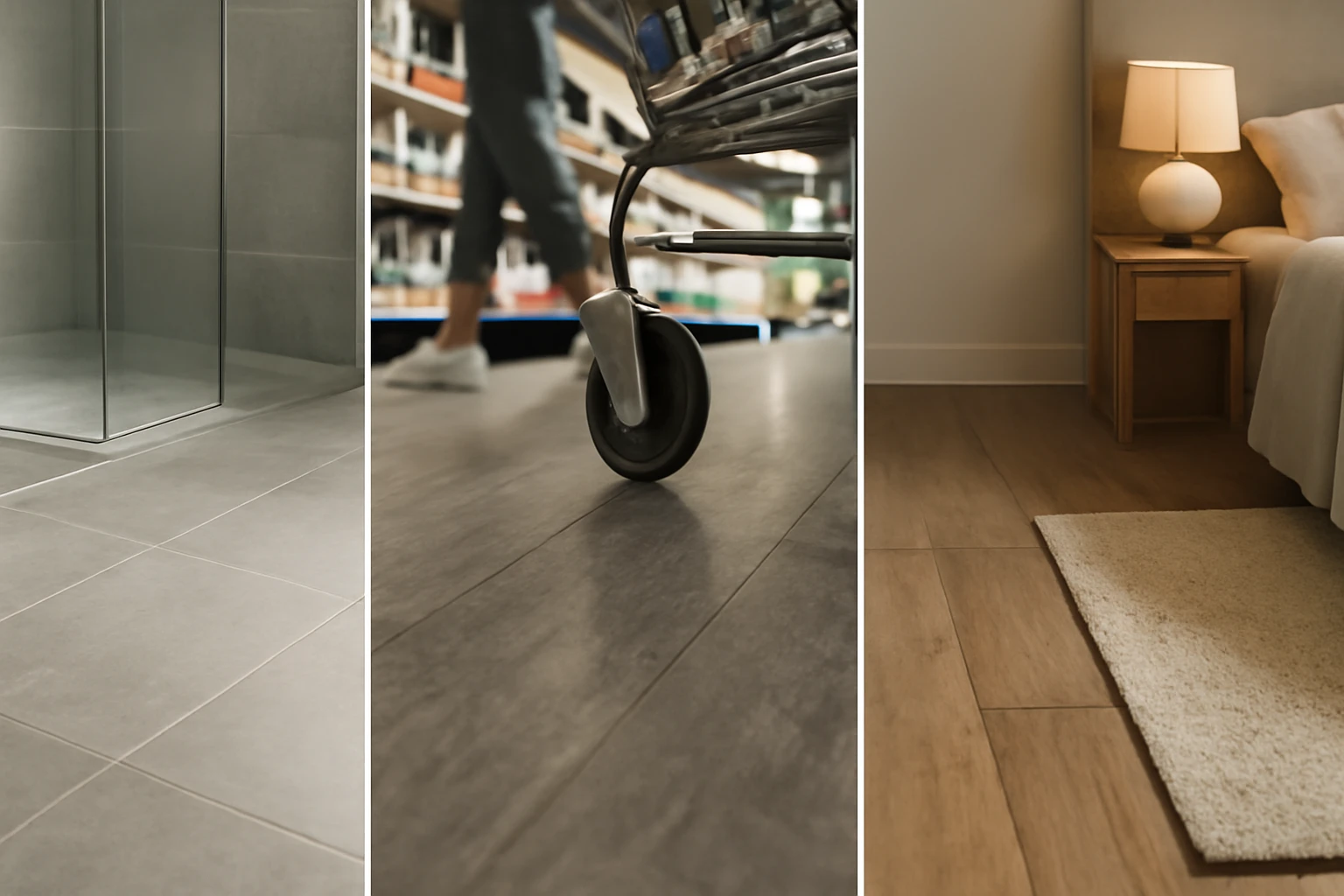
- Bathrooms and Kitchens: Pick waterproof LVT with good slip resistance.
- Living Rooms and Bedrooms: Wood-look LVT with a moderate wear layer works well and saves money.
- Commercial Areas: Choose a heavy-duty wear layer and check warranty limits.
For a local overview and other floor choices, see Best Flooring Options in Dubai for Homes, Offices and Villas.
Final Considerations Before Buying
View samples at home under your own lighting to confirm color and texture. Ask for technical datasheets. Confirm subfloor requirements and get a clear installation quote.
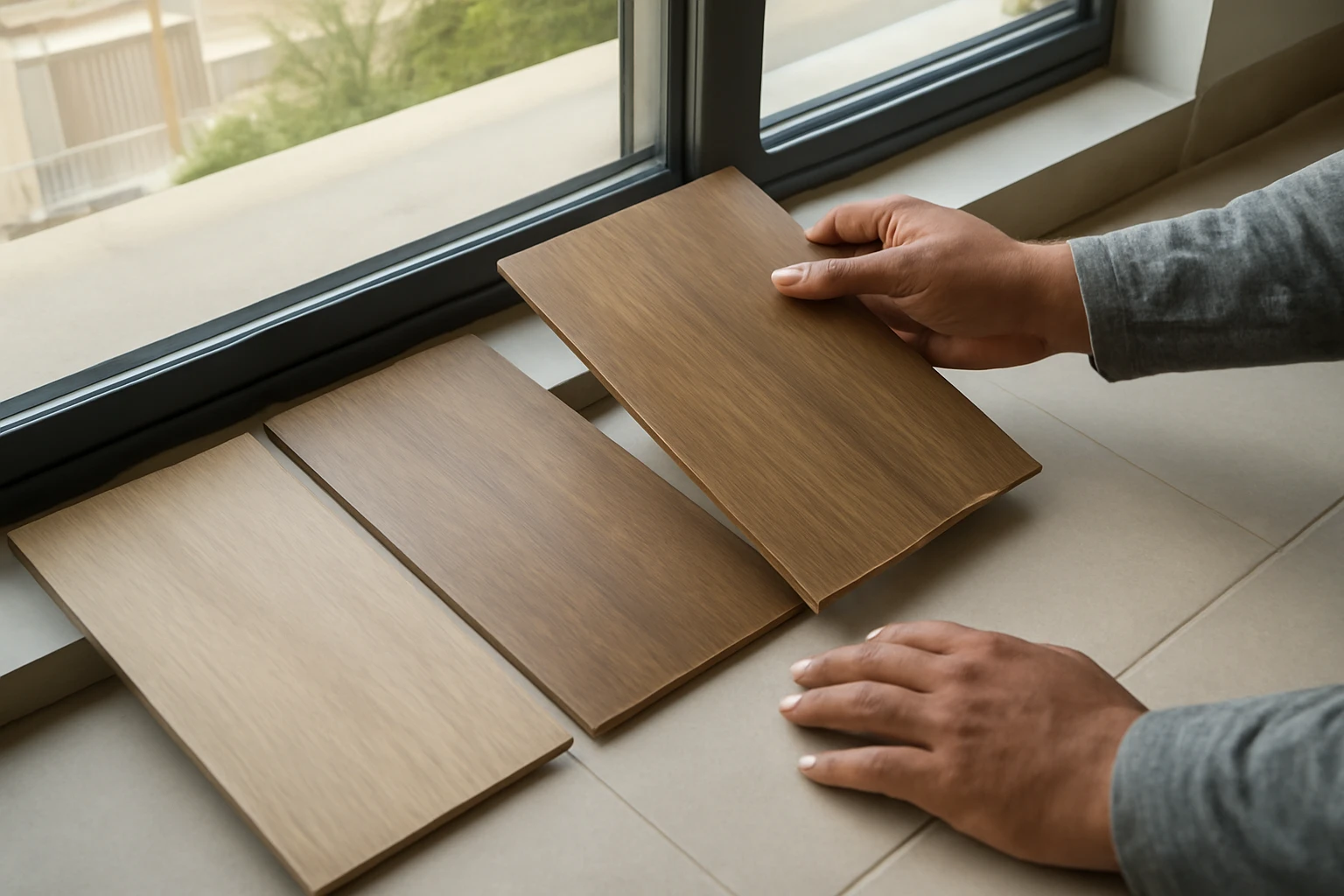
LVT often offers a practical balance of looks, cost, and durability. If you need extreme rigidity or load capacity, also compare SPC Flooring and PVC Flooring. A site visit with professional samples is the best final step.
For more helpful flooring guides, keep visiting Floor Lands.
Frequently Asked Questions
Is LVT Flooring Waterproof?
Many LVT products are highly water-resistant and tolerate spills and splashes. Fully waterproof performance depends on core type and installation. Seams and edges must be installed correctly for wet areas.
How Long Does LVT Flooring Last?
Residential LVT typically lasts 10 to 20 years under normal use. Premium commercial-grade LVT with a thick wear layer can last 20 to 30 years when properly installed and maintained.
Can I Install LVT Over an Existing Floor?
Often yes, if the existing floor is flat, clean and stable. Minor unevenness should be levelled. Check manufacturer guidelines and consider raising door thresholds and trims.
Is LVT Easy to Repair?
Individual planks or tiles can be replaced when using click-lock or glue-down systems, though glue-down repairs are more work. Keep spare planks from the original installation for best color match.
How Does LVT Compare with SPC and Laminate?
LVT balances realism and comfort with good water resistance. SPC is more rigid and often better in heavy-duty wet environments. Laminate can look realistic at lower cost but usually has lower water resistance than LVT.