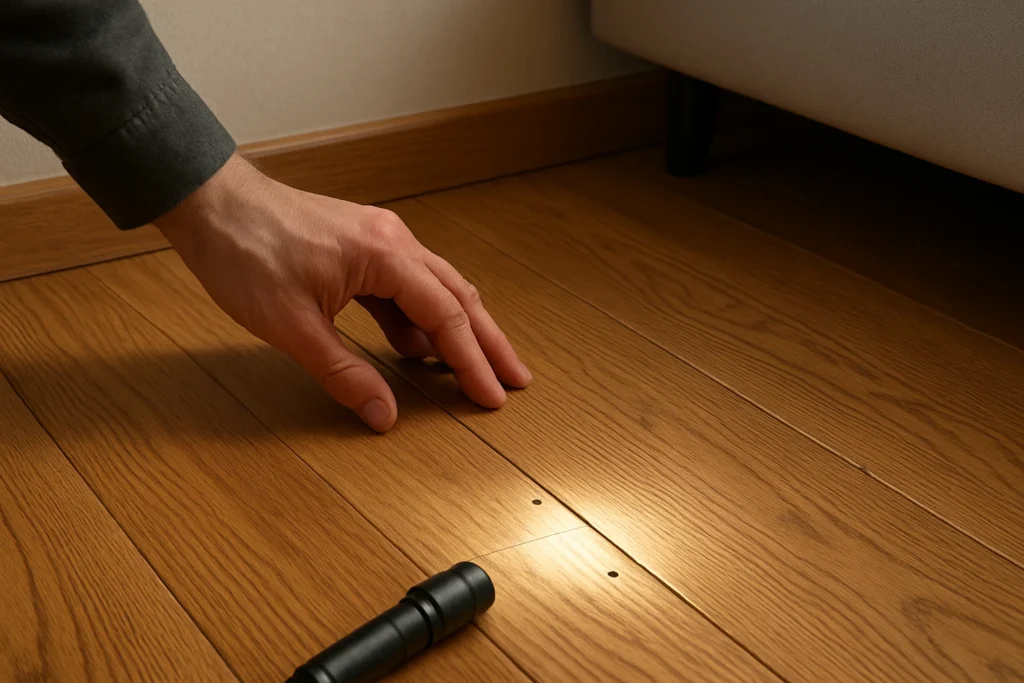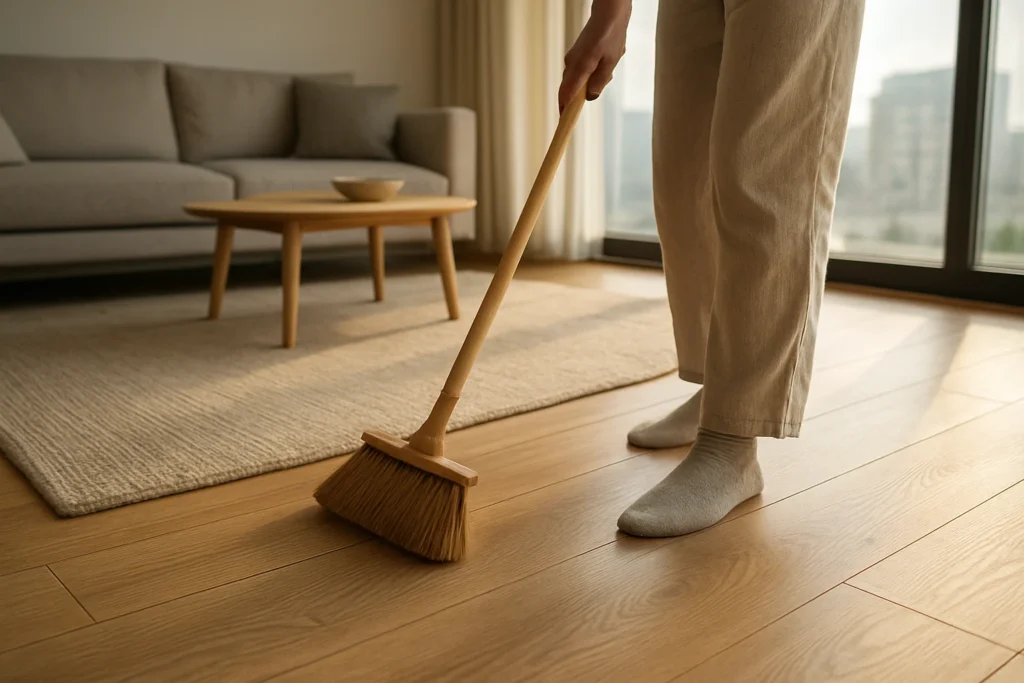
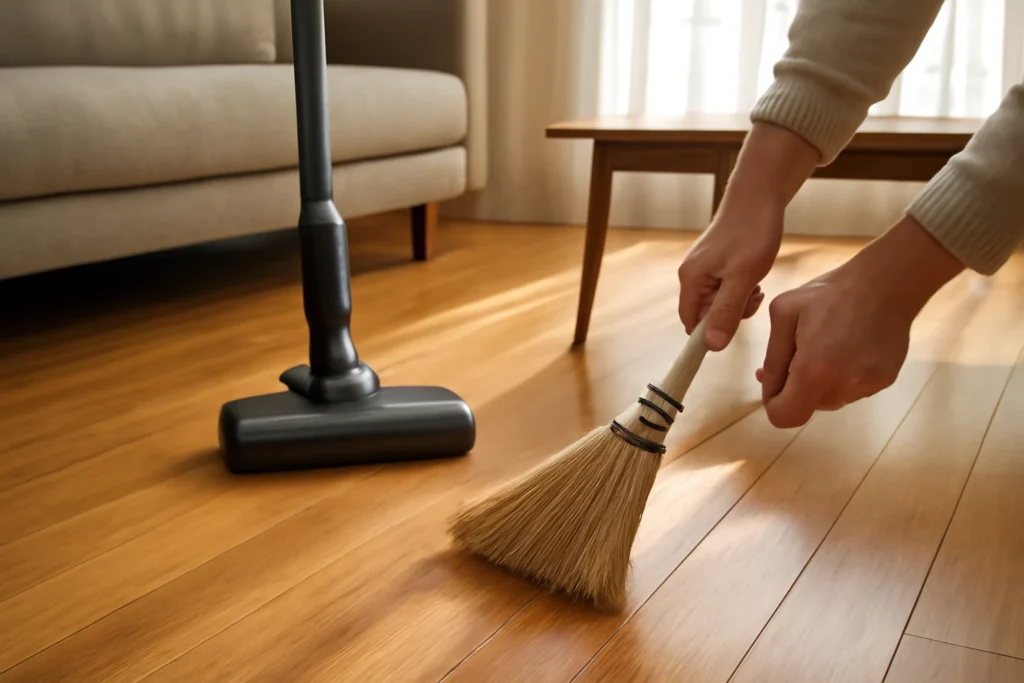
Clean bamboo flooring with a soft broom or a vacuum set for hard floors, a barely damp mop and a pH-neutral cleaner, and treat spills right away. Avoid excess water and harsh chemicals to protect the finish and reduce the risk of cupping or discoloration.
Key Statistics
- Typical bamboo flooring lifespan with regular care: 20 to 25 years.
- Small daily efforts cut deep-clean frequency to once every 6 to 12 months for most homes.
- Water exposure is a leading cause of damage; standing water for more than 24 hours raises risk of warping by over 50 percent in humid climates.
Bamboo floors are durable and attractive but need careful cleaning. Below you will find clear routines, stain fixes, deep-clean steps, and cost guidance based on common trade practice and real-world use.
Why Regular Cleaning Protects Bamboo Flooring
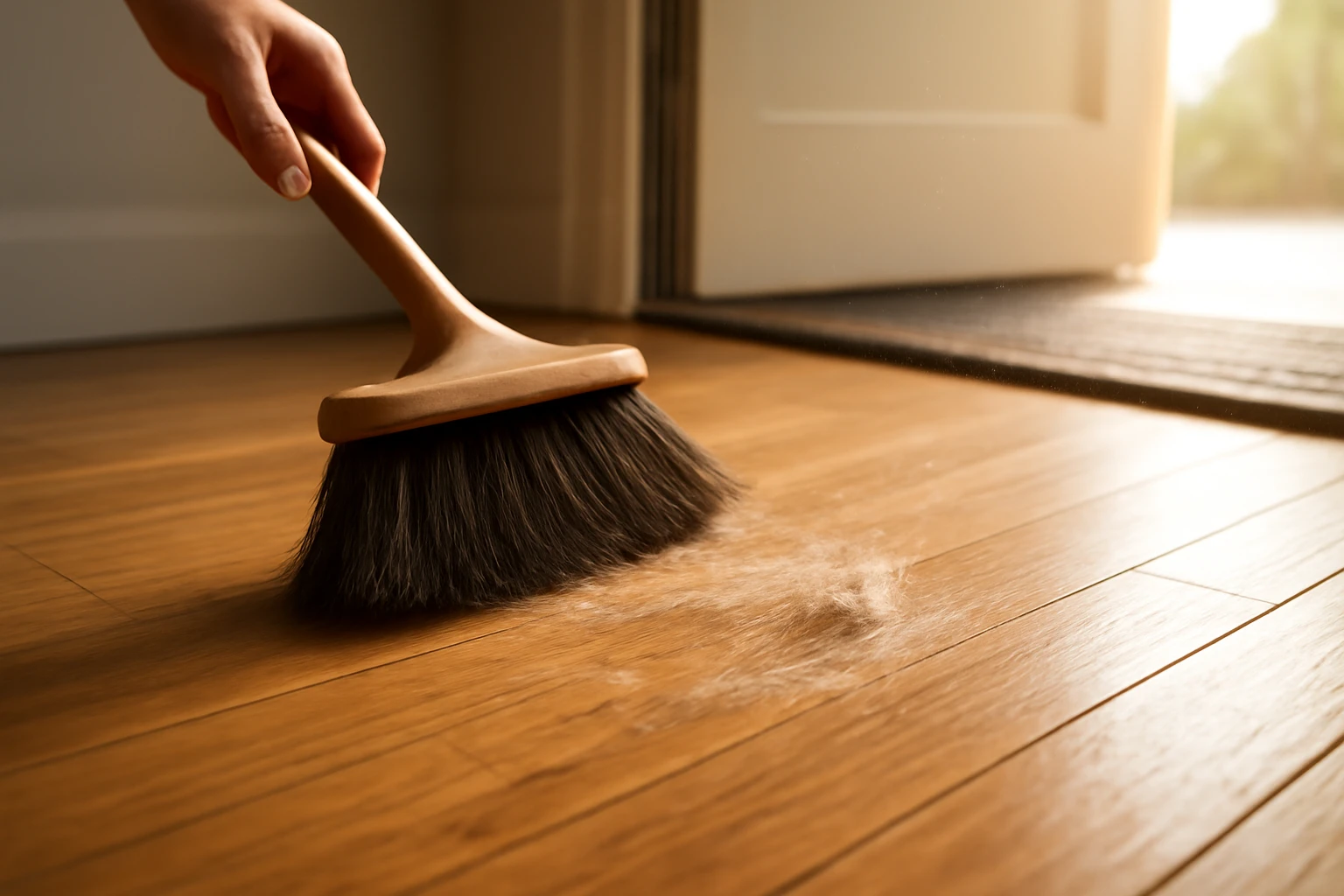
Regular cleaning removes grit and spills that wear down the finish and dull the surface. Tiny particles act like sandpaper under feet and furniture. A short daily routine cuts scratches and slows long-term wear.
Common Wear Patterns
- Entry zones show the most abrasion.
- Chair and table legs cause concentrated dents.
- Moisture near sinks or doors leads to edge swelling.
Tool Checklist:
- Soft-bristle broom or vacuum with a hard-floor setting.
- Microfiber mop and buckets.
- pH-neutral, nonabrasive cleaner.
- Felt pads for furniture legs.
Daily and Weekly Cleaning Routine
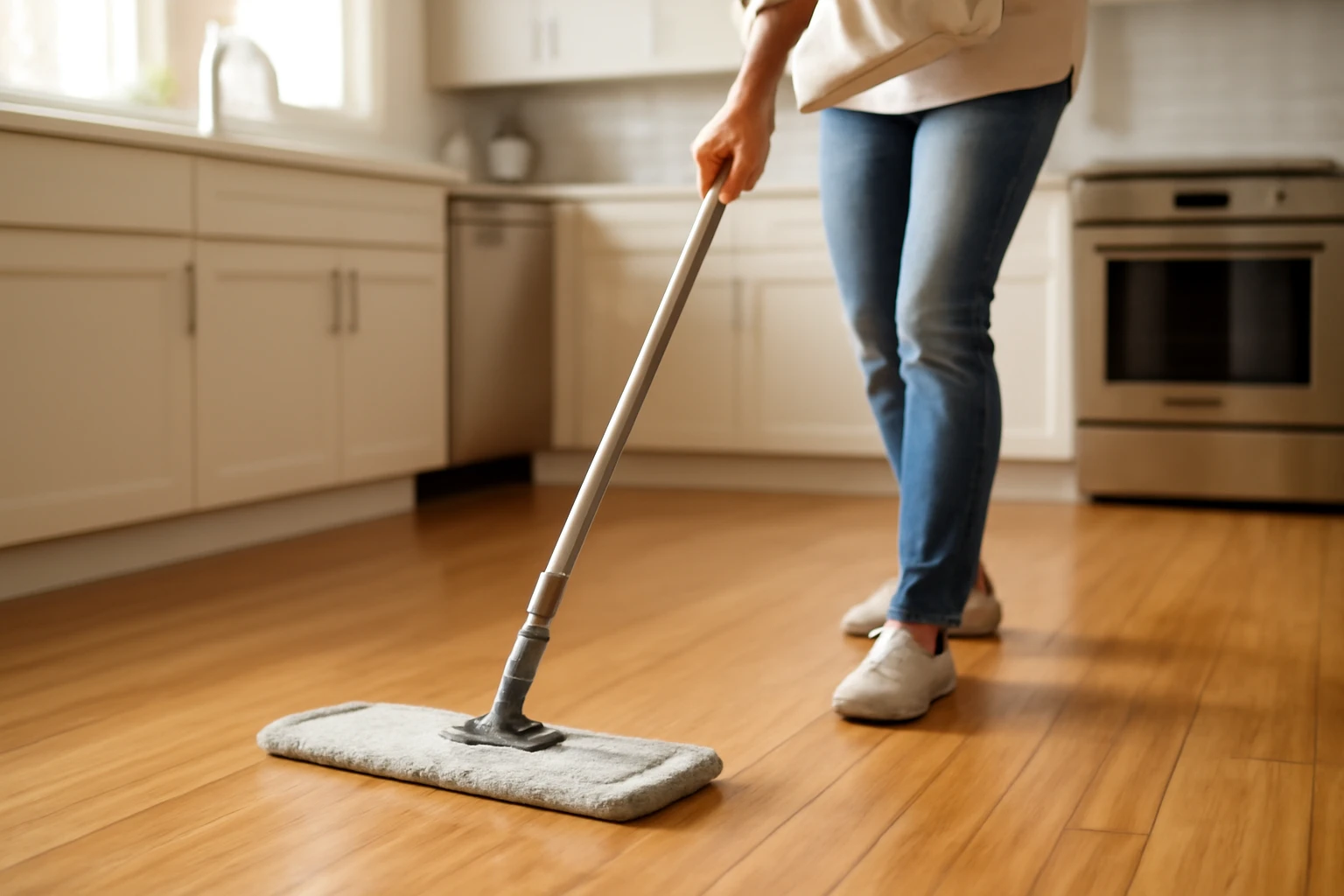
Short, steady care keeps the finish intact and the floor looking new. Aim to sweep daily and use a gentle mop once a week in most homes.
Daily Sweep and Spot Care
- Sweep or vacuum high-traffic areas each day.
- Wipe spills right away with a soft cloth.
- For sticky spots, dampen a cloth with diluted cleaner and dry the area immediately.
Daily Tips:
- Do not use vacuums with beater bars.
- Keep a small towel near sinks and doors for spills.
Weekly Damp Mop
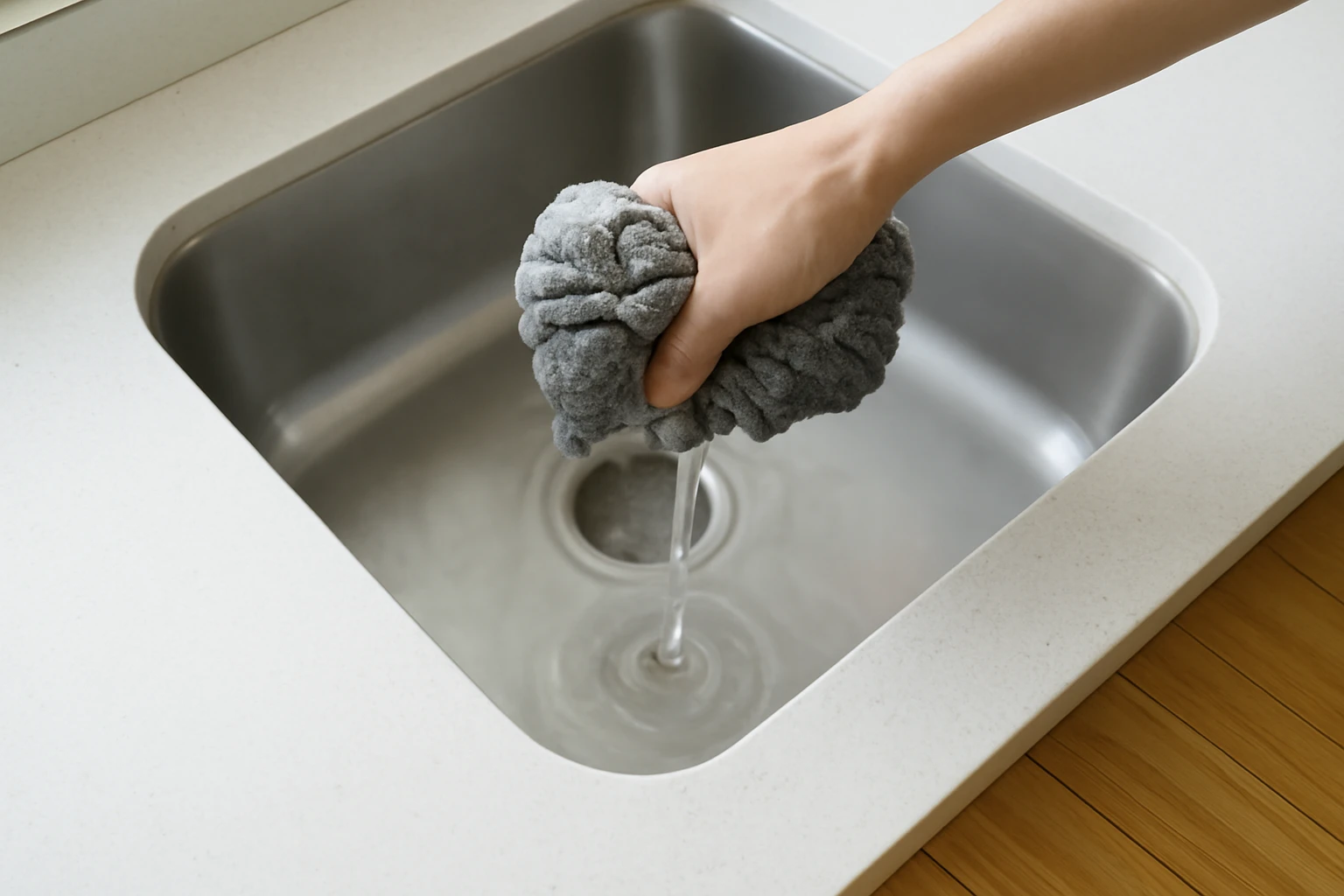
A weekly damp mop removes fine dust without soaking the planks. Use a barely damp microfiber mop and a cleaner made for finished wood or bamboo.
Weekly Routine:
- Mix cleaner per the label instructions. More concentrate will not improve results.
- Mop with the grain. Rinse mop often and wring it well.
- Dry any remaining dampness with a soft cloth.
For cleaning products and methods that also work on other natural surfaces, compare techniques in How to Clean Cork Flooring Safely and Restore Its Finish.
Removing Stains and Treating Spills
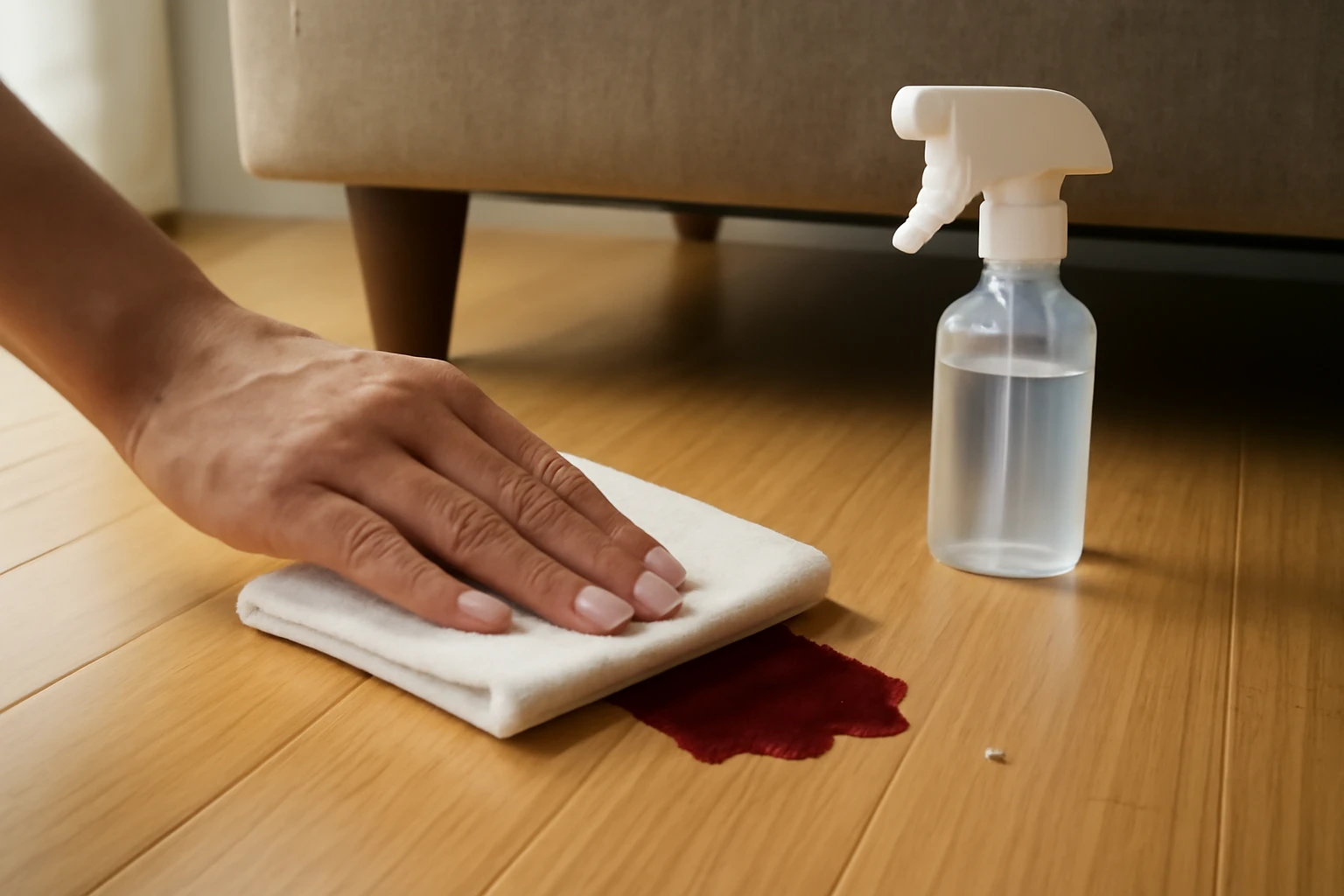
Deal with stains quickly. The longer a spill sits the deeper it can reach the finish and the bamboo fibers.
Immediate Steps for Spills
- Blot, do not rub. Rubbing spreads the stain and may wear the finish.
- Use a damp cloth with a small amount of neutral cleaner for sticky messes.
- Dry the area thoroughly.
Stain-Specific Actions:
- Water marks: Blot and dry. If the mark stays, follow deep-clean steps.
- Oil and grease: Use a gentle degreasing cleaner that is labeled safe for wood; rinse and dry.
- Dye stains (ink, wine): Blot, then use a manufacturer-approved spot remover. Test in an out-of-the-way area first.
When to Call a Pro
If a stain has reached through the finish or planks swell or split, professional repair or refinishing may be needed.
Deep Cleaning and When to Refinish
Deep cleaning removes residue and brings back luster, but do it only when needed. Most homes need a full deep clean every 6 to 12 months, depending on traffic.
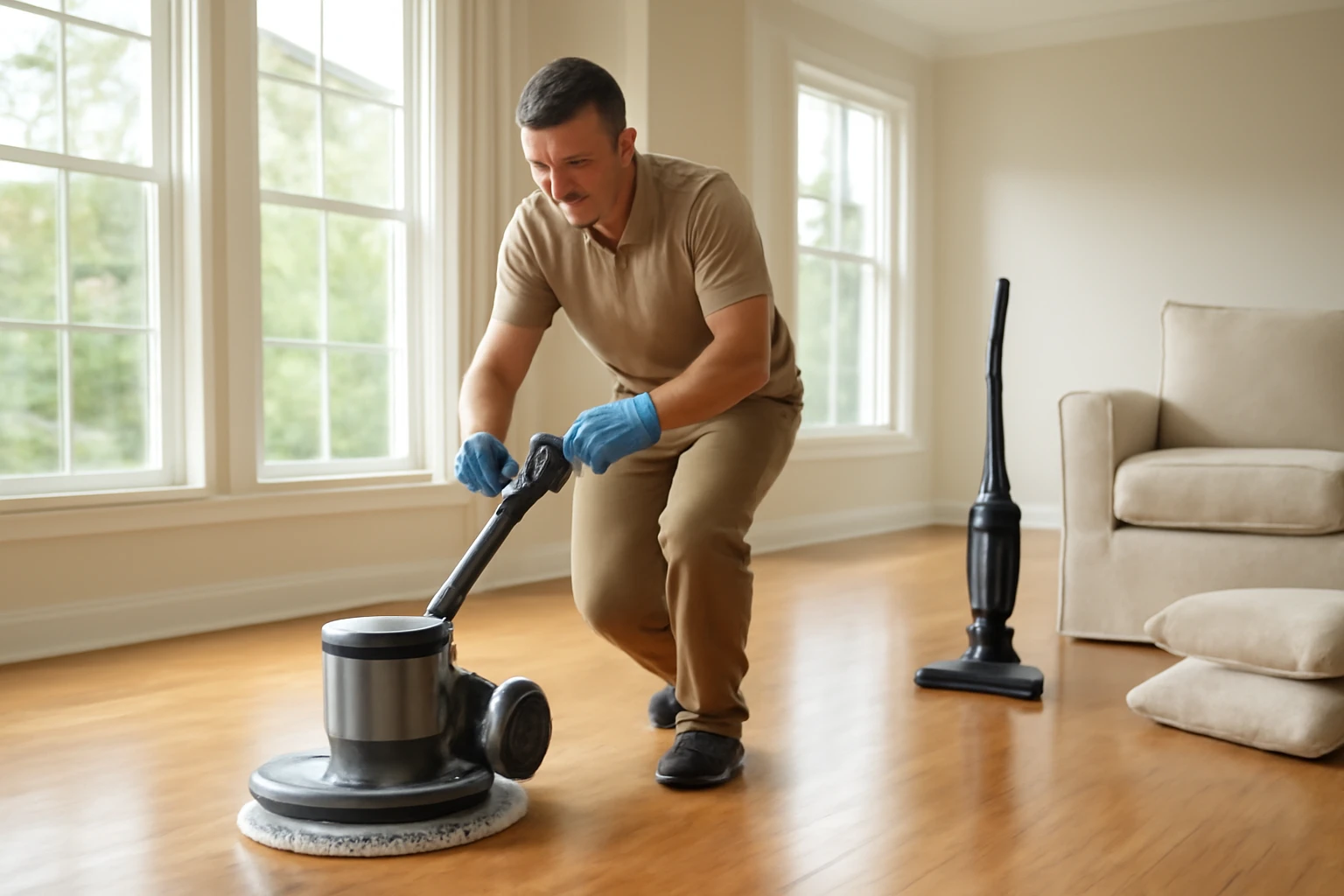
Deep Clean Steps
- Move furniture and vacuum well.
- Use a manufacturer-approved deep cleaner and a microfiber pad or a low-speed floor machine.
- Buff and dry fully. Keep traffic off the area for 24 to 48 hours.
Deep Clean Checklist:
- Test cleaner in an unseen corner.
- Work in small sections.
- Keep ventilation high during and after cleaning.
When to Refinish
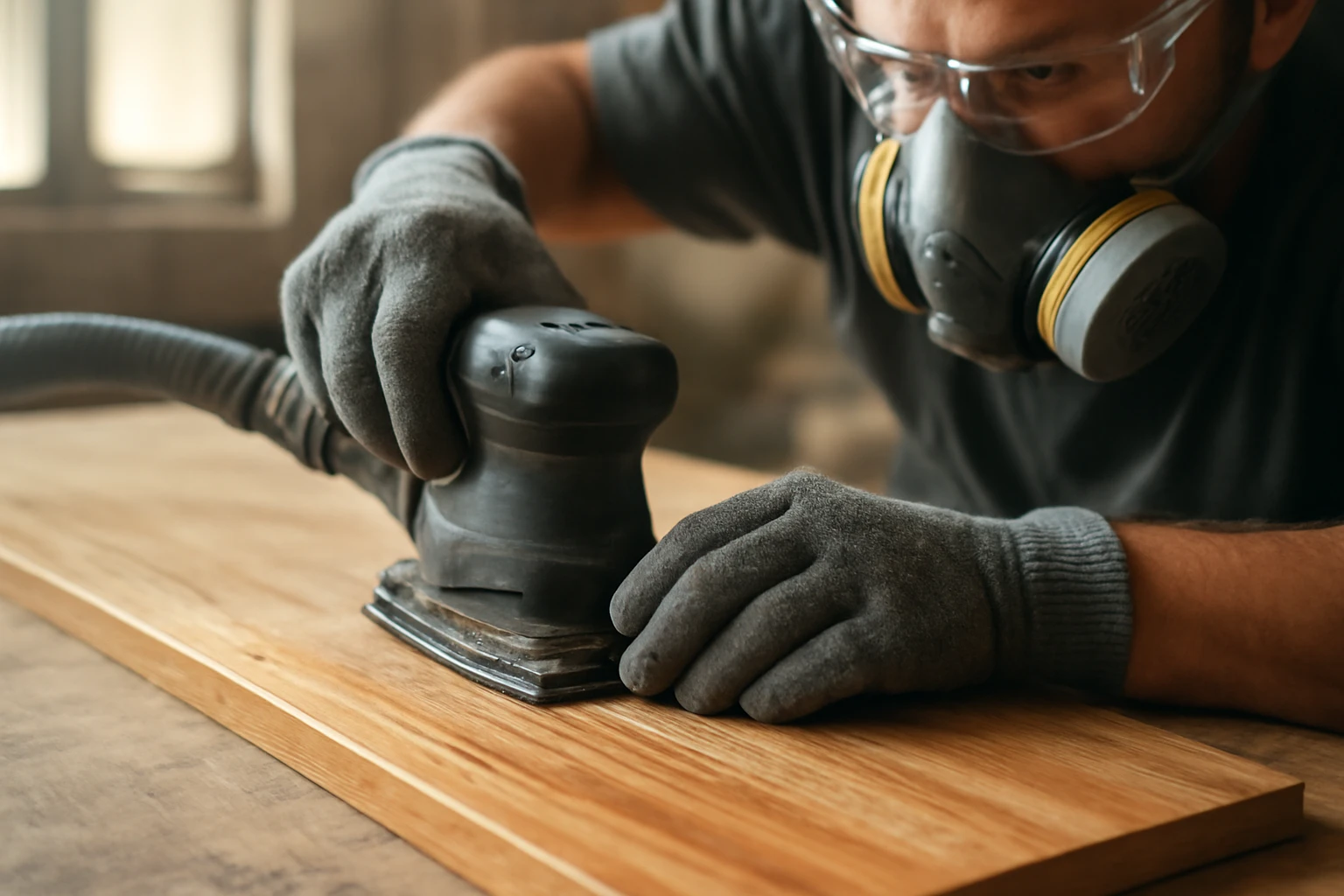
Refinishing is needed when the finish is gone, deep scratches remain, or water damage has changed plank shape. For strand-woven bamboo, sanding and refinishing can restore the look but the option depends on the wear layer thickness.
For more on solid wood choices and how they compare to bamboo, see our page on Solid Wood Flooring.
What Not to Use on Bamboo Floors
Some cleaners and tools damage the finish or the bamboo itself. Avoid abrasive or highly alkaline products.
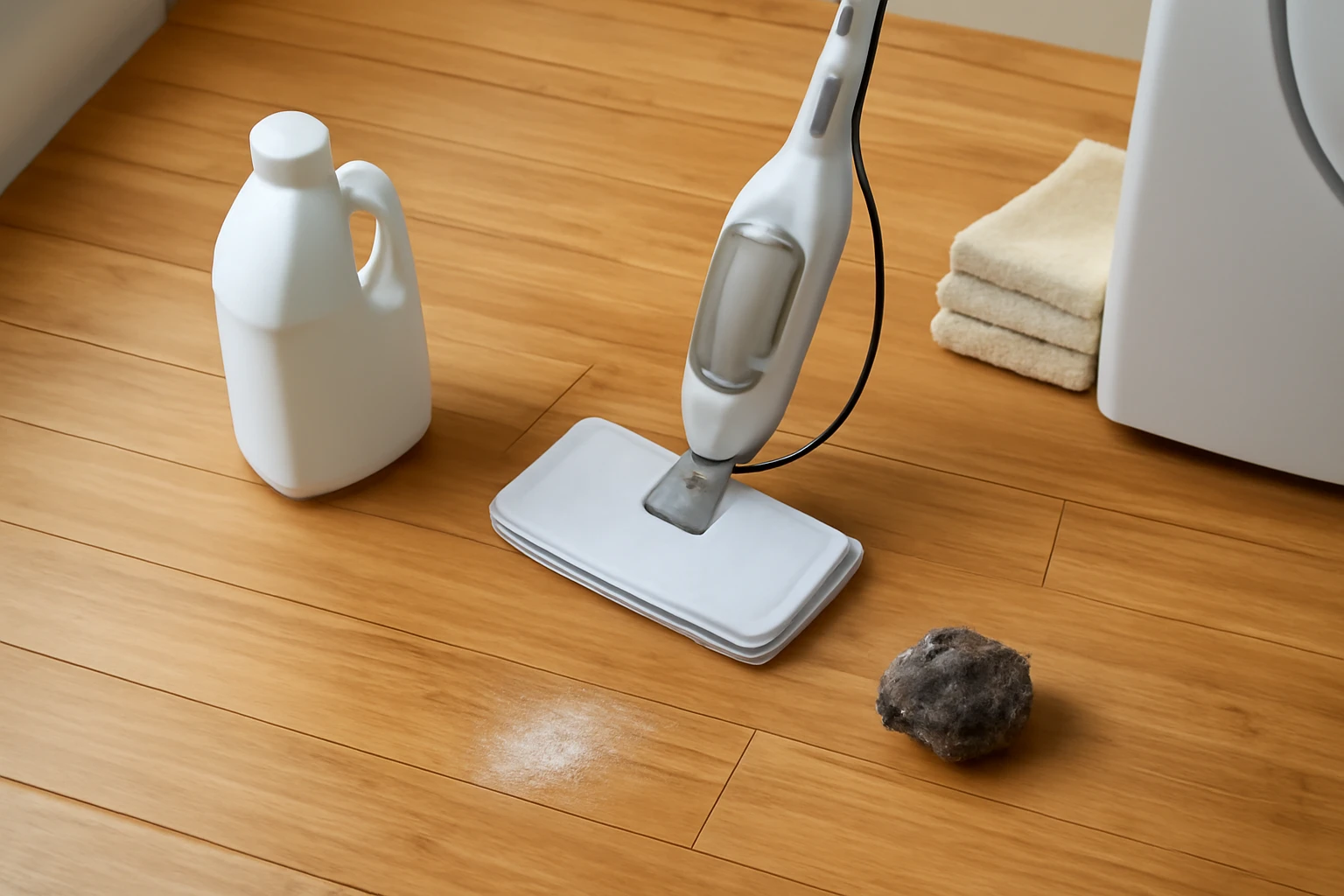
Items to Avoid
- Steam mops. High heat and moisture lift planks and harm glue joints.
- Ammonia or bleach cleaners. These strip protective finishes.
- Abrasive pads or powders. They scratch the sealed surface.
Quick Safety Notes:
- Do not let water pool. Wipe puddles immediately.
- Do not sand thin-finish engineered bamboo without expert advice.
Comparison Table: Bamboo Versus Other Flooring
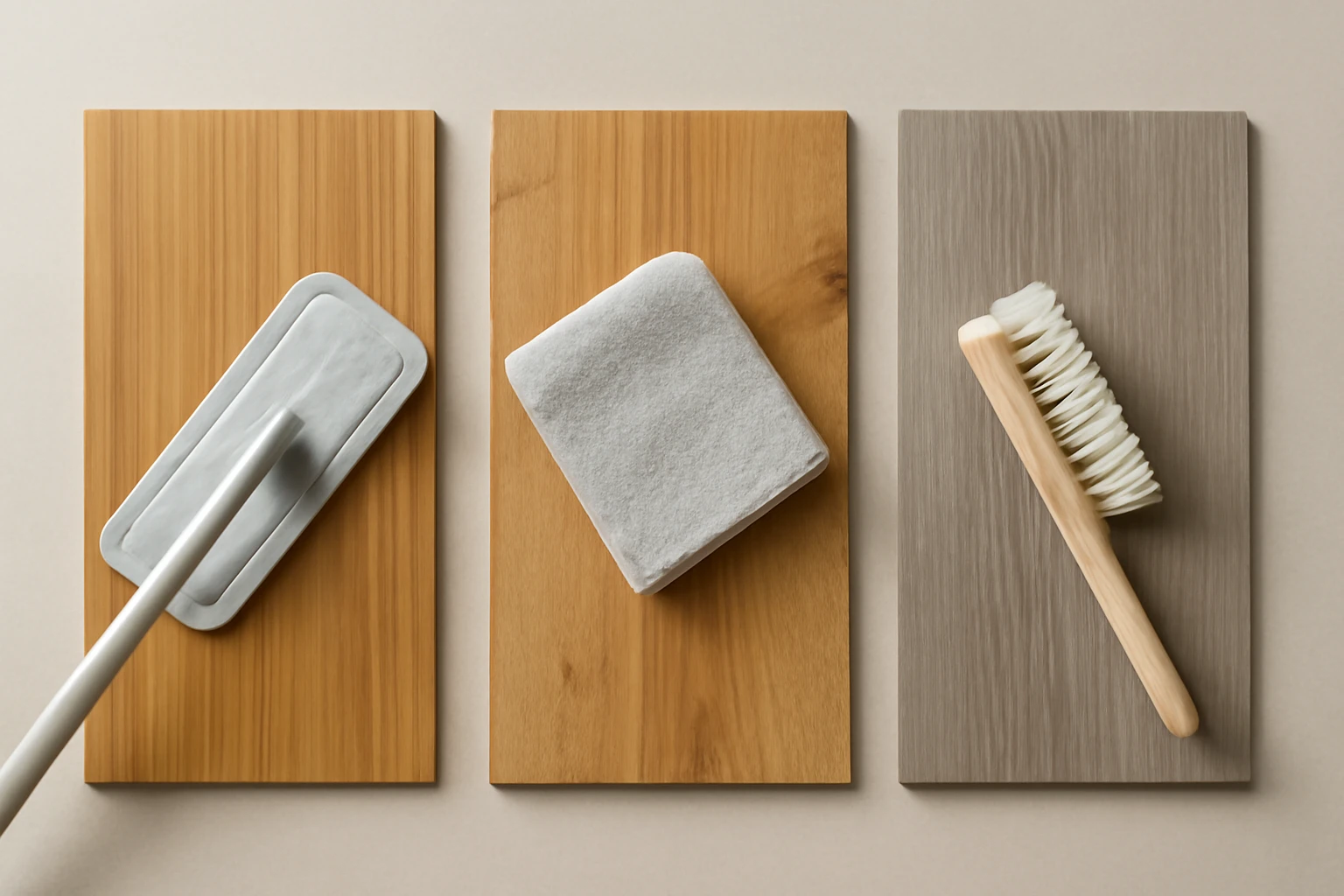
Bamboo stands out for sustainability and hardness but cleans differently than other floors. Below is a side-by-side comparison to help choose cleaning methods.
| Surface Type | Typical Finish | Best Cleaner | Routine Frequency | Notes |
|---|---|---|---|---|
| Strand-woven Bamboo | PU/polyurethane | pH-neutral wood cleaner | Sweep daily, mop weekly | Very hard surface; sensitive to standing water |
| Solid Hardwood | Oil or lacquer | Cleaner for wood finish | Sweep daily, mop weekly | Refinish thickness varies; avoid strong solvents |
| SPC Vinyl | Polyurethane wear layer | Neutral vinyl cleaner | Sweep weekly, mop biweekly | Waterproof core; can tolerate more moisture |
This table helps when you compare bamboo to Wooden Flooring options.
Maintenance Costs and Lifespan Estimates
Budgeting for care keeps the floor in service longer. Initial cost, finish type, and local climate change maintenance needs.
| Item | Typical Cost Range (USD) | Expected Interval |
|---|---|---|
| Regular cleaning supplies | 10 to 40 | Ongoing |
| Professional deep cleaning | 80 to 250 per room | 1 to 2 years |
| Refinishing (sanding and refinish) | 3 to 7 per sq ft | 10 to 15 years depending on wear |
In many climates, proper maintenance extends usable life to two decades or more. Kitchens need more attention. For kitchen-specific flooring advice, read Kitchen Flooring.
Quick Reference Cleaning Chart
Keep this chart near your cleaning supplies for fast decisions.
| Task | Frequency | Tool | Cleaner |
|---|---|---|---|
| Sweep or vacuum | Daily | Soft broom or vacuum | None |
| Spot clean spills | As needed | Soft cloth | pH-neutral wood cleaner |
| Damp mop | Weekly | Microfiber mop | Diluted neutral cleaner |
| Deep clean | 6 to 12 months | Low-speed buffer or hand pad | Manufacturer-approved deep cleaner |
A small laminated card with this chart helps guests and household staff follow the right steps.
Final Notes from Experience
Homeowners who keep a short daily routine and a cautious weekly mop get the best results. The two common mistakes are excess water and abrasive cleaning tools. Put mats at entries and train household members to remove grit. With steady care, your bamboo floor will stay both beautiful and useful. For more helpful flooring guides, keep visiting Floorlands.ae.
Frequently Asked Questions
Can I Use a Steam Mop on Bamboo Flooring?
No. Steam mops force moisture and heat into the planks and joints. That can lead to swelling, delamination, and finish failure. Use a barely damp microfiber mop and dry the surface quickly.
What Cleaner Is Safe for Bamboo Floors?
Choose a pH-neutral cleaner labeled safe for finished wood or bamboo. Avoid bleach, ammonia, and strong alkaline products. Always test a cleaner in a hidden area first.
How Often Should I Deep Clean Bamboo Flooring?
Most homes need a deep clean every 6 to 12 months, depending on traffic and soil. High-traffic areas may need attention more often.
How Do I Remove Scratches from Bamboo Floors?
Light surface scratches can be reduced with a manufacturer-approved touch-up kit or polish. Deeper gouges may require sanding and refinishing by a professional.
Is Bamboo Flooring Waterproof?
Bamboo is not fully waterproof. Some engineered options resist moisture better, but standing water should be removed immediately to prevent warping.
Can I Refinish Strand-woven Bamboo?
Yes, strand-woven bamboo can often be refinished, but the number of refinishes depends on the thickness of the wear layer. Consult a flooring professional before sanding.
What Daily Habits Protect the Finish?
Sweep or vacuum daily, use mats at entrances, attach felt pads to furniture legs, and avoid wearing high-heeled shoes indoors.