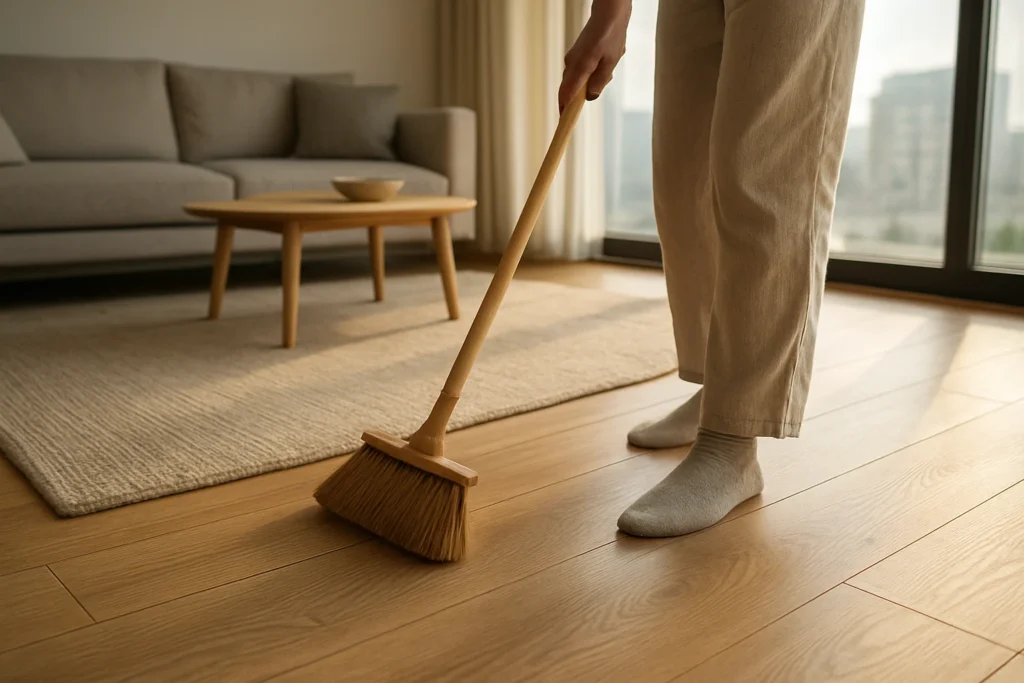
A straightforward routine keeps vinyl floors clean and long lasting. Sweep or vacuum daily. Mop with warm water and a pH-neutral cleaner. Blot spills right away. Do not use abrasive tools or high-heat steam. For stubborn stains, try a gentle paste or a manufacturer-approved cleaner and test it first in an out-of-the-way spot.
Key Statistics
- Vinyl is one of the most popular residential floorings, often chosen for cost, durability, and water resistance. Surveys show many homeowners mop vinyl weekly and deep clean every 3 to 12 months.
- Typical household cleaning frequency: sweeping or vacuuming 3 to 7 times per week, damp mopping 1 to 2 times per week.
- Most commercial vinyl finishes can withstand pH-neutral cleaners with dilution ratios between 1:100 and 1:200 for routine cleaning.
This guide, Floor Lands, will explain safe methods, common mistakes, stain removal, deep-cleaning steps, and how to protect the finish long-term. It is aimed at homeowners and maintenance staff who want practical, reliable results.
Why Clean Vinyl Flooring
Keeping vinyl clean preserves the finish and prevents wear. Dirt and grit act like sandpaper and can dull the surface. Simple daily care reduces the need for strong chemicals or professional restoration.
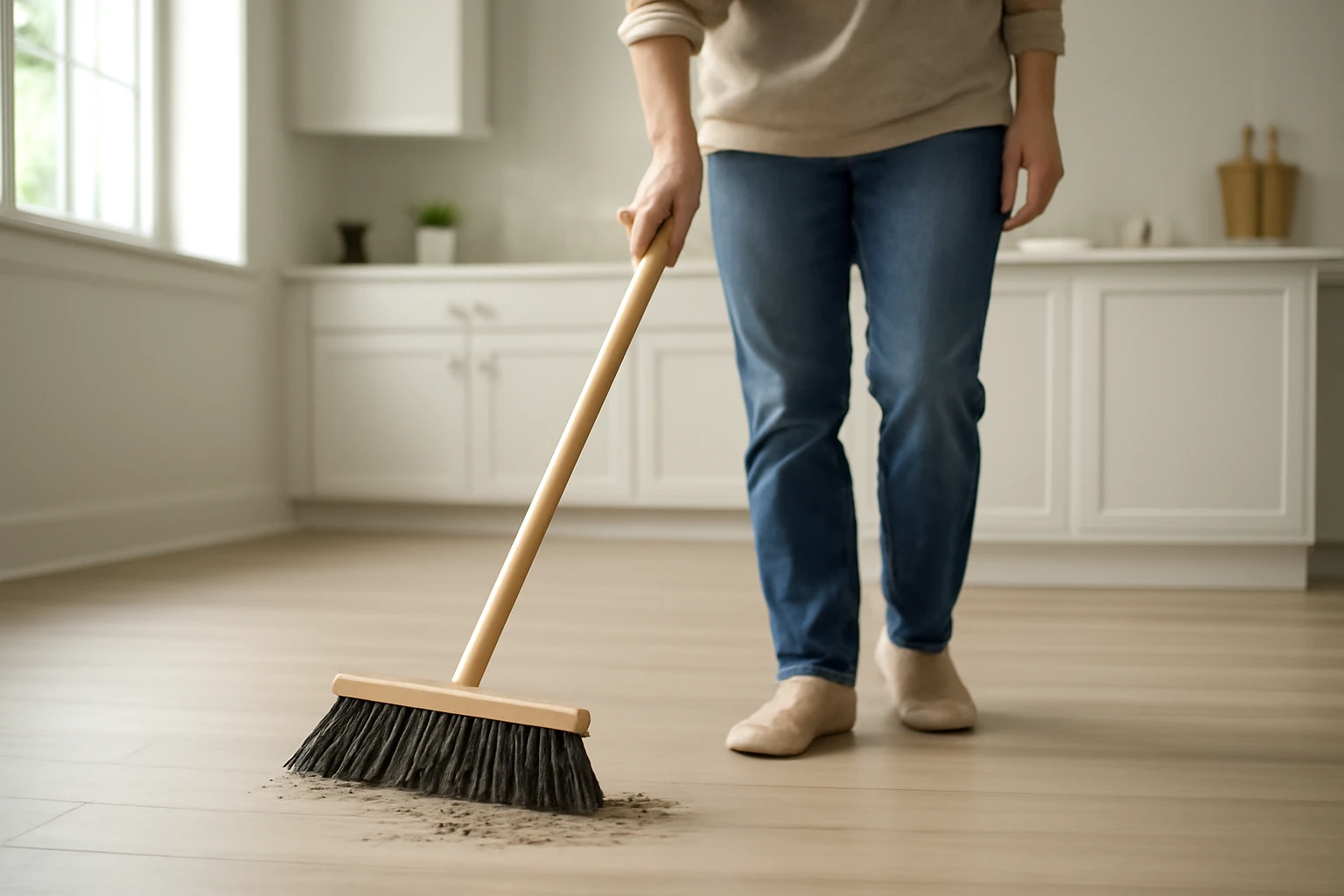
Common Effects of Poor Cleaning
- Scratches and scuffs from trapped grit.
- Stains that set and become harder to remove.
- Loss of surface sheen or a patchy appearance.
A small daily habit prevents most problems. A common mistake is using too much soap. Thin films from overuse attract dirt faster.
Daily and Weekly Cleaning Routine
A regular routine keeps the floor looking new with minimal effort. Aim for a short daily sweep and a weekly damp mop using a mild solution.
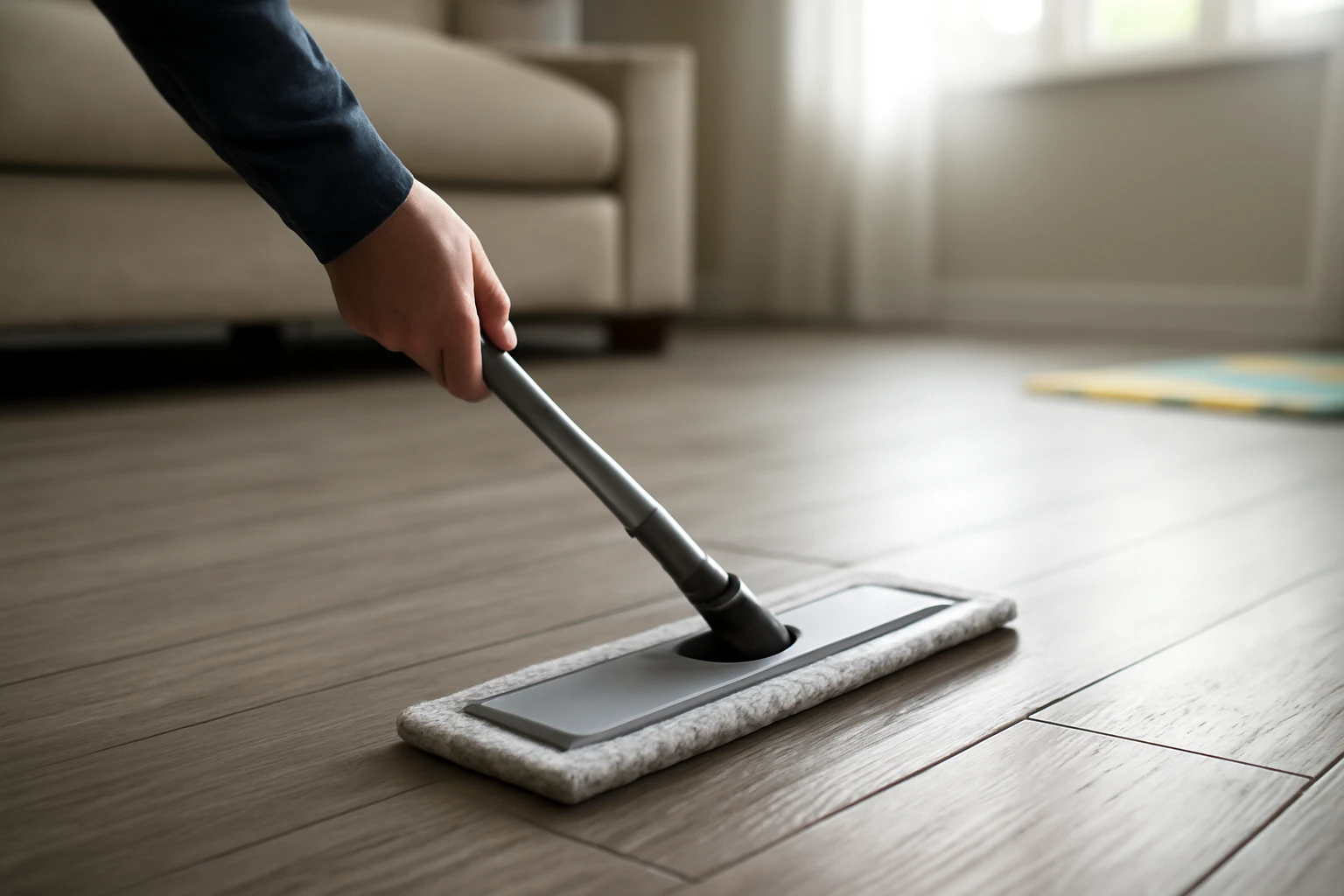
Daily Tasks
- Sweep or vacuum to remove grit. Use the soft-brush attachment.
- Wipe spills promptly with a soft cloth.
Weekly Tasks
- Damp mop with warm water and a pH-neutral cleaner following label dilution.
- Change mop water often to avoid redepositing dirt.
Tools That Help
- Microfiber mop heads for trapping fine dust.
- Soft broom or vacuum with hard-floor setting.
- Two-bucket system for mop rinsing and clean solution.
Removing Common Stains
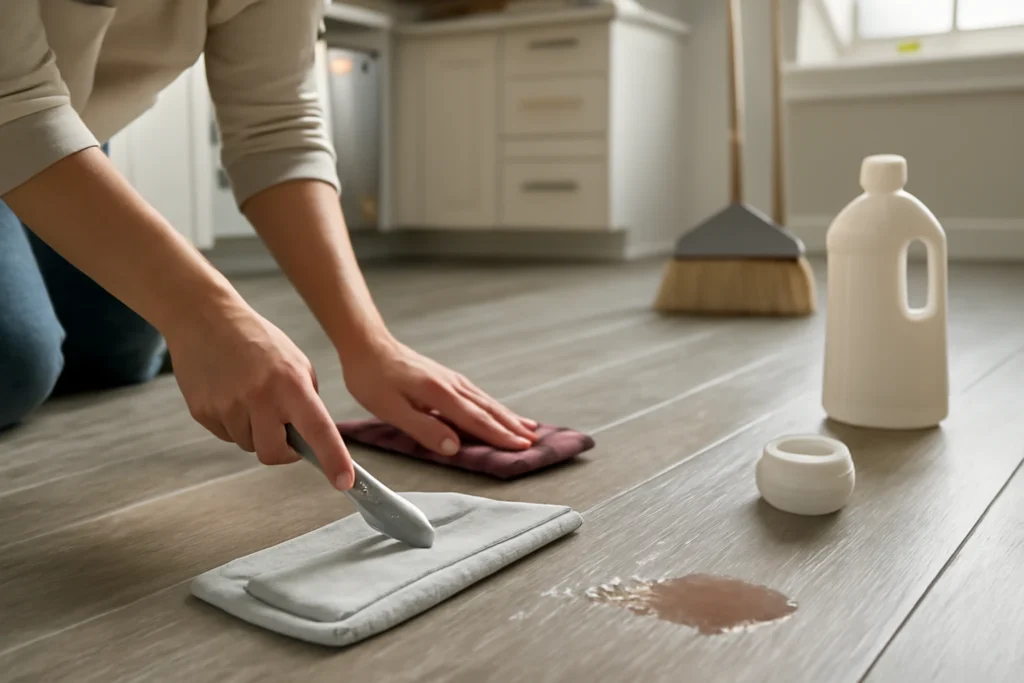
Different stains need different approaches. Start with the mildest method and test a small area first. Many common spots lift with gentle abrasion and a mild cleaning paste.
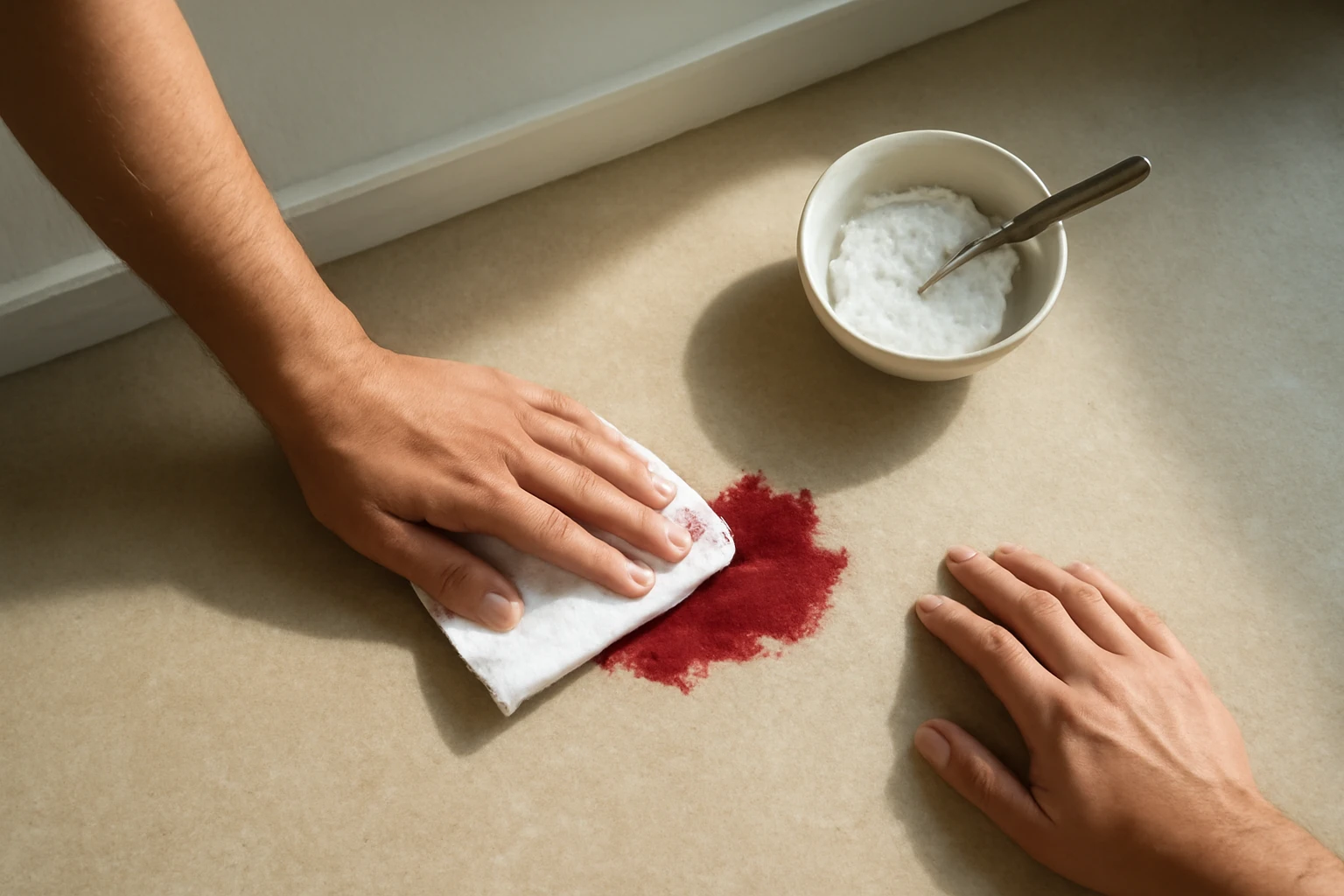
Stain Removal Quick Guide
| Stain Type | First Step | If It Persists |
|---|---|---|
| Food or Drink | Blot with damp cloth | Use diluted pH-neutral cleaner and soft brush |
| Grease or Oil | Apply dish soap solution, blot | Use isopropyl alcohol on a cloth, test first |
| Ink or Marker | Rubbing alcohol on cloth test | Repeat gently; call pro if deep |
| Paint (Latex) | Scrape gently when dry, clean residue | Use mineral spirits sparingly and test |
| Rust | Commercial rust remover for vinyl | Follow product instructions carefully |
What Not To Do
- Do not use strong solvents without testing. They can remove the finish.
- Avoid abrasive scrubbing pads that can scratch.
Deep Clean and Restore Shine
Deep cleaning should happen every 3 to 12 months depending on traffic. It lifts embedded grime and can return a more even sheen. In many cases it will not strip the finish when done correctly.
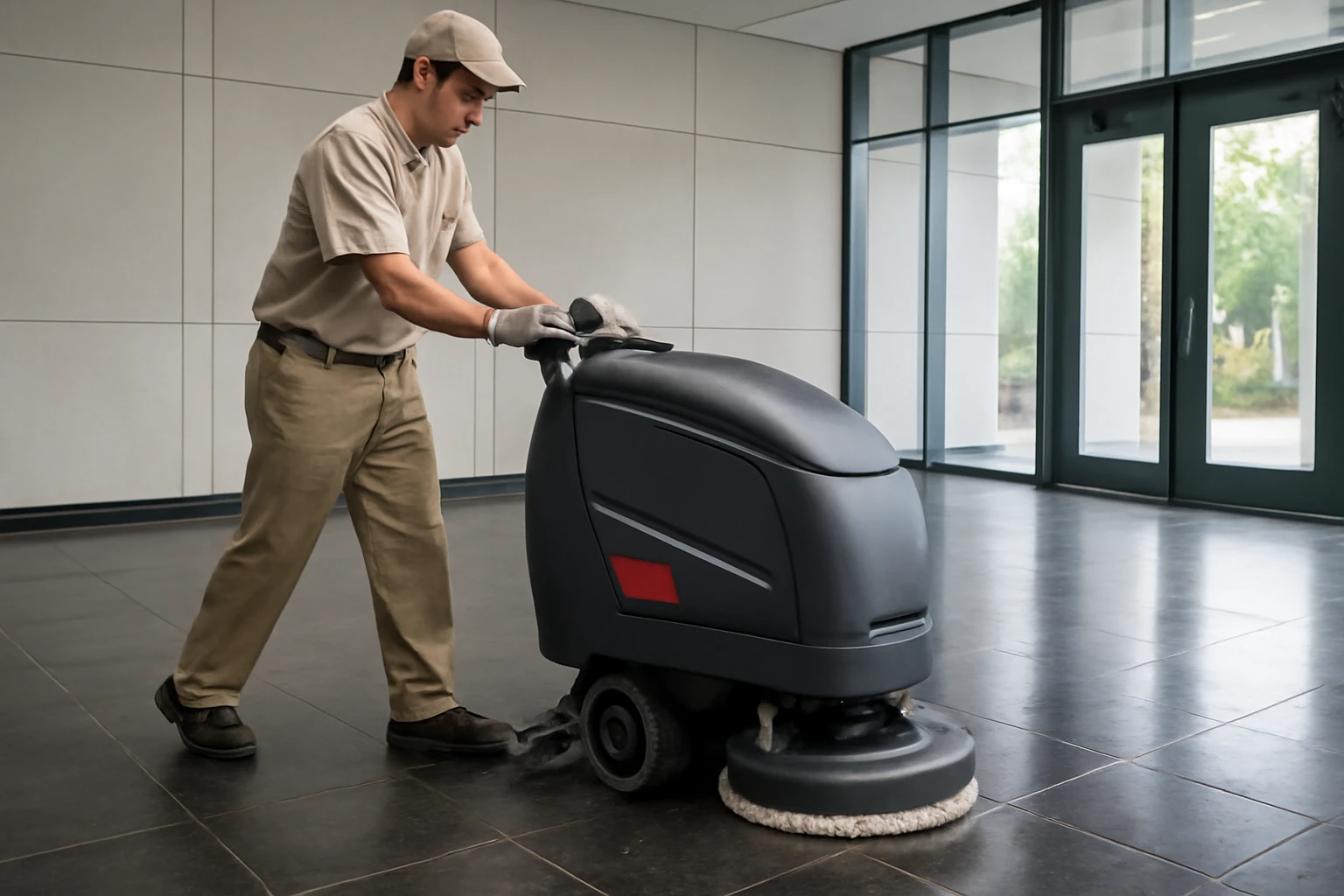
Deep Clean Step-By-Step
Start mild and increase intensity only if needed. For heavy buildup, professional methods may be required.
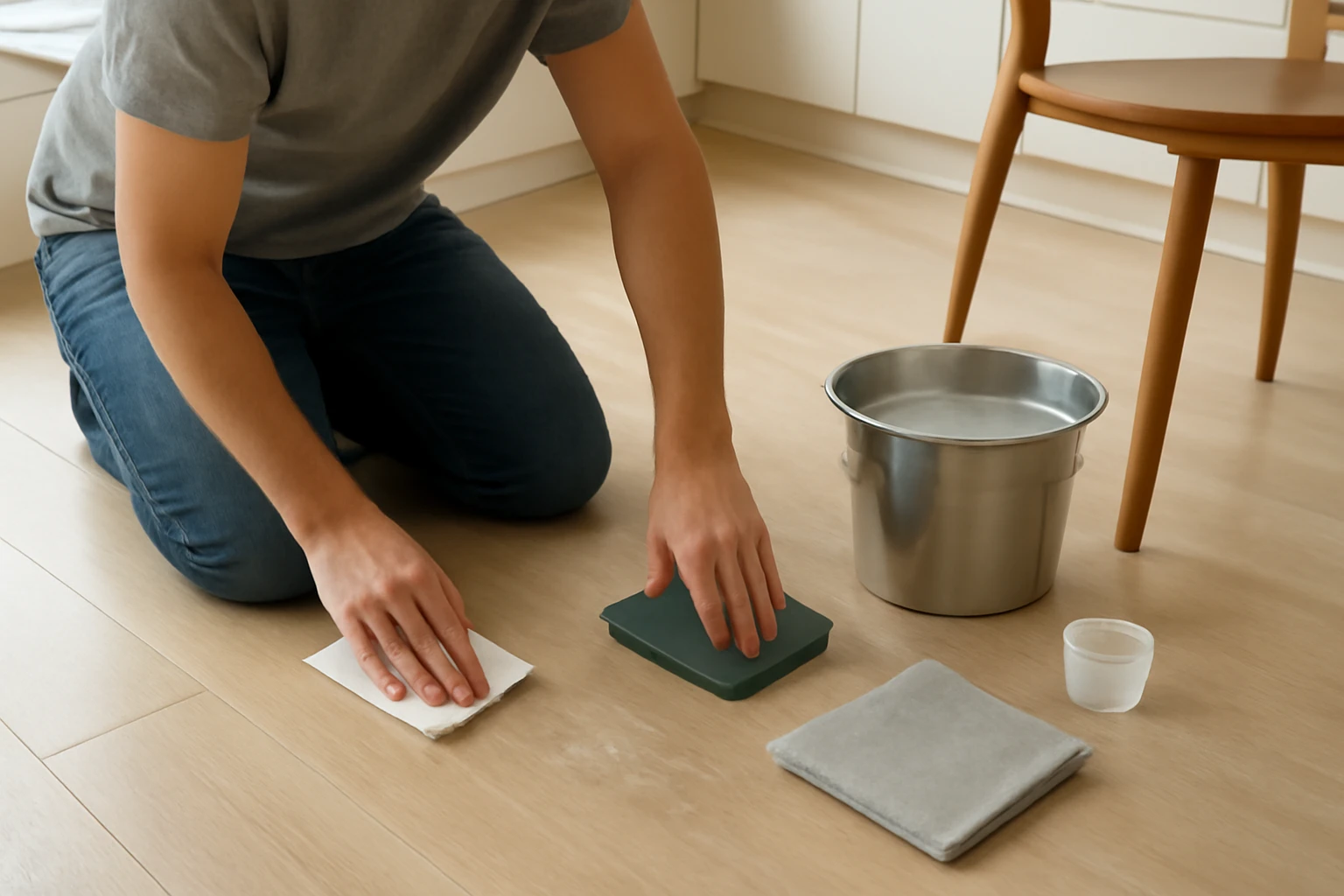
What to Do First:
- Move light furniture. Protect legs and glides.
- Sweep and vacuum thoroughly.
Tool Checklist:
- Microfiber pad or soft nylon scrub brush.
- pH-neutral cleaner and measuring cup.
- Two buckets or a mop with clean water reservoir.
- Clean, dry towels for immediate drying.
Deep Clean Procedure:
- Mix a mild solution per product directions. Use warm water.
- Work in small sections. Apply cleaner and agitate gently with a microfiber pad.
- Rinse the mop or pad frequently. Remove residue with clean water.
- Dry each section promptly to avoid streaks.
When To Use A Restorer
- If the floor looks dull after deep cleaning, use a manufacturer-approved vinyl restorer. Test in a hidden area first.
- Avoid products labeled for other floors such as wood or laminate unless the maker confirms vinyl is safe.
Preventive Care and Maintenance
Preventive measures reduce damage and cleaning time. Small investments pay off in longevity and appearance.
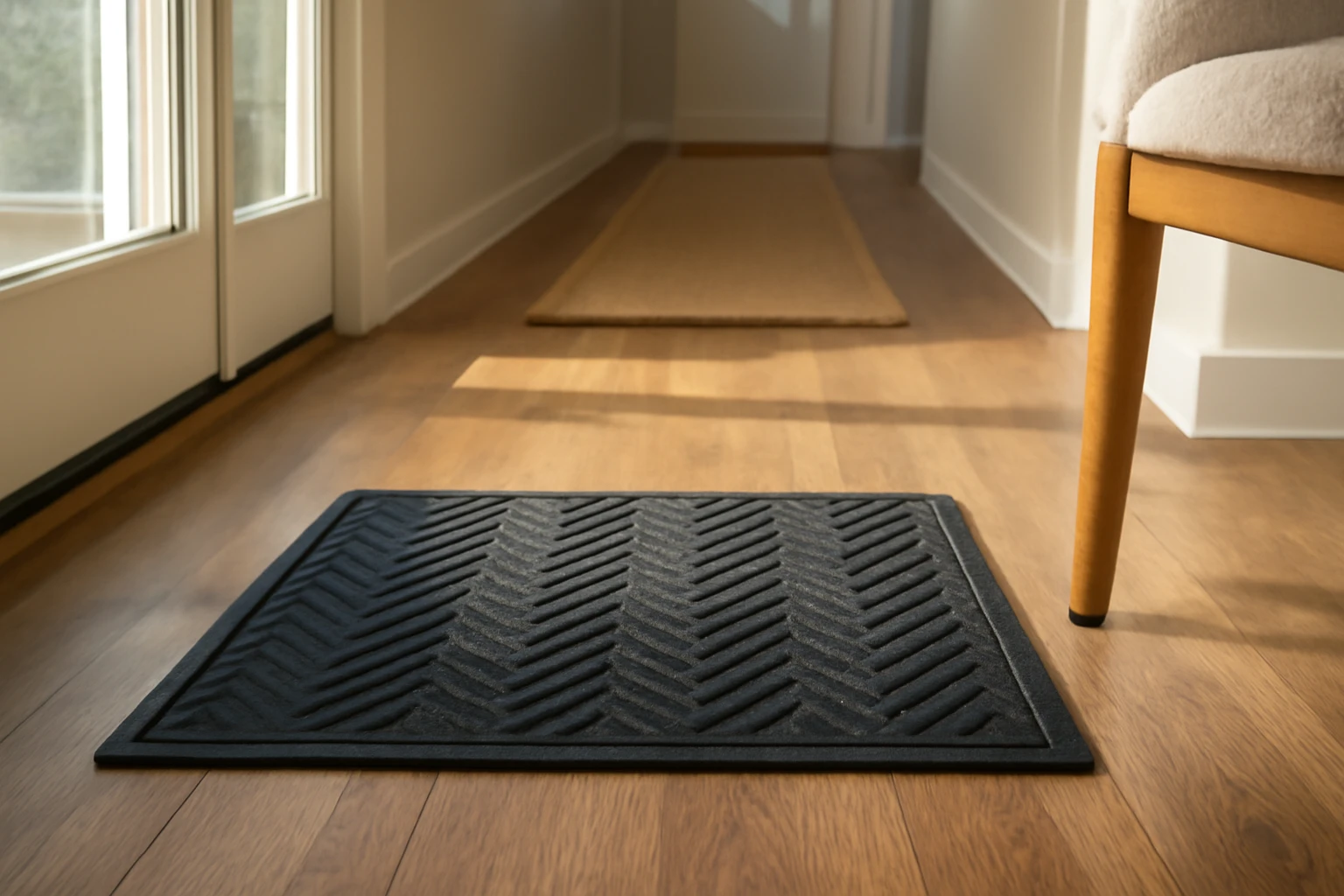
Practical Steps
- Use entrance mats to capture grit at doors.
- Add felt pads under furniture legs to prevent scratches.
- Keep pet nails trimmed to reduce gouging.
- Use area rugs in high traffic zones and under dining tables.
Maintenance Schedule Example
| Task | Frequency |
|---|---|
| Sweep or vacuum | Daily or every other day |
| Damp mop | Weekly |
| Deep clean | 3 to 12 months |
| Inspect seams and edges | Twice a year |
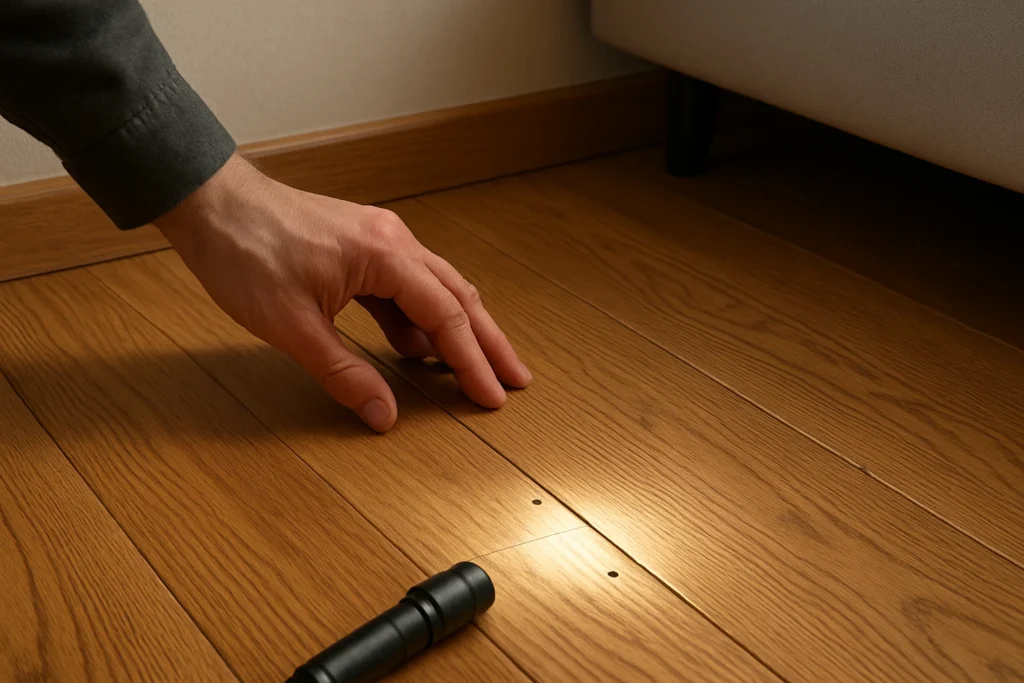
Pay attention to edges and seams to prevent moisture problems. Small gaps near baseboards can trap dirt.
Products to Use and What to Avoid
Choosing the right cleaner matters more than the brand. pH-neutral and low-residue products are best for most vinyl finishes.
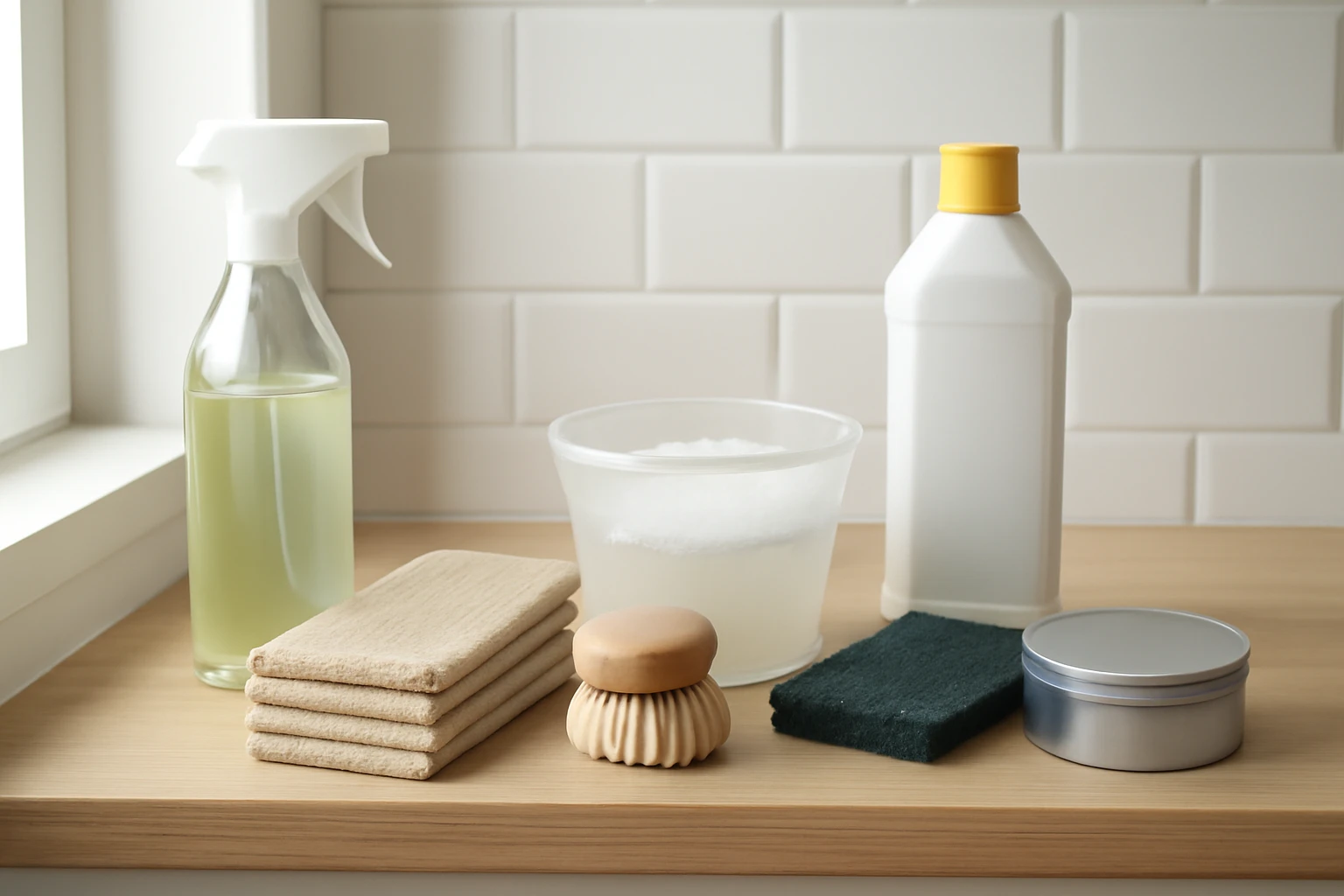
Cleaner Comparison Table
| Cleaner Type | Use Case | Safety For Vinyl |
|---|---|---|
| pH-Neutral Floor Cleaner | Routine mopping | Safe when diluted |
| Mild Dish Soap | Grease spots | Safe in small amounts |
| Isopropyl Alcohol | Ink or grease spot | Use sparingly, test first |
| Ammonia-Based Cleaners | Heavy soil | Not recommended for many finishes |
| Bleach Solutions | Disinfection | Use very dilute solutions if safe per manufacturer |
Products To Avoid
- Abrasive powders or pads that can scratch.
- Concentrated acetone or lacquer thinners that strip finish.
- Undiluted detergent that leaves a film.
Tip: When in doubt, consult the floor manufacturer or the product line guidance. Many commercial vinyl products have care instructions online. For related flooring types and their care, see the manufacturer’s pages on Vinyl Flooring, SPC Flooring, and cleaning comparisons like How to Clean Laminate Flooring Safely and Effectively.
When to Call a Professional
Some issues need specialist attention. If damage is structural or cleaning does not restore the finish, a pro can assess repair versus replacement.
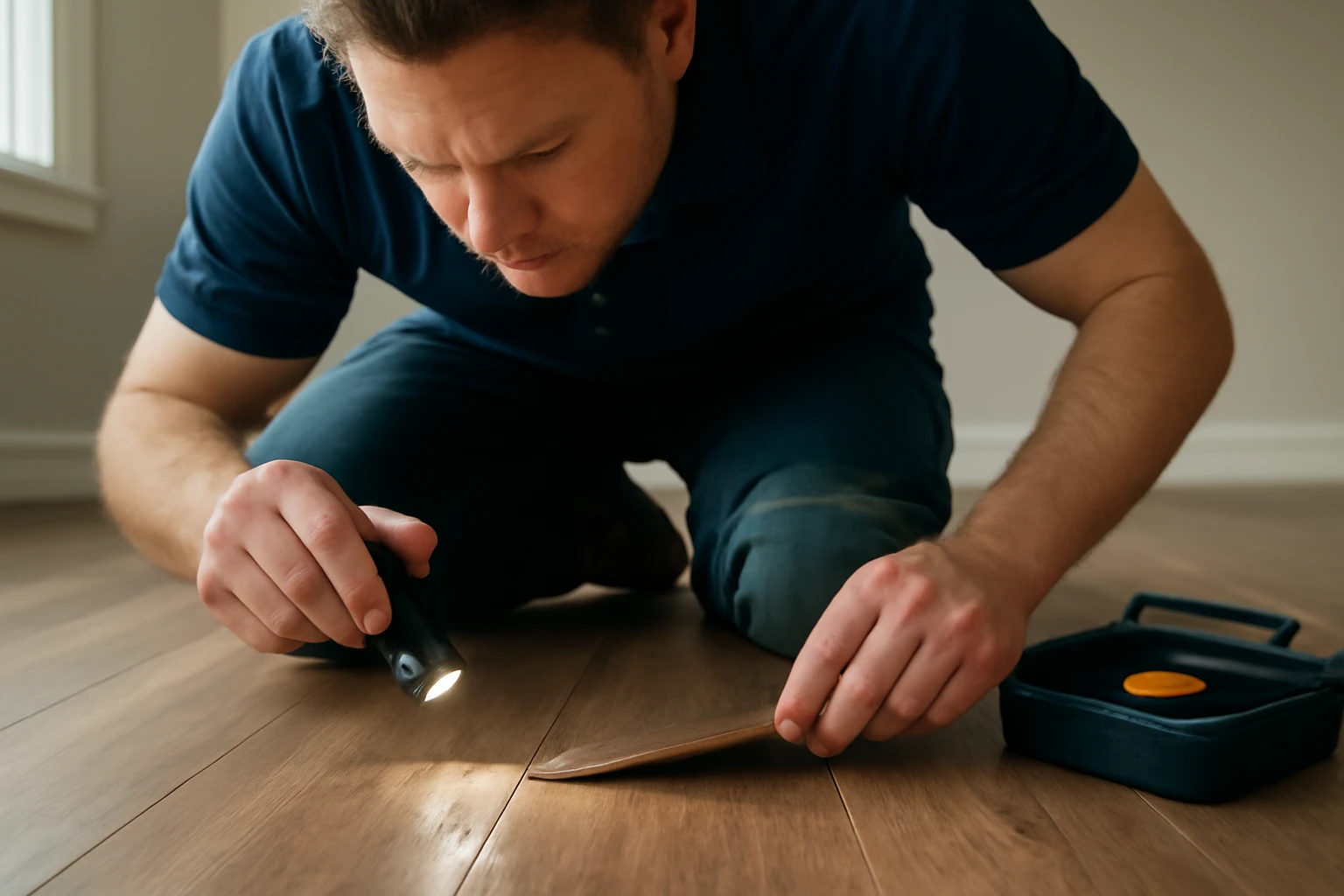
Signs You Need Help
- Persistent deep stains that resist safe cleaners.
- Large sections with lifting or bubbling.
- Extensive surface wear where the texture has worn away.
What Professionals Do
- Assess adhesive and subfloor conditions.
- Offer repair patches, seam re-welding, or full replacement.
- Provide commercial-strength restorers and buffing when safe.
Choosing A Service
Ask for references and evidence of work on vinyl. A good contractor explains methods and shares before and after photos. If you compare to care for other floor types, check resources on How to Clean Bamboo Flooring Without Damaging the Finish and kitchen-specific guidance at Kitchen Flooring.
Quick Reference Tables and Checklists
Daily Checklist
- Sweep or vacuum.
- Clean spills within minutes.
- Spot-clean shoe marks.
Weekly Checklist
- Damp mop with pH-neutral cleaner.
- Inspect high-traffic areas for dirt buildup.
Stain Action Table
| Problem | Quick Fix | If Not Removed |
|---|---|---|
| Scuff mark | Use a magic eraser gently | Apply restorer or consult pro |
| Coffee or Tea | Blot, then clean with mild solution | Repeat cleaning, test alcohol |
| Grease | Dish soap on damp cloth | Isopropyl alcohol test |
Closing Advice
Regular, gentle care keeps vinyl floors attractive and durable. Focus on prevention rather than harsh cleaners. That approach saves money and extends floor life.
For comparisons and material choices, see our pages on Best Flooring Options in Dubai for Homes, Offices and Villas and PVC Flooring. If you install new vinyl, follow the maker’s care sheet for warranty compliance.
Frequently Asked Questions
Can I Use a Steam Mop on Vinyl Flooring?
Most vinyl floors are not suited to steam mops. High heat and moisture can loosen adhesive and warp some vinyl types. Check manufacturer guidance. If you must use a steam device, test a small hidden area and use the lowest setting.
What Is the Safest Cleaner for Vinyl Flooring?
A pH-neutral cleaner diluted per label instructions is the safest choice. Warm water alone works for light cleaning. Avoid concentrated alkaline or solvent-based cleaners unless the manufacturer approves them.
How Do I Remove Scuff Marks from Vinyl?
Try a soft rubber eraser or a damp microfiber cloth with a little pH-neutral cleaner. For persistent marks, a gentle buff with a magic eraser may help. Always test first in an inconspicuous spot.
How Often Should I Deep Clean Vinyl Floors?
Deep cleaning frequency depends on traffic. For most homes, every 3 to 12 months is appropriate. Busy kitchens or commercial areas may need deeper cleaning more often.
Will Vinegar Damage Vinyl Flooring?
Vinegar is acidic and can dull or etch some vinyl finishes over time. Use a diluted solution only sparingly and test first. For routine care, a pH-neutral cleaner is safer.