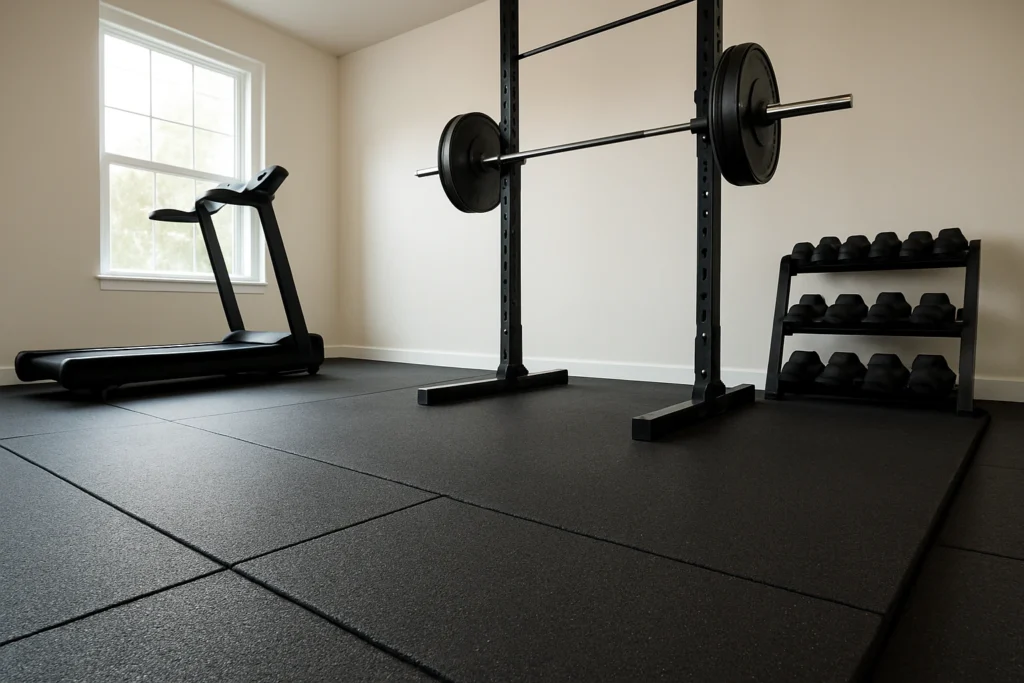
A good gym floor keeps equipment steady, protects the subfloor, and cuts impact. The best thickness depends on what you do there. Home cardio zones can use thinner mats. Heavy weight and drop areas need thicker rubber or layered systems.
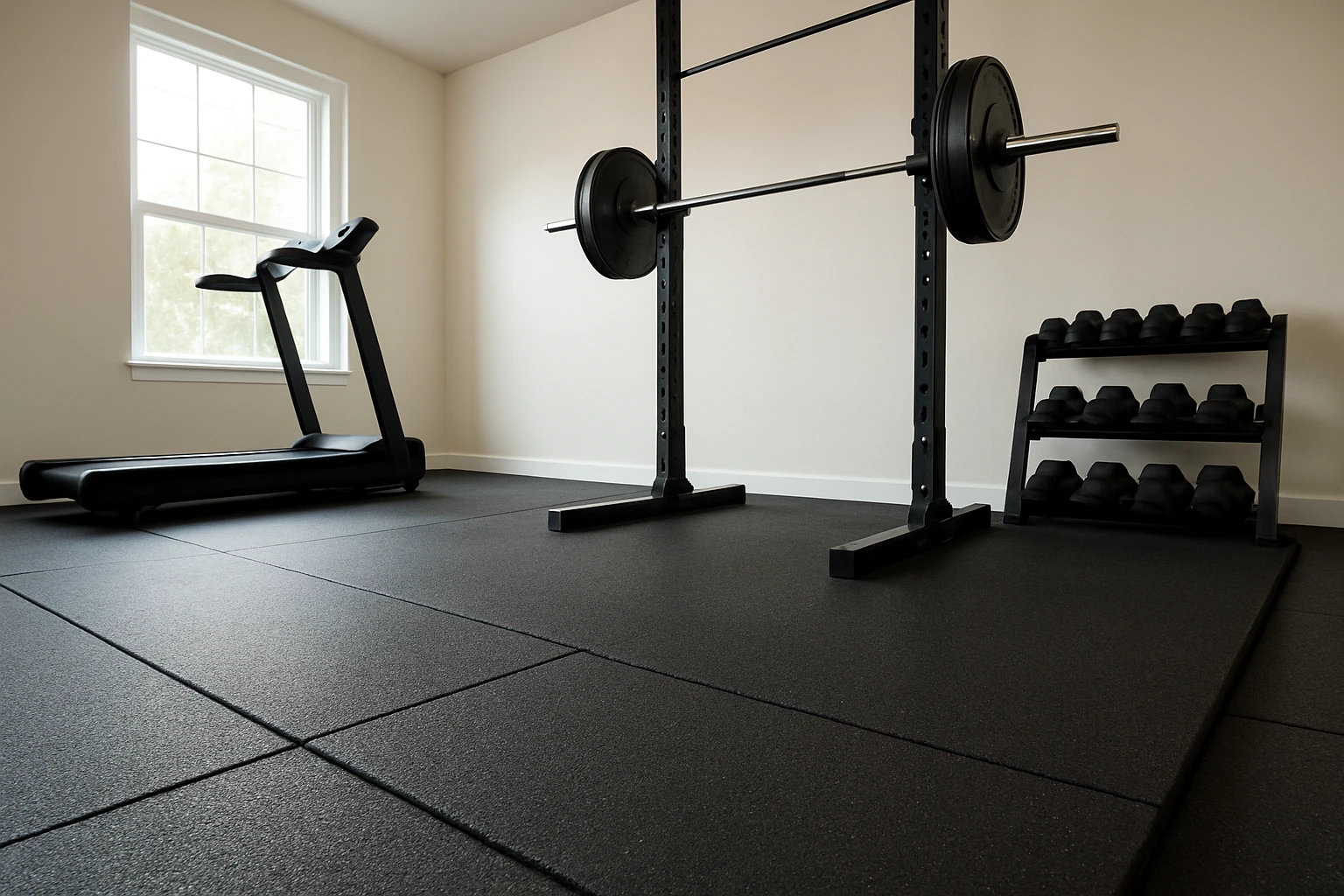
For most users, 8 to 12 mm works well for general gym areas. Use 20 to 25 mm for heavy free-weight zones and Olympic lifting where dropped weights are common. Thinner materials like 6 mm suit cardio and yoga but do not stop heavy impacts.
Key Statistics
- Typical home gym mats sold: 6 mm to 12 mm.
- Commercial gyms often use 10 mm to 25 mm depending on area.
- Heavy drop zones commonly use 20 mm to 50 mm layered solutions.
Recommended Thickness by Gym Area
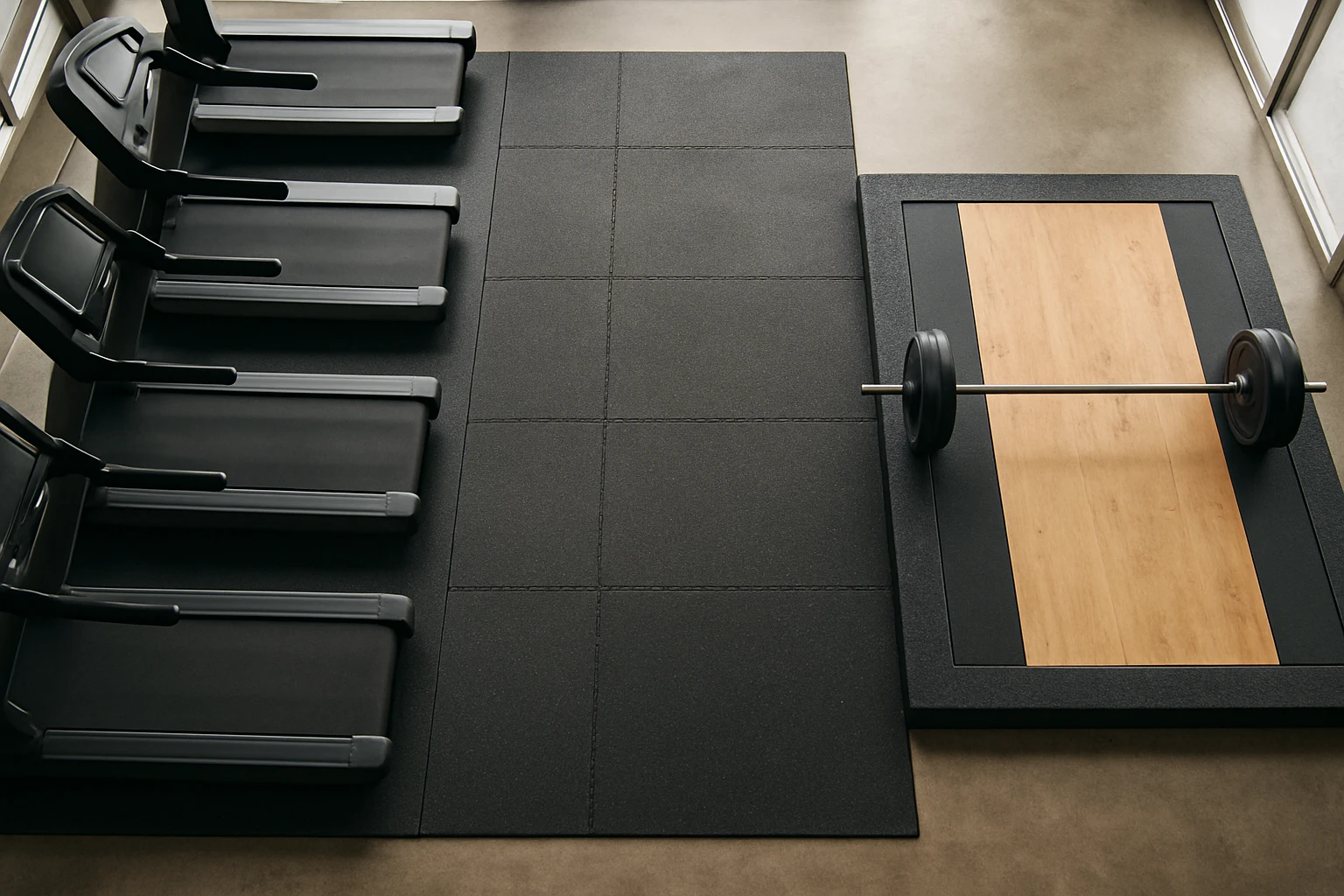
Pick thickness by the activity in each space. The table below shows common choices and why they work.
| Gym Area | Typical Thickness (mm) | Why This Works |
|---|---|---|
| Cardio Machines | 6 to 8 | Adds grip and comfort. Keeps noise down. Not for dropped weights. |
| Group Fitness | 8 to 12 | Offers cushion for impact moves. Easy to clean. |
| General Free Weights | 10 to 15 | Protects subfloor from moderate drops. Feels stable for footing. |
| Heavy Weight / Drop Zones | 20 to 25 (or layered) | Absorbs impact of dropped plates and bars. Reduces rebound. |
| Olympic Lifting Platforms | 25 to 50 (platform or layers) | Built to protect floors and equipment. Often wood center with thick rubber edges. |
| Home Garage Gym | 8 to 20 | Depends on whether heavy drops happen. Use thicker near squat racks. |
A common mistake is using one thickness for the whole gym. Different zones need different protection and feel.
How Thickness Affects Performance and Safety
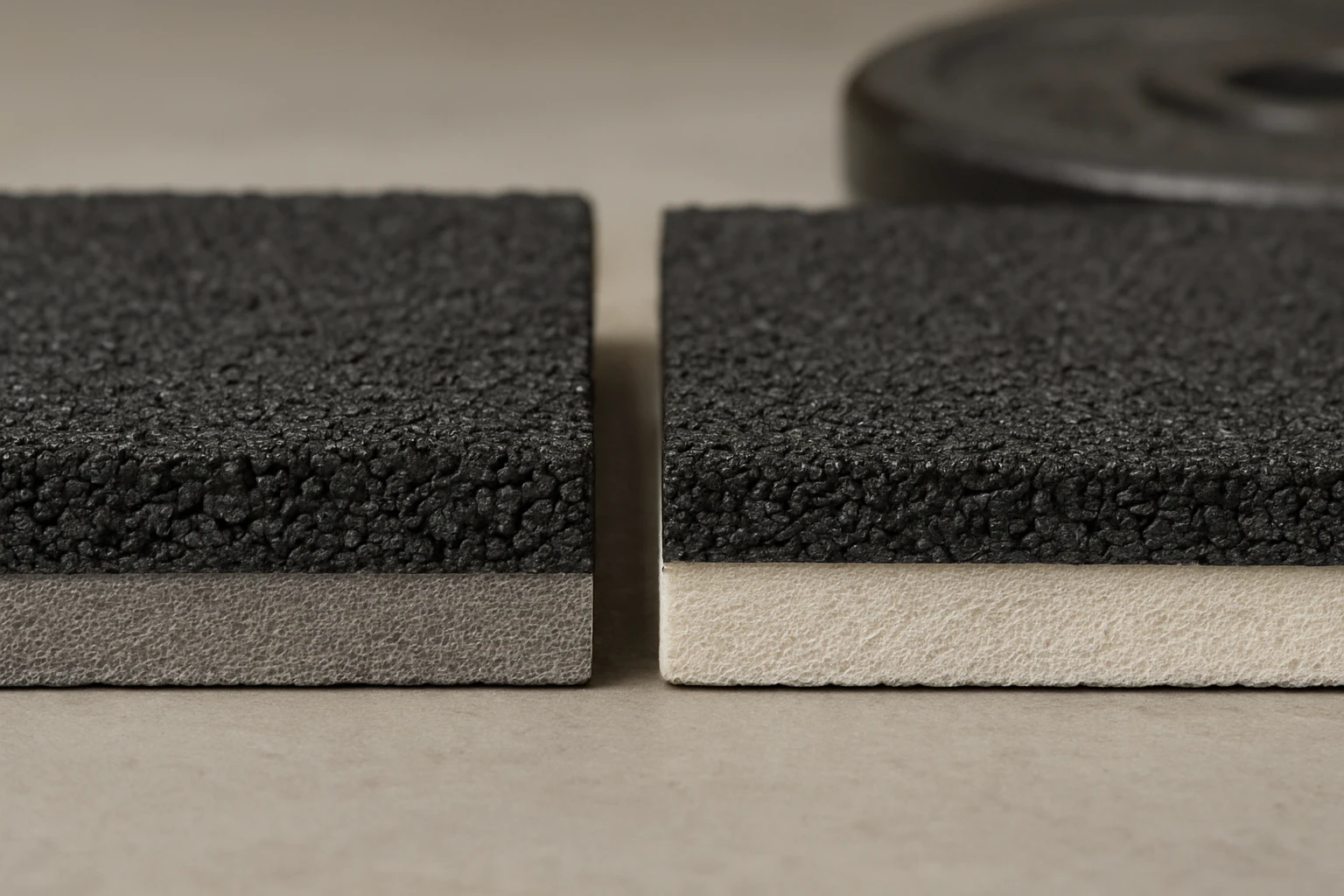
Thickness alters shock control, noise, and stability. Thicker floors cut force to the subfloor. They can feel springy. That helps with drops but can make balance harder for quick footwork.
Key effects to watch:
- Impact absorption. Thicker rubber reduces force to the subfloor. That helps prevent cracks and damage.
- Rebound. Very soft or thick foam may bounce and make heavy lifts unstable.
- Noise. Thicker materials lower noise from machines and dropped weights.
- Traction. Thickness alone does not equal grip. Surface texture matters.
Pros and Cons by Thickness
| Thickness | Pros | Cons |
|---|---|---|
| 6 to 8 mm | Affordable, easy to handle, good for cardio | Little protection for heavy drops |
| 10 to 12 mm | Balanced protection and stability | Heavier and pricier than thin mats |
| 20 to 25 mm | Strong protection for drops, quiet | Can feel less stable for fast footwork |
| 30 mm plus | Best for heavy lifting platforms | High cost, bulky, may need special installation |
Comparing Material Types and Suitable Thickness
Material matters as much as thickness. Here are common gym materials and the thickness ranges that work best.
| Material | Typical Thickness (mm) | Best Use | Notes |
|---|---|---|---|
| Solid Rubber (SBR/EPDM) | 6 to 25+ | Free weights, drop zones, commercial gyms | Durable. Links: Rubber Flooring and EPDM Flooring |
| Interlocking Rubber Tiles | 8 to 20 | Home gyms, studios | Easy to install and replace |
| EVA Foam Tiles | 6 to 25 | Yoga, light workouts, kids areas | Comfortable but less drop protection |
| PVC/ Vinyl Tiles | 3 to 8 | Cardio rooms, low-impact studio | Not for heavy drops. See PVC Flooring |
| SPC / Rigid Core | 4 to 8 | Reception areas, light gym walkways | Not ideal under heavy weights. See SPC Flooring |
| Poured Rubber | 15 to 50 | Commercial drop zones, outdoor areas | Seamless and durable. Often custom installed |
If you need an athletic surface that meets sport standards, check Sports Flooring. For a home garage gym, Garage Flooring shows helpful options.
How to Measure and Choose Thickness for Your Space
Measure what you want to protect and how you will use the area. Start with a floor plan. Mark zones for machines and lifting. Ask these questions. Will heavy plates be dropped? Is the floor on a slab or above a room below? How much noise control do you need?
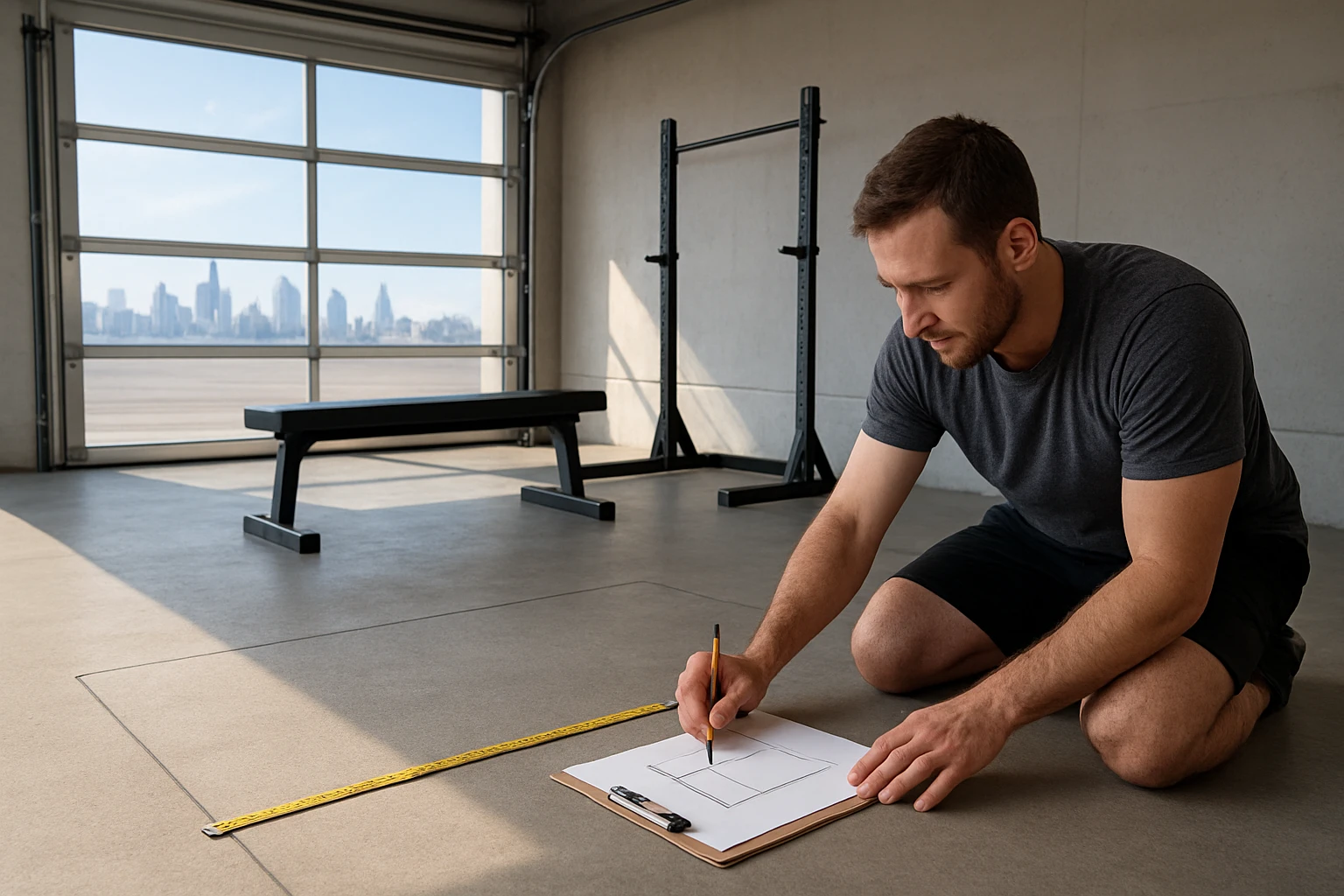
Quick Measurement Steps:
What to Measure:
Measure the full room length and width. Mark equipment footprint. Add at least 1 m clearance around machines and racks.
How to Plan Thickness:
Decide zones first. Use 6 to 8 mm for cardio. Use 10 to 12 mm for general fitness. Use 20 to 25 mm or a platform for heavy drops.
Installation Notes:
Check the subfloor. Uneven concrete may need levelling. Layering thinner mats on a plywood platform can increase protection without using a single heavy slab.
Installation Options and Layering
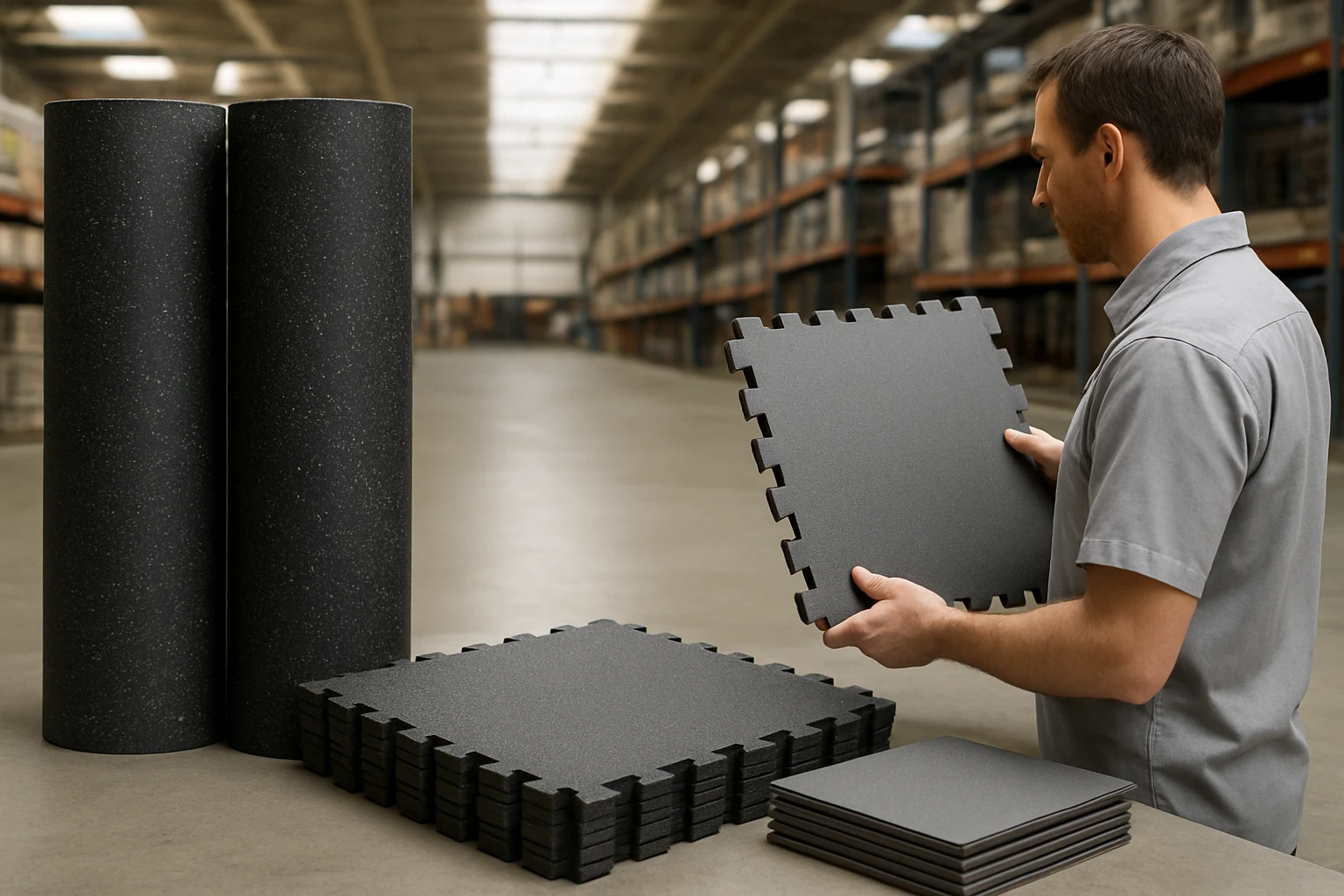
You can buy rolls, tiles, or modular platforms. Each installs in a different way. Rolls cover large areas with fewer seams. Tiles are easy to replace. Platforms use a wood center with rubber edges.
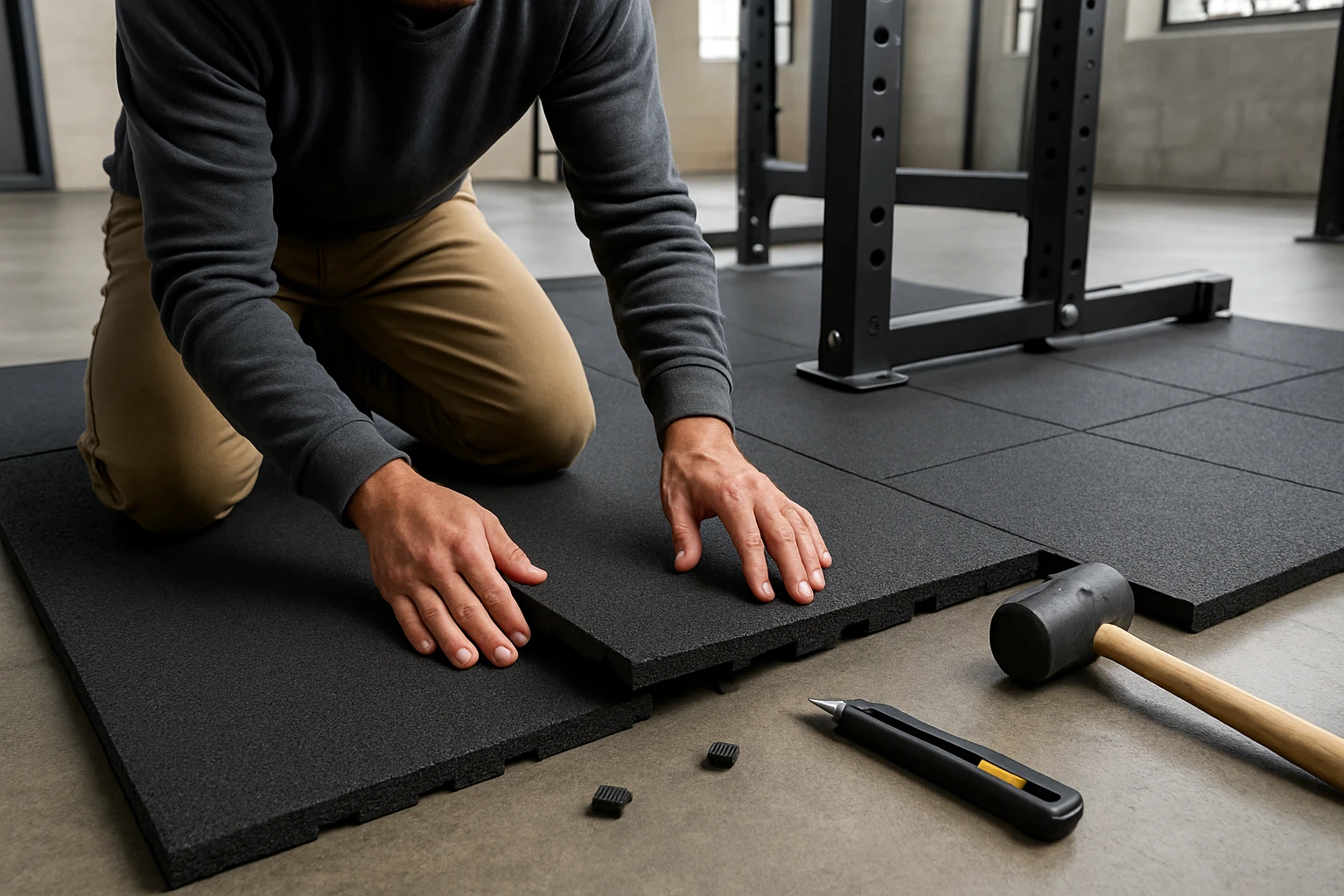
Table of common installation choices:
| Option | Best For | Installation Time | Cost Range |
|---|---|---|---|
| Rolled Rubber | Large areas, few seams | Moderate | Mid to high |
| Interlocking Tiles | Home gyms, studio floors | Low | Low to mid |
| Poured Rubber | Custom commercial areas | High | High |
| Platform With Ply Core | Olympic lifting | Moderate | Mid to high |
A common approach is to combine products. Use 10 mm tiles for most of the room and add a 25 mm platform under heavy racks.
Cost, Durability and Maintenance
Thicker, denser products cost more. They usually last longer. Simple cleaning keeps floors safe and extends life. Wipe spills, sweep debris, and use manufacturer cleaners.
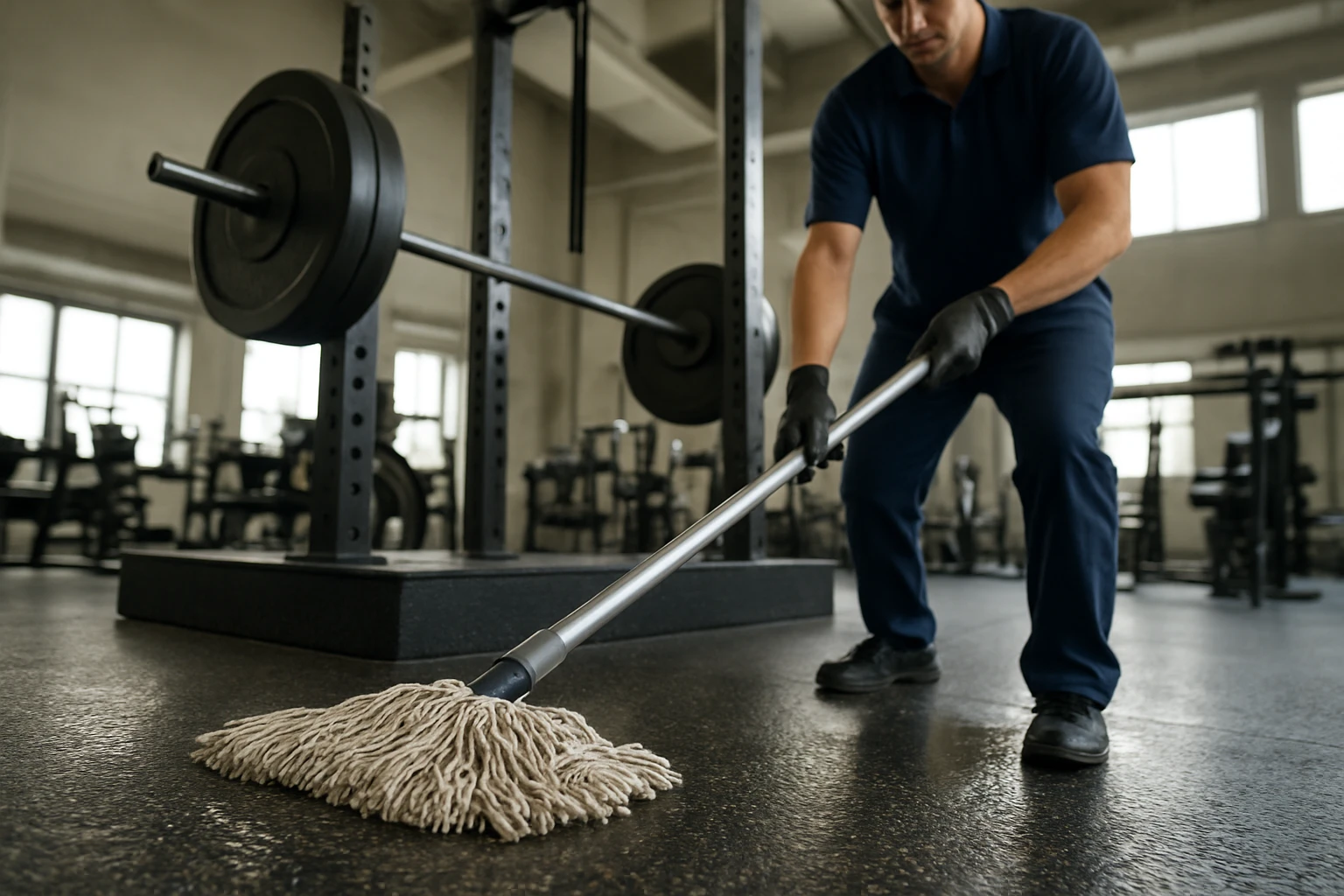
Cost factors:
- Material type and density.
- Thickness and area size.
- Installation complexity.
Durability tips:
- Use denser rubber for weight areas.
- Replace tiles near racks first if damage appears.
- Re-check seams on interlocking tiles every few months.
For general guidance on flooring options and costs in this region see Best Flooring Options in Dubai for Homes, Offices and Villas and How Much Do Flooring Cost in Dubai: Prices by Material and Installation.
Practical Recommendations and Buying Checklist
Follow a simple checklist before you buy. It saves money and prevents regret.

Buying checklist:
- Map your zones and activities.
- Choose material based on use (rubber for weight, foam for studio).
- Match thickness to activity. Use a mix of thicknesses if needed.
- Ask about density and warranty, not just mm.
- Check delivery weight and lifting needs for thick rolls.
If you want a firm surface for quick footwork, avoid very soft foam. For heavy drops pick a layered or thick rubber option.
When to Call a Professional
Call a pro if you have uneven subflooring, drainage issues, or if you plan a poured rubber surface. Pros can design a platform and set proper transitions to other floors.
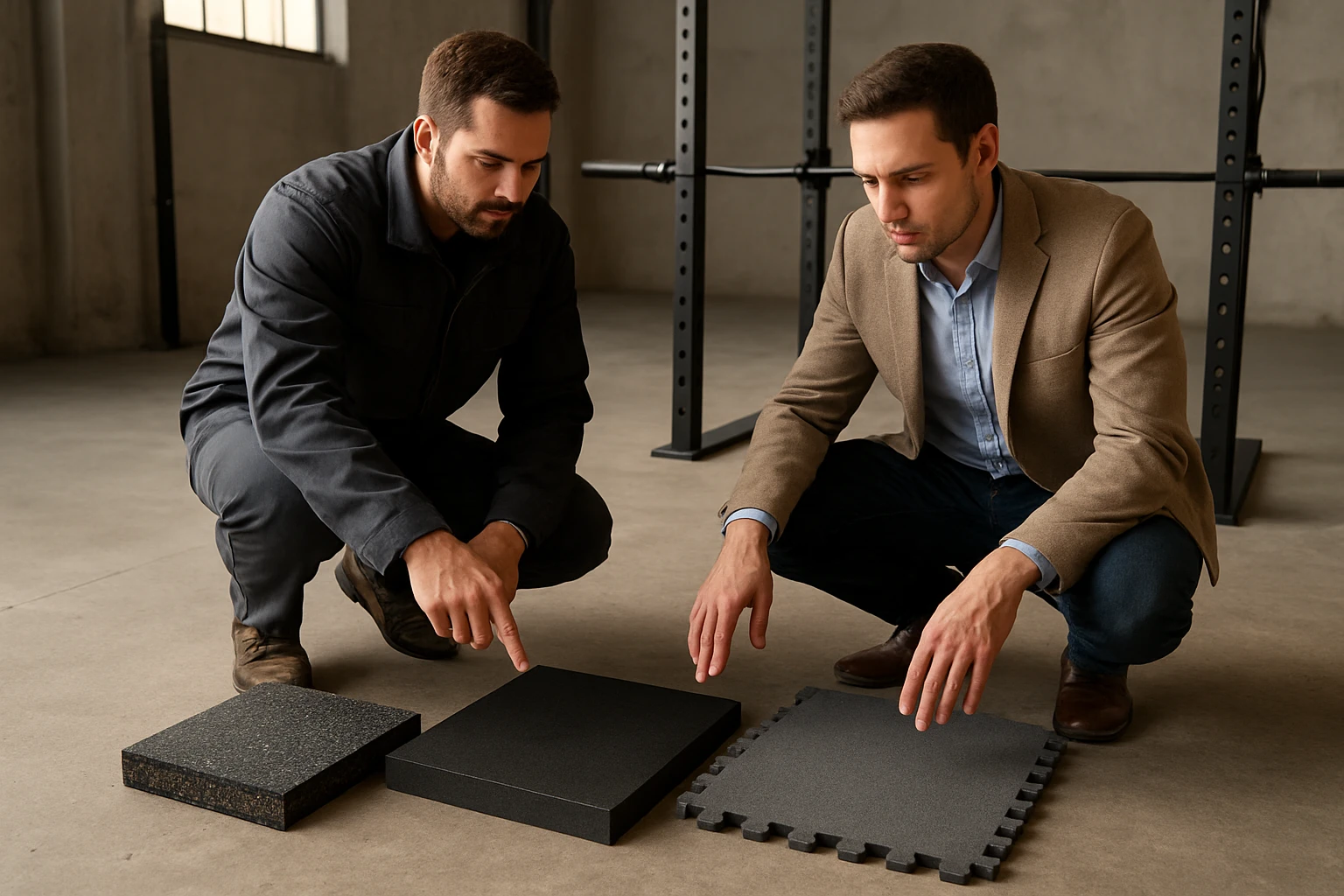
In our experience, a short site survey avoids big mistakes. A common mistake is choosing thickness by feel alone without testing a real sample under a rack.
Quick Comparison Table
This table summarizes the simplest choice based on the most common gym needs.
| Need | Recommended Thickness | Material Suggestion |
|---|---|---|
| Cardio and Stretching | 6 to 8 mm | PVC or thin rubber |
| Group Classes and HIIT | 8 to 12 mm | Interlocking rubber or foam |
| Weight Lifting | 10 to 20 mm | Solid rubber tiles or rolls |
| Olympic Lifting Drops | 25 to 50 mm | Platform with solid rubber edges or poured rubber |
Useful Links and Further Reading
For more detailed product pages and local options, check these pages if they match your plan:
- Sports Flooring
- Rubber Flooring
- EPDM Flooring
- PVC Flooring
- SPC Flooring
- Garage Flooring
For deeper reads on specific products, see these blog posts:
- What Is SPC Flooring and How It Works
- Best Flooring Options in Dubai for Homes, Offices and Villas
- How Much Do Flooring Cost in Dubai: Prices by Material and Installation
Final Notes
Pick the thickness that fits each zone. Put protection first for heavy weights. Think about comfort for cardio and classes. Test samples where you can. A mixed system often gives the best balance between cost, safety, and feel.
Frequently Asked Questions
Is Thicker Always Better for Gym Flooring?
No. Thicker gives more impact protection but can reduce stability for quick footwork. Match thickness to activity. Use thicker material for drop zones and thinner options for cardio or stretching areas.
What Thickness Do Home Gyms Usually Use?
Home gyms commonly use 6 to 12 mm overall. Many owners use 8 to 12 mm rubber tiles for most areas and add a thicker section under heavy racks if needed.
Can I Layer Thinner Mats Instead of Buying a Thick One?
Yes. Layering thin mats on a plywood platform can give the same protection as a single thick mat. Make sure layers compress together and stay level to avoid trip hazards.
What Thickness Is Best for Olympic Lifting Platforms?
Olympic platforms often combine a wooden center and 25 mm to 50 mm rubber edges. The rubber must absorb impact while the wood offers a stable lift surface.
How Do I Choose Between Rubber and Foam for a Studio Area?
Choose foam for low-impact classes and comfort. Pick rubber for multi-use studios that include weights or heavy machines. Rubber wears better under heavy traffic.